
‘My dad and I were diagnosed with breast cancer two years apart – at least I knew what he was going through’
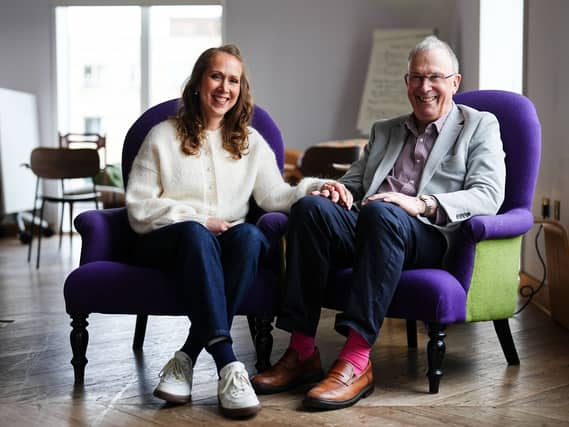

David and Cat Sneath discovered they were carriers of a gene mutation that increases risk.
A father and daughter who were both diagnosed with breast cancer two years apart said they were able to “go through it” with the support of a loved one who has done the same.
Catherine Sneath, 47, a senior civil servant on a current career break, from Nottingham, was diagnosed with stage 3 breast cancer in April 2022 after she said she noticed a “pea-sized” lump just after finishing breastfeeding.
Catherine, better known as Cat, had a lumpectomy, double mastectomy, chemotherapy and radiotherapy, and a genetic test.
The latter confirmed she was a carrier of a mutation of the BRCA2 gene which causes a higher-than-average risk of breast, ovarian, prostate and pancreatic cancer.
In the aftermath, Cat’s sister, Rebecca Williamson, 45, was confirmed to be a carrier too, so she had a preventative double mastectomy in January 2023 and her fallopian tubes removed in June 2023.
Their father, David Sneath, 78, a retired judge from Nottinghamshire, was also confirmed to have the BRCA2 gene in September 2022 but he did not have the same preventative surgery.
In November 2024, David noticed discharge on his left nipple and he said he “wasn’t surprised” that it led to his own stage 1 breast cancer diagnosis on December 23.
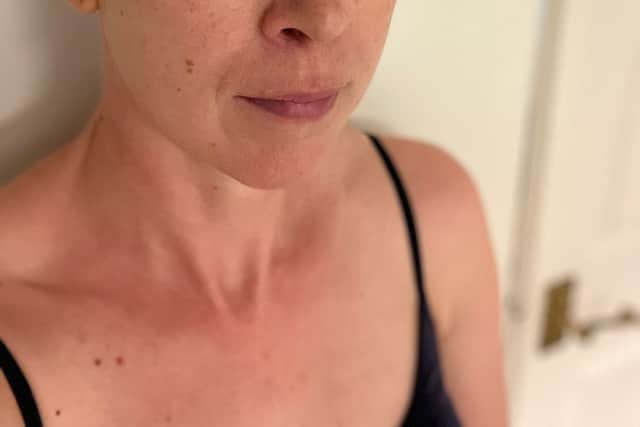
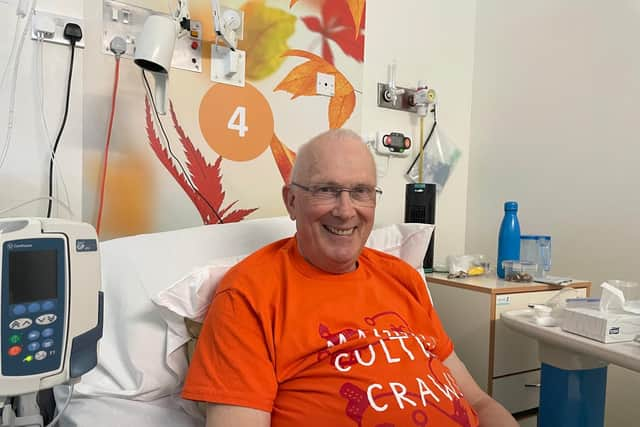
A month later, David had a double mastectomy and six rounds of chemotherapy, and was discharged from cancer care.
Remembering the moment Cat found out about her father’s diagnosis, she told PA Real Life: “When dad said he needed to have a chat with me, he added that it was an ‘oh shit’ moment and I knew exactly what it was straight away.
“Because that’s how he reacted when I told him about my breast cancer diagnosis.
“After he told me, I just tried to reassure him by saying that I’ve been through it so he’s going to be fine too.
“I knew I’d done it before and I could help.”
David added: “Cancer didn’t come as a shock to me.
“But I do remember being the only man present when I attended a couple of primary breast cancer group sessions at (the cancer support charity) Maggie’s.”
The most common symptom of breast cancer is a lump or swelling on the breast, and other warning signs include nipple discharge, changes in chest or breast shape, sores or ulcers, an inverted nipple or a rash that may look like eczema, according to the NHS.
Before her diagnosis, Cat said friends saw her as “one of the healthiest people” they knew, both in terms of exercise and diet.
Her first and only symptom of breast cancer came about in mid-March 2022 when she said she was weaning her second child from breastfeeding.
“I was in the shower one day and I found a pea-sized lump,” Cat said.
“I was quite aware of my breasts, having recently breastfed, so I went to my doctor in late March.”
She was referred to a breast clinic, where she had a mammogram and biopsy, and was diagnosed with breast cancer in early April 2022.
“I was actually with my sister in a cafe when I got the phone call,” Cat said.
“The words I clung on to at that time were ‘small and treatable’ but they said I needed to be seen really quickly.”
Cat then rang David to tell him the news.
David said: “I remember my reaction was just to say ‘oh shit’, and then she went on to tell me more about the diagnosis.”
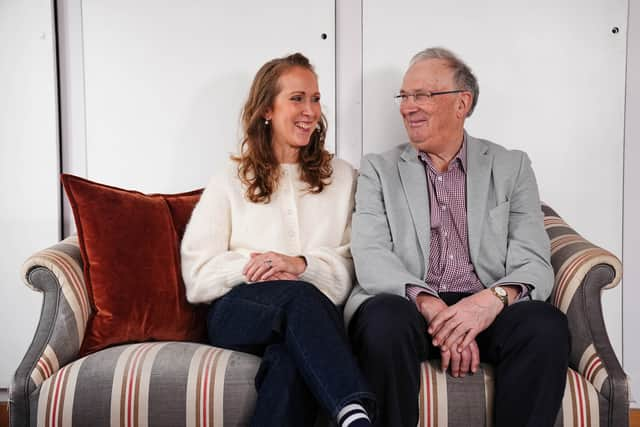
Cat had a lumpectomy – a surgical procedure that removes a breast tumour and a small rim of surrounding healthy tissue – within a month of her diagnosis and a genetic test.
“I got both the results of the lumpectomy and the genetic test within a couple of weeks of each other,” Cat said.
“It went from being ‘small and treatable’ to being detected in my lymph nodes, it’s spread quite far, it’s grade 3 and I’ve got this genetic mutation.
“It was probably the worst appointment of my life.”
Cat had a double mastectomy in June 2022, chemotherapy from August for five months, radiotherapy from February 2023 and a year of oral chemotherapy from May.
She is on a 10-year hormone treatment and also had her ovaries removed in the summer of 2024, as the BRCA2 gene mutation meant she also had a heightened risk of developing ovarian cancer.
Throughout it, Cat said she was helped by the cancer support charity Maggie’s, which has 27 centres across the UK and offers free psychological, emotional and practical support for people with cancer, as well as their family and friends.
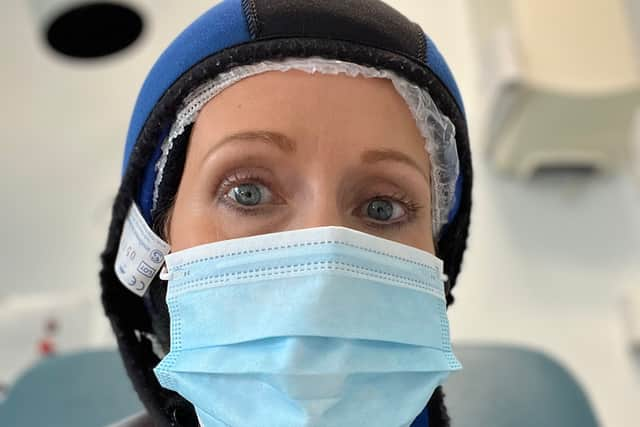
When Cat’s prognosis was initially uncertain, David said he “burst into tears” at the Maggie’s centre in Nottingham and accessed counselling through the charity to help him process his daughter’s diagnosis.
The first symptom before David’s own diagnosis came in November 2024.
“My wife noticed some spots of what appeared to be blood on my pyjama top,” David said, “and initially we thought it was just from a zit on the nipple… but when it happened again, I went straight to the doctor.”
Knowing David’s family history, he said his doctor placed him on a cancer pathway “pretty rapidly”, so he had a biopsy on December 11.
David said: “The operator of the scan was pretty clear that she thought it probably was a tumour and that evoked the strongest emotional reaction in me.”
On December 23, it was confirmed David had stage 1, grade 2 breast cancer, meaning the cancer is at an early stage but it is abnormal and grows at a moderate pace.
Cat said her immediate thought when her father told her his diagnosis was to respond “for goodness sake, this is ridiculous”.
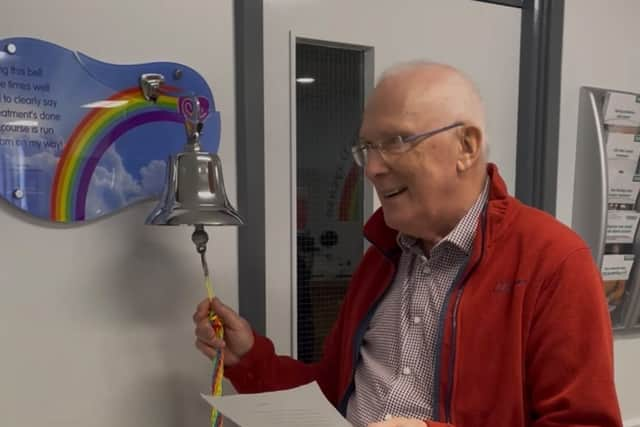
David had a double mastectomy on January 22 last year and started the same chemotherapy treatment Cat had from April for four months.
For the most part, David said he was “sanguine” throughout his treatment, despite experiencing moderate hair loss, fatigue and loss of taste.
David said he is now “cancer-free” but he takes a drug called tamoxifen to suppress oestrogen so that his cancer is less likely to return.
“What I want for the future is to live long enough to see my grandchildren reach adulthood,” David said.
When David’s eldest grandchild is 18, he will be 87, so he said he has “got a little way to go yet” but that is his “ambition”.
Cat said: “I think it’s important to share our story because I want to help people understand that there is life after cancer and there’s incredible support, particularly through Maggie’s.
“If you get diagnosed with cancer, you’re not alone. You don’t need to suffer in silence.”
David added: “I want to highlight awareness of the risks of male breast cancer.
“I know it’s only about 400 cases a year (in the UK) compared with 55,000 women being diagnosed, but it’s still important, especially if men are carriers of the BRCA2 gene.”
The Omaze Lake District House Draw is now open in support of Maggie’s. Find out more on their website: omaze.co.uk/pages/maggies?_kx=ls-IVhr2UsfrYQJ6OXCW3vUnSNPVSuazYiroYEszM-w.NAdKub.