
‘My dog is a therapy pet at a hospice – you can see that you’re making a difference, and that’s special’
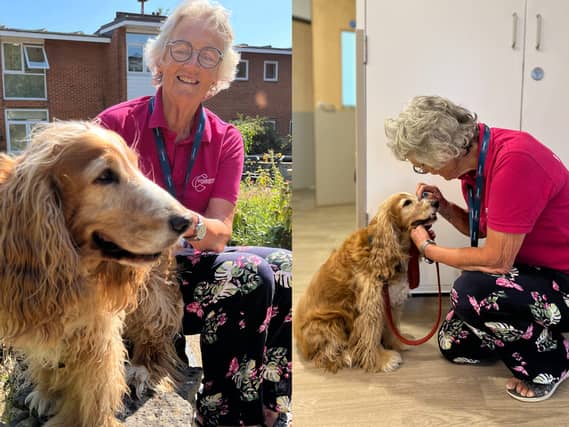

Sandra Potter has been volunteering at St Christopher’s Hospice in south London for more than a decade with her dogs Max and Wilson.
A woman who takes her spaniel to her local hospice for therapy dog visits has said “it’s a very special thing to be able to do” – and that her dog loves it, too.
Sandra Potter, 77, who lives in Sydenham, south London, has been volunteering at St Christopher’s Hospice in Sydenham for more than a decade.
She started volunteering with her labrador Max in 2015, and when Max died in 2020, she adopted her spaniel Wilson and began taking him along as a therapy dog to visit patients at the end of life, and their families.
She said the work she does with Wilson has a “huge” impact on the hospice’s patients and their families, not only giving them a chance to cuddle a cute dog but also providing them with “something else to think about, something else to talk about” while they receive end-of-life care.
“Sometimes you do talk about dying, absolutely,” Sandra told PA Real Life.
“But most often I find myself chatting about cabbages and kings.
“One of the things that I think strikes you, you think you’re going in to a hospice and everybody’s dying. Wrong. Not everybody is dying: Some people have gone in for pain management, for relief for relatives. It’s actually quite a happy place.
“There’s a very good vibe to it, a very positive vibe. The wards are light, they’re cheerful, they’re very well equipped, and patients are pleased to be there.”
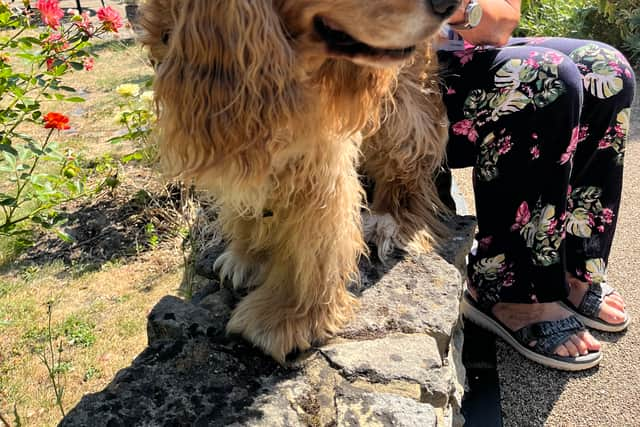
Sandra has had her golden spaniel Wilson since December 2020, when she adopted him from Battersea Dogs and Cats Home.
With Max, she had volunteered at St Christopher’s Hospice since she retired from running her own travel company in 2015. Living just a couple of streets away from the Sydenham hospice, she decided to pop in and see if she could volunteer with Max as a therapy dog.
She remembers staff thinking Max was the perfect candidate – “he was a big, floppy Labrador, so soft,” she said – and after completing the requisite training, they began visiting patients and their families each week.
When Max died Sandra did not want to stop providing therapy dog services to the hospice because, she said, “it’s a very special thing to be able to do”.
She began the process of adopting another dog and six months later, she said, “Wilson came along, and he was perfect”.
She learned that Wilson had come from Poland – from information in his microchip – but he was found alone on the streets of London before going into Battersea’s care. He was a year old by the time he found his home with Sandra, and she knew he would be ideal for therapy dog training just like Max.
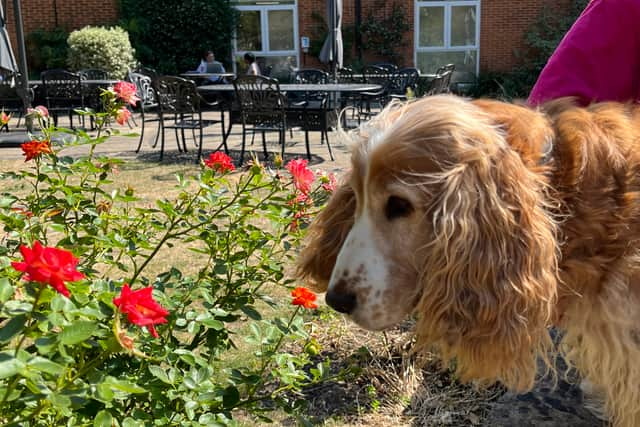
Five years earlier, when Sandra first volunteered at St Christopher’s Hospice, she completed her mandatory 24 hours training to become a patient-facing volunteer. Max, and subsequently Wilson, then needed to be registered with Pets as Therapy, which partners with schools, hospitals, care homes and community groups to provide pet therapy services and ensures that all prospective therapy pets are suited to the role.
“Any well-trained dog should pass with no problem at all, and both of mine did very easily,” Sandra said, adding that she needed to show that her dogs were well-behaved, could sit, walk to heel, not pull on the lead or beg for food, and not react badly to loud noises.
For the last five years, Sandra and Wilson have been making their weekly visits to the hospice – though Sandra said they also choose to remain on call for whenever a patient might particularly need to see a dog on any given day.
When she arrives at the hospice, Sandra said she checks in with the staff to see if there is anyone whose door she should not knock on – someone who is frightened of dogs or has an allergy, for example. Then she makes her rounds, knocking on the wards’ doors to see if there is anyone who would like to have a chat and a cuddle with Wilson.
“Wilson is just as important to the staff as he is to the visitors and patients. It’s gorgeous,” she added.
“I walk up and down the passageways (and I hear): ‘Oh, Wilson, how are you?’, ‘Oh, Wilson, can I give him a stroke?’, ‘Oh, Wilson!’.
“And then they’ve been talking to the dog for a minute, and they suddenly look up and say, ‘Oh, Sandra, how are you?’,” she laughed.
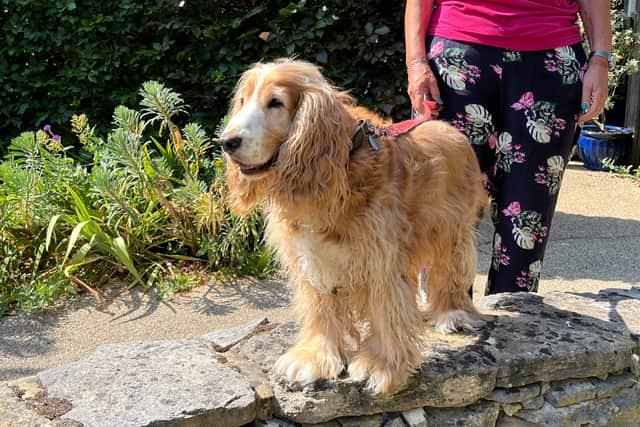
Each visit with patients and their visitors can last anywhere between a couple of minutes and half an hour, depending on their preferences – and Sandra said she is always up for a chat about anything.
“It’s really nice for them just to have something else to think about, something else to talk about, that has nothing to do with their loved one,” she said.
“Sometimes you do talk about dying, absolutely, but most often I find myself chatting about cabbages and kings.”
Of course, many people in hospices are at the end of life, which means Sandra has had to say goodbye to many patients she has come to know. She said this can be “tough, because, as with everyday life, you get some people in there who you really, really like. Some do get under your skin”.
“But you have to leave it at the door, and that comes with practice,” she said, adding that the hospice’s volunteers receive plenty of support from staff and the hospice’s bereavement service, should they need it.
What Sandra loves most about volunteering with Wilson is the impact their presence can have on patients and their families, which she said “can be huge”.
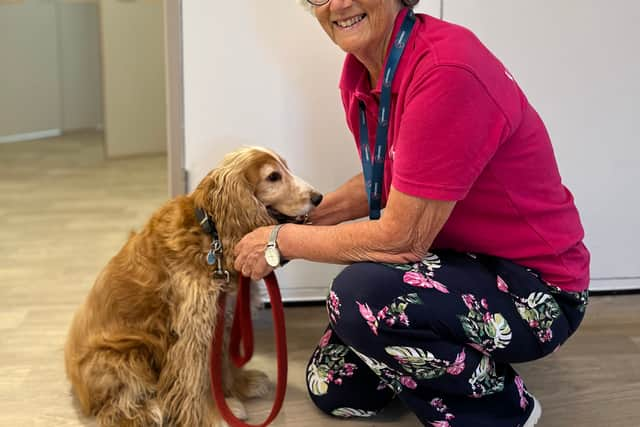
Sandra has seen how much comfort a dog can bring, whether that’s from stroking their fur and giving them a cuddle, or reminding them of their own beloved pets and providing a welcome distraction.
“The weight of the dog on your bed is something quite special,” she said.
“If they’re capable – and they want it, obviously – I’ll invite Wilson up on to the bed, and he’ll sit and cuddle with them.
“A long time ago, I was with somebody who was quite close to the end of life, with Max. He gave him a little lick, and there was this little tiny smile that went across the patient’s face, and it just breaks your heart.
“That’s one of the reasons I do it, because you can see that you’re making a difference, and that’s special.”
To find out more about St Christopher’s Hospice visit stchristophers.org.uk. To find out more about volunteering opportunities, visit stchristophers.org.uk/volunteering.