
‘Our 9-year-old died on Mother’s Day – cancer is like a serial killer that’s taking children and you can’t catch them’
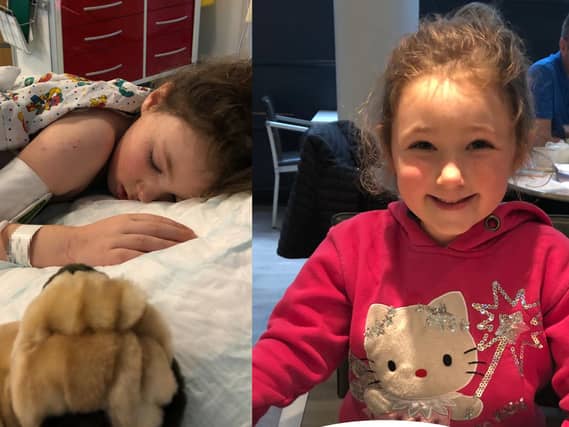

Sally and Mark Brown’s daughter Jessie was five years old when she was diagnosed with medulloblastoma.
The mother of a nine-year-old girl who died in her arms on Mother’s Day after a brain tumour diagnosis has said cancer is like a “serial killer that’s taking children… and you can’t catch them”.
Sally and Mark Brown’s daughter Jessie was five years old when she was diagnosed with medulloblastoma – the most common malignant children’s brain tumour – in November 2019 after experiencing dizziness and vomiting.
Jessie had an operation to remove as much of the brain tumour as possible, along with radiotherapy and chemotherapy, and she was declared in remission in late 2020 – but her cancer returned around a year later.
After pursuing several lines of treatment to prolong her life, and looking at past results of more than 300 clinical trials for research, the cancer eventually stopped responding to treatment and Jessie died at home on Mother’s Day in 2024, aged nine.
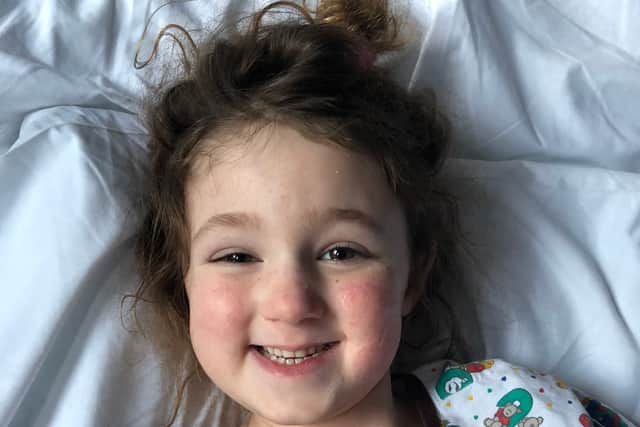
The couple, from Whitstable, Kent, have since set up Jessie’s Argonauts, a charity which supports research into kinder, more effective treatments, so other children facing a similar diagnosis can enjoy the future Jessie was unable to have.
Sally, 48, an NHS administrator, told PA Real Life: “We felt like our lives had ended.
“You just feel angry and think, ‘Why can’t she have this life? Why can’t we just be carrying on like other people?’, and you just get the feeling that nobody understands.
“You feel like there’s a serial killer that’s taking children, and you’ve tried everything, and you can’t catch them.”
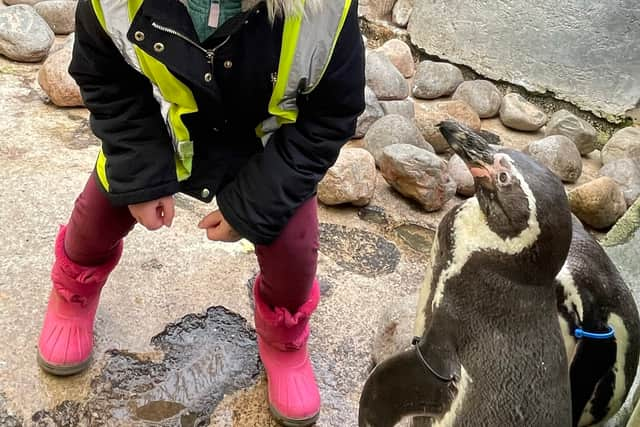
Prior to her diagnosis, Sally said Jessie was a “sturdy, fit and active” child, who loved animals and enjoyed going swimming.
However, in the summer of 2019, when she was five, she started having brief moments of dizziness, followed by headaches and vomiting.
“Unfortunately, childhood cancer is rare, and I think it’s a process of elimination when trying to diagnose something,” Sally said.
“The first doctor said it was definitely viral, then it was believed it was gastric… because of the vomiting and the loss of appetite.”
Sally said all the standard neurological tests came back as “completely normal”, but Jessie continued to vomit every two to three days.
The couple continued to take their daughter to see various doctors, but “no-one found anything” – until Sally received a call from another GP, who said Jessie needed to have a scan at their local hospital.
“I was taken aback because it went from, ‘Let’s try and get this sorted as soon as possible’, to, ‘I think you should drop everything and leave work now’,” Sally said.
Jessie had an MRI at hospital the following morning, and Sally and Mark believed this was simply to “rule things out rather than rule things in”.
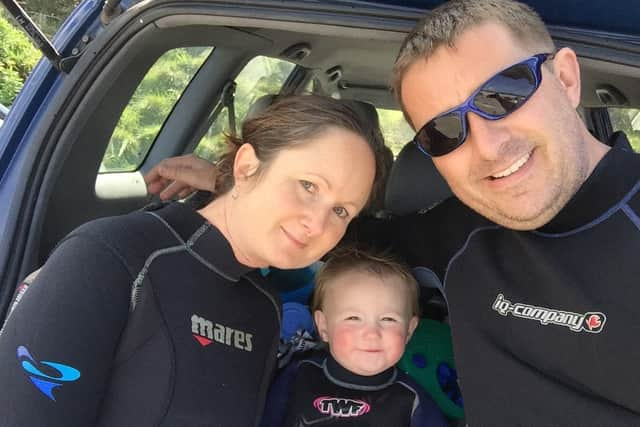
They said they were not expecting doctors to “find anything” but, after six weeks of uncertainty, the scan confirmed Jessie had a brain tumour in November 2019.
“It was this shock, disbelief, nausea,” Sally said.
“You almost don’t believe it and then you realise that this is it, life is no longer the same.”
At this point, it was unclear whether the brain tumour was malignant or benign, but Jessie was blue-lighted to another hospital where a specialist neurology team took over her care.
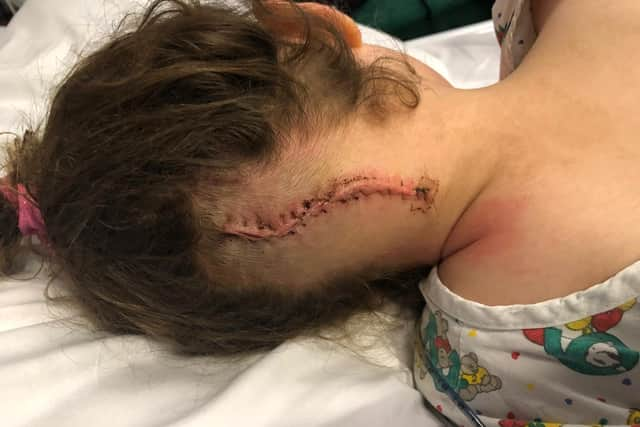
Within 24 hours, Jessie had a shunt inserted into her brain to drain built-up fluid and, over the next week, the medical team planned her next surgery.
“We explained to her that there was a ‘naughty lump’ inside her head that we had to get out, but I never used the word ‘cancer’. I didn’t want her to be afraid,” Sally said.
Jessie then underwent a 14-hour operation to remove as much of the 4cm tumour as possible, and Sally said the surgeons were able to get 90% of the mass out.
However, the side effects were “initially horrific”, Sally said, as Jessie went from being an “easy-going, steady child to one who was emotionally labile”.
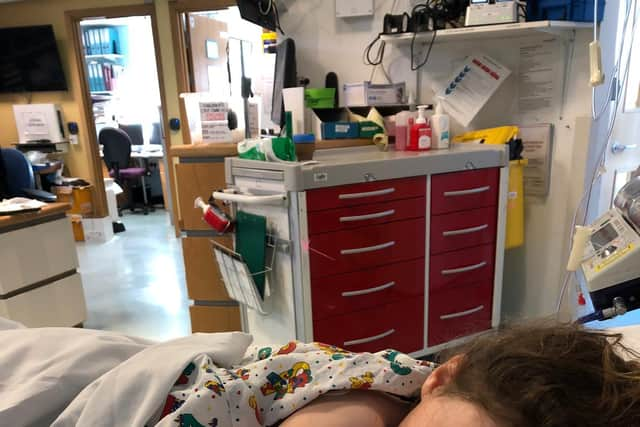
Sally said Jessie was irrational, upset, angry and frustrated, and she was constantly nauseous, too dizzy to walk and struggled to speak and even swallow her own saliva at one point.
She was therefore fitted with a stomach tube for food and medication and, one month after the operation, she started six weeks of radiotherapy.
By this point, Jessie’s biopsy results confirmed she had medulloblastoma – a condition Sally had “never heard of” at the time.
“We wanted so desperately to be told her tumour was benign, but it was horrific to learn that it was very aggressive,” Sally said.
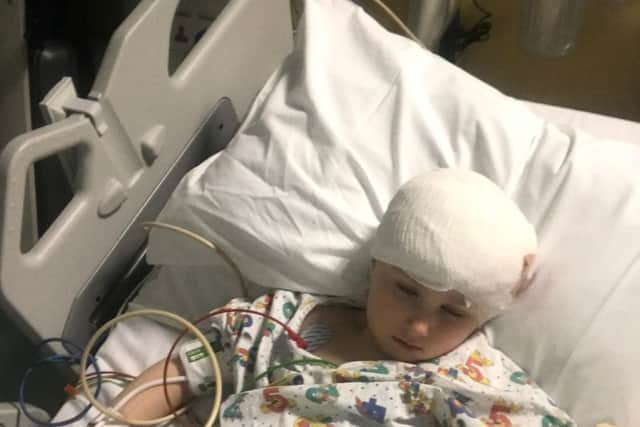
After the radiotherapy, Sally said Jessie had six months of intensive chemotherapy, and during this time she suffered life-threatening infections and required several emergency blood transfusions.
Towards the end of 2020, however, Jessie was declared in remission and the couple hoped she would “walk away from this” and “have some sort of a future”.
According to Brain Tumour Research, only 60% of children survive a diagnosis of medulloblastoma beyond five years and, when these treatments do succeed, they often lead to long-term side effects.
Jessie started junior school in September 2021 and, apart from struggling with numeracy, Sally said “she was doing well” and she enjoyed walking her dog, Max, in her spare time.
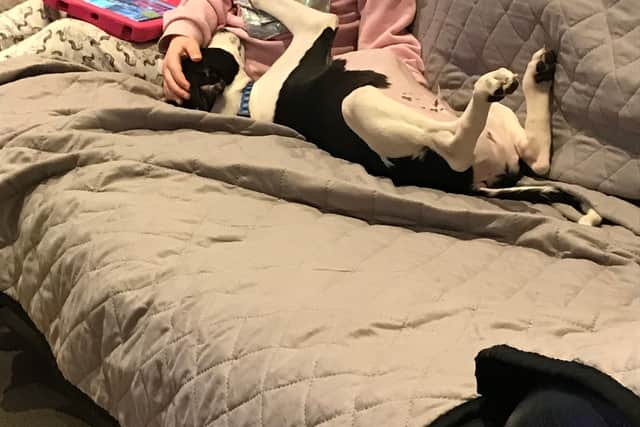
“We were optimistic that, potentially, she could have a fairly normal life if she was lucky enough not to be one of the 40% that do relapse,” Sally said.
However, in March 2022, the couple were told the “cancer was back” – and while treatments were available, Sally said nothing was “regarded as curative”.
She continued: “They basically just said that it was a terminal diagnosis and that we could have treatment if we wanted.
“But they were very clear that it would be to prolong her life, not to save it or cure her.
“There are no targeted treatments available for it.”
Sally said Jessie responded well to her first line of chemotherapy treatment, but after a while, she started to show signs that the cancer was progressing.
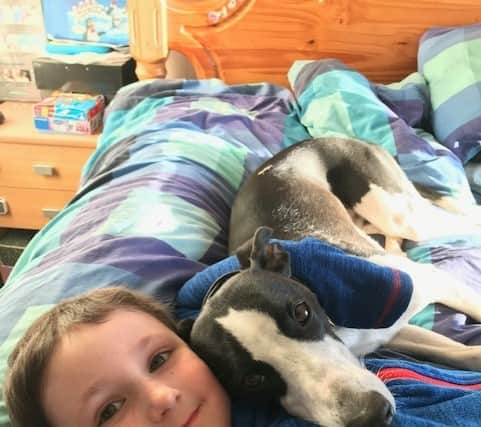
Sally said her oncologist managed to obtain special-case funding for a treatment, which partly comprised a course of injections directly into her brain, and she “tolerated this really well”.
“We knew that the treatments currently available to her would not cure her, but we wanted to buy her time, and we were hoping for a miracle,” Sally said.
“I looked at every clinical trial I could find that had ever been recorded for the disease, and spoke to oncologists all over the world, hoping for something that would help Jessie.”
By December 2023, however, Sally and Mark started to see some neurological issues developing, and Jessie struggled to even write a comma.
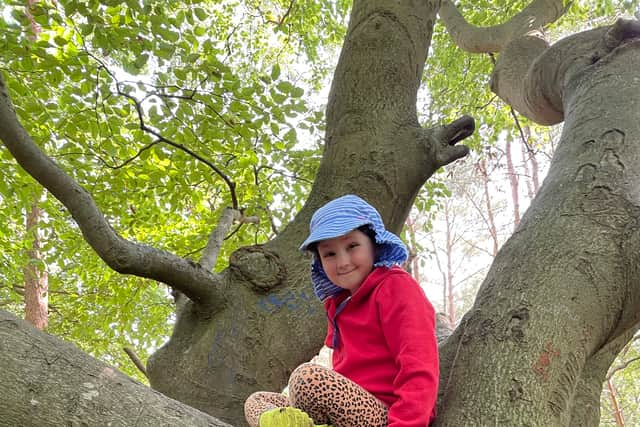
Sally said there was nothing curative available to them anywhere in the world and there were no forthcoming clinical trials in the UK, and Jessie’s cancer stopped responding to treatment.
After looking at all their options, the couple made the decision not to pursue another line of treatment.
“It’s completely devastating because you’ve seen your child go through so much and suffer so much, and you just hope that she would be able to have a life,” Sally said.
“She was such a kind little girl… and knowing that she was going to die after going through all that, it’s just horrendous.”
The couple wanted to give Jessie “as many life experiences as possible”, and they visited lots of farms and wildlife parks and booked several animal experiences, such as goat racing and cuddling porcupines.
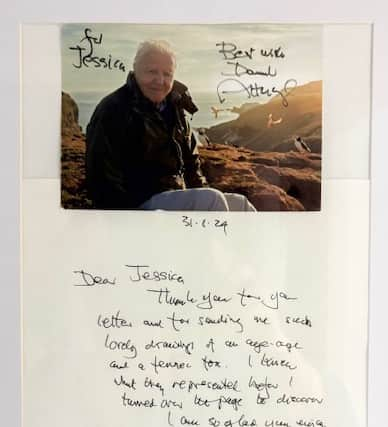
Jessie even wrote to David Attenborough – who she had wanted to marry since the age of three – and received a reply from him just days before she lost consciousness.
Jessie then died on March 10 2024, on Mother’s Day, aged nine, supported by her nurses and the palliative care team.
After her death, Sally and Mark donated Jessie’s brain tissue to The Institute of Cancer Research (ICR), as they wanted to support research into new targeted treatments for medulloblastoma.
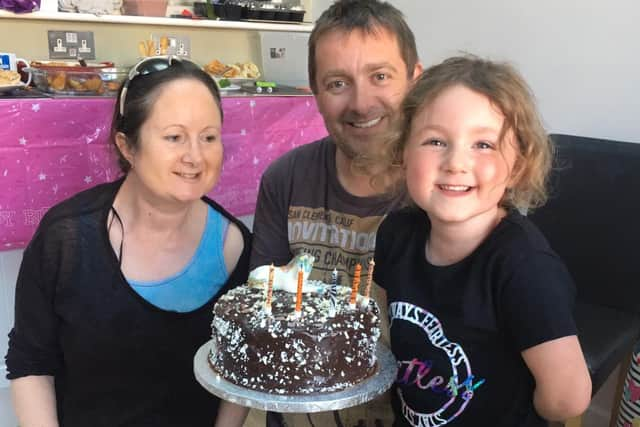
With their charity Jessie’s Argonauts, they now hope they can “try and make a difference” and fund more research and treatments for the condition.
“We had felt so disheartened that there had been nothing available for Jessie – not a single clinical trial that we could access nor any new drugs to treat her,” Sally said.
“But we now want to try and make a difference.
“Jessie was such a kind, special little girl, and she always wanted to help other people. This is something that she would have wanted us to do.”
Sally is sharing Jessie’s story as part of the ICR’s Christmas Fundraising Appeal, which is focused on its research into cancers affecting children and young adults. To find out more, visit: icr.ac.uk/support-us/our-appeals/childhood-cancer-appeal.
To find out more about Jessie’s Argonauts, visit the charity’s website: jessiesargonauts.org.uk.