
Reacher collaborators Lee and Andrew Child on AI, politics and screen adaptations
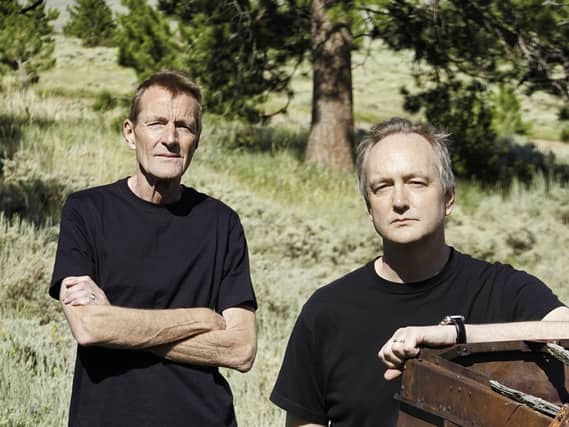

The bestselling author and his brother talk about artificial intelligence and the inspiration behind their latest villain.
Last year, after living in the US for more than two decades, bestselling author Lee Child, creator of the hugely successful Jack Reacher series, returned to England, settling in the Lake District, leaving his younger brother Andrew, who has continued the Reacher books, across the pond in Wyoming.
They used to live three miles from each other – now the journey to hang out together is more than 4,000.
Lee, whose books have sold nearly two hundred million copies – it is said that a Reacher novel is sold somewhere in the world every nine seconds – says United States president Donald Trump is the reason he left.
“Yes, specifically, or more accurately, because so many people voted for him a second time,” he clarifies.
His character Reacher has graced the big and small screens – two movies with Tom Cruise, who didn’t have the physical presence of Reacher’s 6ft 5in, 250lb frame, four Prime Video series starring Alan Ritchson, with a fifth shooting now and a sixth commissioned, all set in the US.

Yet Lee’s love affair with America seems to have waned.
“I remember the mythic, legendary, glamorous, energetic, optimistic America of the 50s and the 60s, those couple of decades of fantastic prosperity, where a working man could, with one job, own a house, run a family and have a vacation every year. Maybe in 10 years he could buy a boat. Maybe in 15 years he could buy a cabin by the lake.
“There were plenty of things wrong, of course, let’s state that up front. In the 50s and 60s, if you were black or gay or a woman or whatever, it was very negative for you. But in general, the trajectory was upward, and it was based on goodwill, optimism and positivity, and that has all just faded away to where it’s a very unpleasant, antagonistic, toxic society.”
Last month Ritchson answered a fan on Threads, commenting that a storyline in which Reacher takes on a white supremacist militia group had been approved “until someone got re-elected”.
Today, Lee, 72, who was born in Coventry and grew up in Birmingham, reflects on how politics has muddied the waters.“Clearly from a fiction point of view, the white supremacist militia group in their little encampment in Montana (as featured in his second Reacher book, Die Trying) was readily identifiable as the bad guy when I wrote that book in the late 90s.
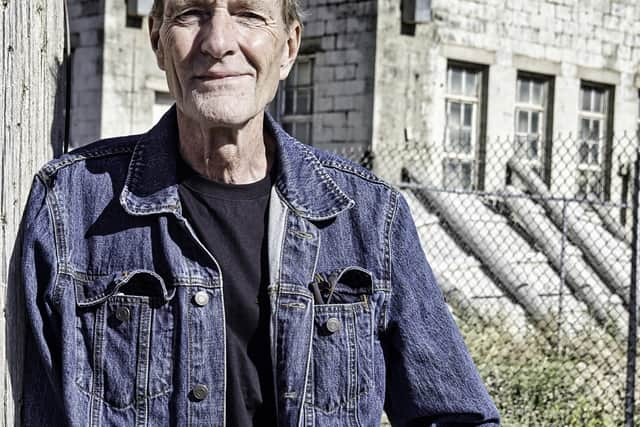
“Now, 30 years later, there would be a severe debate. A lot of people would think they were the heroes, and therefore the narrative gets confused at that point.”
Lee, who has been married to Jane for more than 50 years with (they have a daughter, Ruth), says he felt too old to “wait it out” until things improve in the US, yet his younger brother Andrew, 58, also a thriller writer who pens the Reacher series, although Lee’s name still appears on the covers of their six collaborations, remains in Wyoming, waiting it out.
They remain close, sharing many similar opinions about the world, discussing news items which grab their attention and could form the seed of a new plot. Lee says that Andrew does all the work on the Reacher books these days.
Lee, who is famous for not outlining his plots, likens their differences in approach to storylines to driving home at night. Andrew seems more forward-thinking, more disciplined, Lee doesn’t really know where he’s going.
“You can’t see any further than your headlight beams. Andrew likes a sort of long throw LED projector headlight. I can get by with a couple of geriatric glow worms taped to the front of the car.”
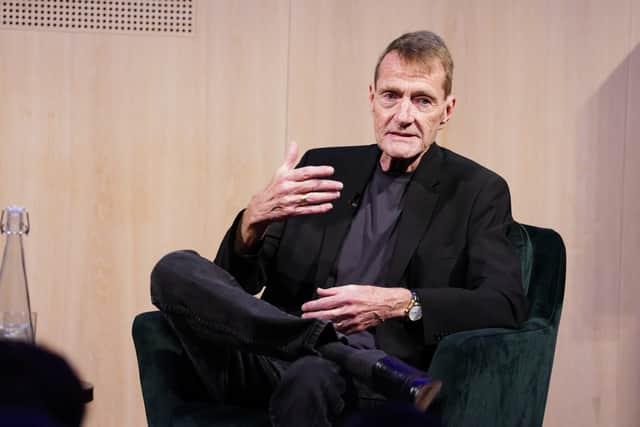
As for the TV adaptations, Lee enjoyed the first Tom Cruise movie but not the second.
“It was irresistible to me at the time, in as much as the world’s last major global movie star was offering to spend $200 million promoting my brand around the world, and who wouldn’t accept that in the old media world?
“But I miscalculated how readers would react, because to me, the book is the product. The book is the ultimate truth.”
The world of binge TV is much more attractive to authors, he continues.
“There is no way on earth now that an author would choose a feature film over binge television, mostly because of the running time. You’ve got so much time to tell the story, it’s not just 90 minutes crammed in. You can have eight, 10, 12 hours, whatever you want.”
Andrew says he never writes the books with any screen adaptation in mind.
“I wouldn’t even know how to go about writing something that was suitable for the screen if I tried. But even before I was writing the books, I’ve been involved with Reacher for 25 years, talking to Lee about Reacher, reading Reacher.
“I’ve watched the series, which is a few hours, and then that’s set against 32 years of the books.”
The brothers’ collaborations invariably come from things they’ve seen or read which annoy them and the 31st Reacher book, Chain Reaction, is no exception as our hero takes on a high-tech conspiracy involving AI, cybercrime, hacking, and deep-seated corruption led by wannabe-trillionaire ‘tech bros’.
“One of the main strands we talk about is who annoys us, who really p****s us off at the moment,” Lee explains.
“So, it just emerges. We sit around. Who do we not like? Well, basically, we don’t like Elon Musk. And so, what about a villain of that nature? So it starts at the back end and then it becomes obvious that that’s the bad guy this time, and then Andrew has to make it begin somewhere and end with the bad guy getting a satisfactory dispatch.”
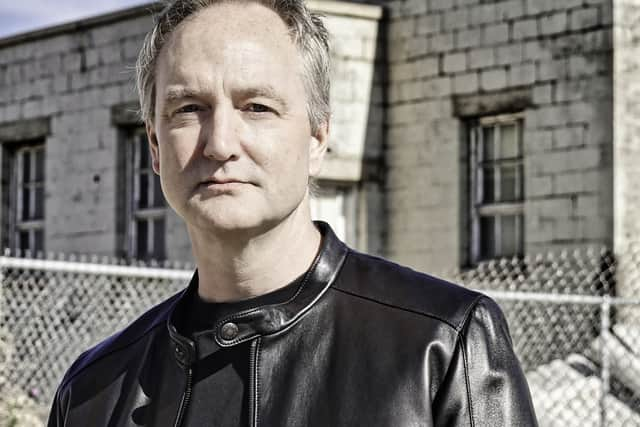
The villains in this book have an arrogance about them, fuelled by huge wealth. “I think it’s a very relatable thing,” Andrew says.
“Everyone has come across people in their lives. It might be bosses at work, or people down the pub, or people in the club that they’re a member of who just think that the rules don’t apply to them. They can do whatever they want and it doesn’t matter who they hurt along the way. That is the strand of arrogance that is particularly galling.”
Working all that into a tech-based plot – although it never gets bogged down in geek-speak – also tapped into their thoughts about AI.
“I’ve never used it to generate anything and I never will,” Lee asserts. “I’m perfectly capable of thinking and writing for myself.”
He has accessed AI in a Google search, but reflects: “Initially, I thought, wow! It was astonishing. It was like my dog had suddenly built me a car.
“And then a few minutes later, I thought, wait a minute, this is a pretty bad car. Doesn’t really work. The wheels are square, the engine won’t start. It’s like Wile E Coyote, he’s run off the cliff and he’s not looking down yet.”
Andrew continues: “I think back to the 80s when I first saw the film The Terminator, I didn’t realise it was a documentary.”
As far as stealing books and trying to reproduce them in an author’s style, Lee says: “Everybody’s book has been consumed and it’s in a database, so that if somebody somewhere put in a prompt and said, ‘Write me a book like a Reacher book in a style a bit like Lee and Andrew Child’, it would do that, but it could only do what we’ve already done.
“It could not possibly do the next thing that we’re going to do this year or next year – and that’s the human element that I love.”
Chain Reaction by Lee Child and Andrew Child is published by Bantam, price £22. Available now