
Siblings diagnosed with life-threatening blood cancers five years apart now have ‘unbreakable bond’ and shared ‘trauma’
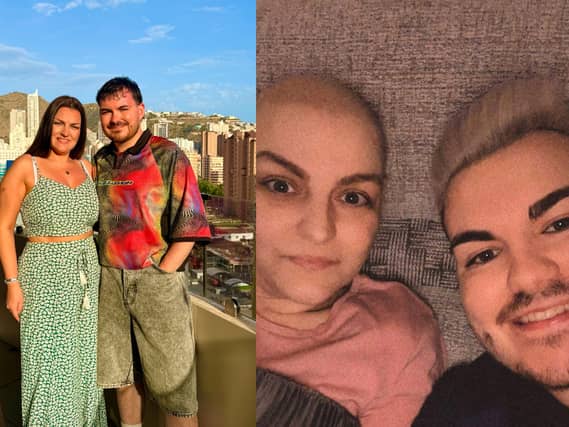

Catherine Dunnachie was diagnosed with cancer after developing a persistent cough.
Two siblings were diagnosed with life-threatening blood cancers five years apart, with the pair now sharing an “unbreakable bond” after experiencing the “trauma” of cancer from both sides.
Catherine Dunnachie, 39, an associate director who lives in Ayr, south-west Scotland, was diagnosed with stage four Hodgkin lymphoma in March 2020 after developing a persistent cough.
She had multiple rounds of treatment during the Covid pandemic, and went into remission in June 2021, but continues to experience long-term side effects including nerve damage, fatigue and infertility.
Five years later, her younger brother Kane Dinmore, 28, began suffering from night sweats and fatigue before being diagnosed with acute myeloid leukaemia (AML) in May 2026.
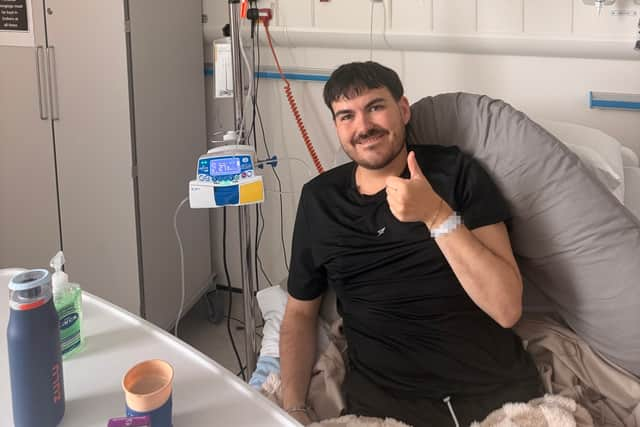
Kane underwent three rounds of chemotherapy, entering remission in August, and is hoping to have a stem cell transplant to reduce the risk of the cancer returning.
The half-siblings, who have different fathers, said doctors told them it is “incredibly rare” for both to develop blood cancers and there does not seem to be a link between the two.
Kane, a marketing executive, told PA Real Life: “I just feel like we’re even closer, like an unbreakable bond.
“Catherine has been there for me the whole time, basically living with me, and I couldn’t do it without her.

“It’s like we understand the trauma.”
After moving to Newcastle for a job in 2019, Catherine developed a persistent cough towards the end of the year.
She said she visited her GP several times but was repeatedly told she had a chest infection and was prescribed antibiotics.
By January 2020, her condition had not improved and she had begun experiencing night sweats and itchy legs.
Catherine said she returned to her GP and, after undergoing an X-ray, was told days later that she might have cancer after a “large mass” was detected in her chest.

After several tests, she said she was diagnosed with stage four Hodgkin lymphoma in March 2020, which explained her symptoms.
Hodgkin lymphoma is an uncommon cancer that affects the white blood cells that help fight infection, according to the NHS.
Catherine said her cancer was classified as stage four because it had spread to her lungs, liver, spleen and abdomen, as well as forming a “massive mass” in her chest.
On the day she received her diagnosis, the country “went into lockdown”, due to the Covid pandemic, and she said she felt “all alone”.
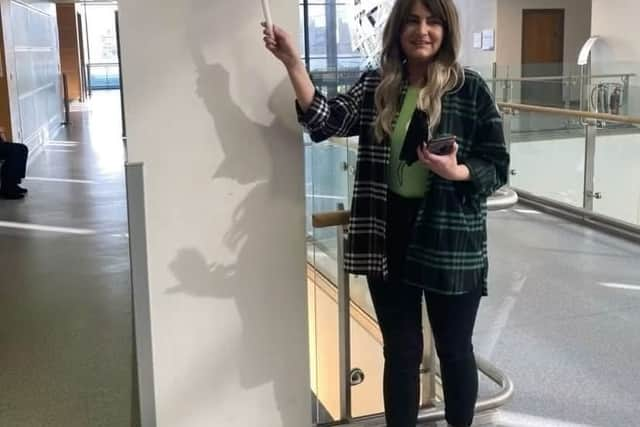
A week later, she began chemotherapy, having to sit “in between screens” with a “big gap” between her and the other patients.
“I think I went into shock after the diagnosis, it felt like fight or flight,” Catherine said.
“When they say the words cancer, I don’t think you take it in, and I went into survival mode.
“I focused on work as much as I could, to distract myself… but I lost all my hair.”
Kane added: “It was a horrible time, I just felt a little helpless knowing she was by herself, and I couldn’t offer physical support.”

Midway through her treatment, she said scans revealed the mass in her chest was still present, and by the end of her chemotherapy course it had only shrunk slightly.
She had another round of chemotherapy, followed by two rounds of immunotherapy trial drugs.
“I felt like they were running out of options for me – every time I had a follow-up appointment it was bad news,” she explained.
In June 2021, she was told she was in remission, which she described as a “miracle”.
“I was just so shocked, it felt like a dream and quite daunting to hear the news after so long,” she said.
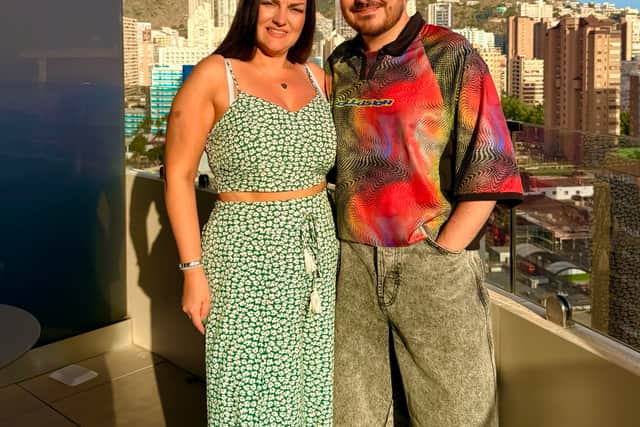
She subsequently underwent a round of conditioning chemotherapy before receiving a stem cell transplant in September 2021, using cells from a donor in Germany after neither Kane nor her older brother was a match.
Catherine said she remains in remission and has check-ups every six months, but continues to experience long-term effects of her treatment, including fatigue and nerve damage in her feet.
She said: “I think a lot of people look at me and think I’m all better, because my hair has grown back, I’ve put weight on, but that’s not the case.
“The pain in my feet is so bad they cramp inwards, and cause pain all up my legs.
“I have to wear heat pads in my shoes to help, and I have so much nerve damage in my hands.”
Her treatment also left her “fully menopausal”, and said there had been “no time for fertility preservation”, meaning she cannot have children “naturally”.
“Having kids was never at the top of my list, but having it taken away from you is so hard to deal with,” she explained.
She added that the “fear of recurrence is always there” and that she has since been diagnosed with obsessive compulsive disorder (OCD) and post-traumatic stress disorder (PTSD).
“It put my life into perspective and made me realise what’s important too, though,” she said.
But, little did she know that her younger brother would go on to face a similar “battle”.
Kane spent 2025 focusing on his fitness, running regularly and going to the gym, and felt “great” about his health.
But in spring 2026, after going on back-to-back holidays to Benidorm and Gran Canaria, he began feeling unwell and initially assumed he had “overdone it”.
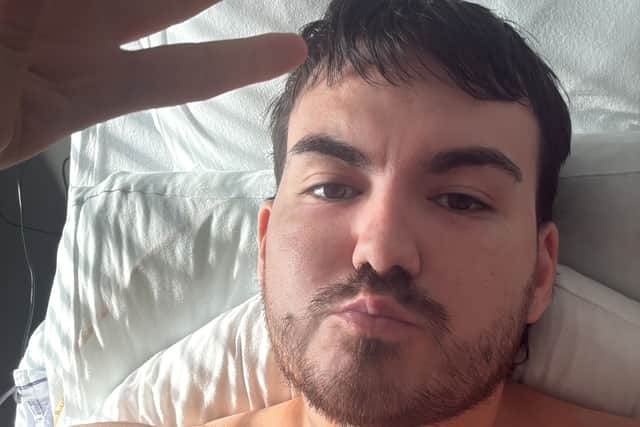
He added: “My gums were swollen, so I thought it was a problem with my wisdom teeth, and I was getting temperatures and a fever.
“I was getting so run down, I was sleeping during the day, having to take time off work.
“My appetite went and I was waking up during the night like soaking in sweat.”
After around 10 days of experiencing these symptoms, in May he also noticed raised lumps on his legs, which subsequently became bruised.
He said Catherine urged him to see his GP, and he was taken to hospital for tests “straight away”, where doctors raised concerns about his blood count and haematology results.
This immediately “rang bells” for Catherine, who recognised similarities with her own diagnosis.
Kane was then diagnosed with acute myeloid leukaemia (AML) – a rare type of cancer that affects the blood and bone marrow, according to the NHS.
He said: “It just didn’t feel real – after it happened to Catherine, you never think it’s then going to happen to you as well.
“The cancer had taken over my full system – doctors said that’s why I had all those symptoms and lumps on my legs, the cancer basically had nowhere else to go.”
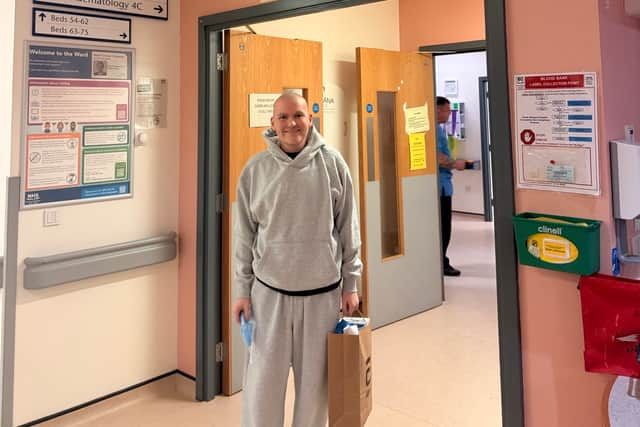
Kane spent almost eight weeks in hospital as doctors worked to get his body into a condition where he could begin treatment.
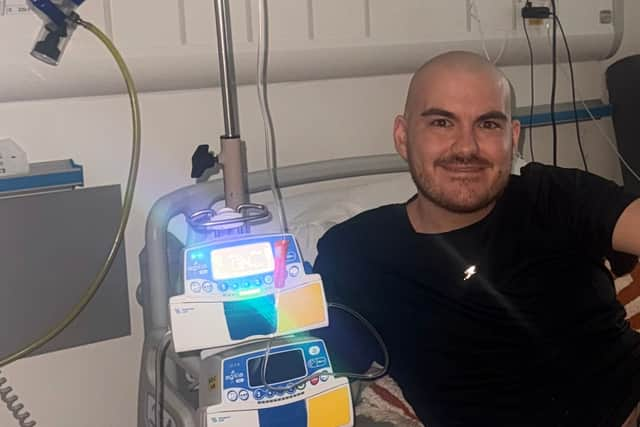
He said he has since undergone three rounds of chemotherapy, with the second putting him into remission in August. His third round was intended to ensure there was no remaining disease.
“It felt like my life had been taken away from me and it was so mentally draining, to have chemotherapy all throughout the summer,” he said.
“It just made me think I don’t know how Cat did it all alone.
“She knows exactly how I’m feeling and just gets it, she’s my rock.”

He is hoping to undergo a stem cell transplant which doctors believe will give him the best chance of preventing the leukaemia from returning.
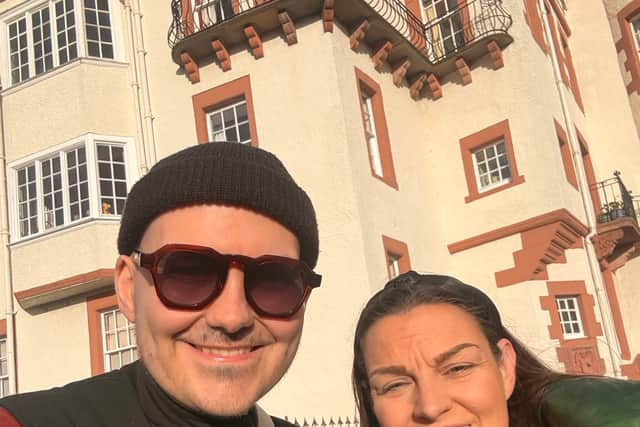
Throughout his treatment, Kane said Catherine had been by his side, moving back to Glasgow to stay with him and support him.
He has also received support from Leukaemia Care, a UK-based blood cancer charity, through counselling sessions.
“They’ve been amazing, and I got a grant from them and I’ve used it to buy new clothes as nothing fits me any more after losing so much weight,” he said.

Looking ahead, the siblings said their experiences had made them “appreciate” one another even more.
Catherine has also raised £15,000 for various charities, including Cancer Research UK and Bright Red.
To find out more about Leukaemia Care, visit: leukaemiacare.org.uk.