
Kildare data centre plan shows 'shocking disregard' for local people

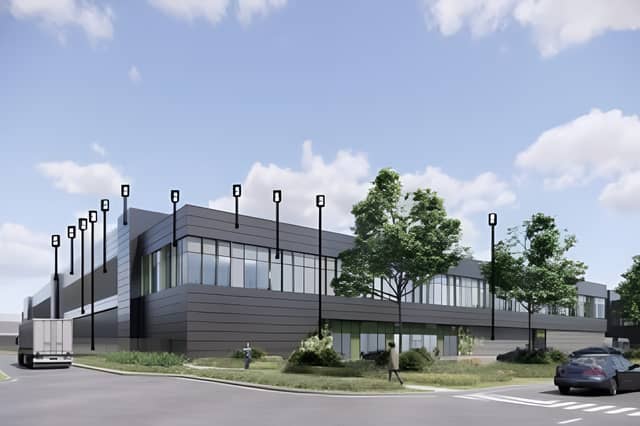

Kildare County Council gave permission - but it’s been appealed to An Coimisiún Pleanála
Plans for a €3 billion data centre on the outskirts of Naas show a “shocking disregard for ordinary people.”
That’s according to residents of the Newhall area who live in the shadow of the proposed development. Kildare County Council has already approved the proposal (in August 2025) but the issue has been appealed to An Coimisiún Pleanála, formerly An Bord Pleanála, with a decision due early next year.
They take issue with some comments made by Herbata representative Gerry Prendergast’s in the Leinster Leader, claiming he dismissed their concerns by saying that the residents did not fully understand what was happening and they dispute any suggestion that the project will have no impact on them.
Mr Prendergast was associated with the development of the 340 acre Millennium Park in Naas at a cost of €312m in 2006. By 2010 the value of Millennium Park had dropped to less than €40m. and was eventually bought by Tetrarch, a development company managed by Michael McElligott. Herbata Ltd is based at Millenium Park.
The residents say they are not reassured by the fact that this is “the first of its kind in Europe.”
“We are opposed to the prospect of six 19 metre towers looming over family homes and the fact that this is largely untried technology is alarming. “We are worried about the impact of the data centre on local water and energy supplies and the threat of pollution and the often reported incessant noise,” said Tom Hartnett, who lives nearby.
“The foulwater for the entire development will travel to the L2030 skirting the perimeter of our home but the land it travels through is not even zoned. We have never been consulted or reassured about these huge changes to where we live,” said a local resident.
“The data centre will be less than half of a kilometre from our house but we have to find out what is going on through the news.” Locals are dissatisfied with the failure to consult them at any stage in the process.
Other residents have voiced concerns that it will dramatically alter the rural landscape and place significant pressure on local infrastructure.
They argue that the scale of the project is incompatible with the rural setting and will result in the loss of long established farmland, hedgerows and wildlife habitats
They say one planning decision could lead to a complete transformation, wiping out any resemblance of what was, for centuries, an animal farm with biodiverse habitat.
They predict the demise of fertile natural pastureland along with mature trees and long established hedge lines.
They point to the existence of a “highly sensitive archaeological landscape” on the site - a Bronze Age enclosure.
They say they are not reassured by a proposal to structure the car park around the archaeological site because the construction of six data centres will surely take its toll.”
They also repeated fears about pressure on the electricity grid, citing warnings from the Commission for the Regulation of Utilities and EirGrid regarding “the impact of data centre demand on Ireland’s already tight energy supply.”
The project proposes onsite gas turbines and engines, requiring a new high pressure gas pipeline.
Residents say this raises questions about emissions, noise and Ireland’s reliance on imported gas.
Water usage is another major concern and research referenced by residents notes that an average data centre can use up to 500,000 litres of water per day, rising to five million litres during heatwaves. The site borders the Bluebell stream, which flows into the River Liffey, prompting fears of potential impacts on water quality and fish populations.
With construction expected to last almost nine years, residents warn of sustained pressure on the local road network, already strained by existing developments.
Noise from construction, turbines and 24 hour operations is also highlighted as a significant issue.
“Instead of being dismissed, residents would like their concerns for their homes, their health and safety, the environment and local heritage to be acknowledged.”
They contend this is not a sustainable decision that benefits Naas.
And while Herbata may create 225 jobs it “will cause irreparable damage to our local environment.”
They say these developments are not short term but their impact is permanent.
“The developers will not be around when these monstrous toxic pillars have to be decommissioned but our children may still be here and it’s grossly unfair to leave such an unnatural legacy for them to clean.”
They want “full transparency, proper engagement and a planning decision that protects the environment and the community.”
They add: “At a time when most developed countries are pausing or moving away from data centres, we hope that a considered decision that respects locals and our environment will be forthcoming.”