
Why non-abv sparkling wine is leading the non-alcoholic conversation
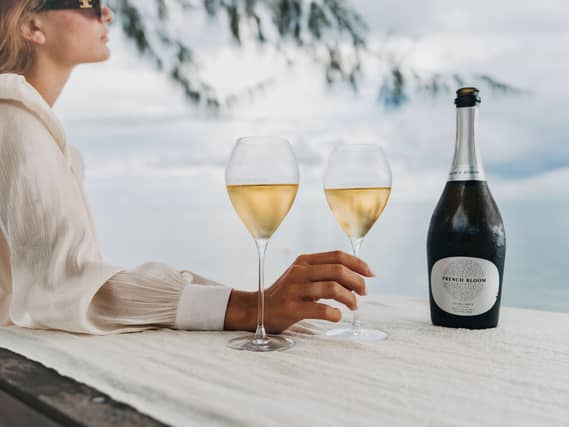

With mindful drinking now mainstream, popping the corks on a zero-proof bottle of bubbly has never been so celebratory, says Sam Wylie-Harris.
Sometimes it takes a movement such as Sober October to explore beyond the benefits of sobriety and the wellness angle, to realise the lines between a drinker or non-drinker are blurring.
More people are leaning into mindful drinking when they’re socialising, embracing moderation, zebra striping (alternating between alcoholic and non-alcoholic drinks), and drinking less but better.
“I think we’re seeing a fundamental shift in the way people drink – it’s much less binary than it used to be,” highlights Maggie Frerejean-Taittinger, co-founder of French Bloom, 0.0% alcohol French sparkling, and a former executive with the Michelin Guide.
“When we started developing French Bloom in 2019, I was pregnant with twins and working at the Michelin Guide. I believed it was going to be for the pregnant woman, for the sober community, for the religious market.
“And we realise now, seven years later and five years since French Bloom launched, that it’s not necessarily you’re a drinker or you’re a non-drinker.
“We seeing that you might have a glass of champagne in the evening and then switch to a glass of non-alcoholic… we call them flexi-drinkers,” says Frerejean-Taittinger.
So why does this translate so specifically to alcohol-free sparkling wine?
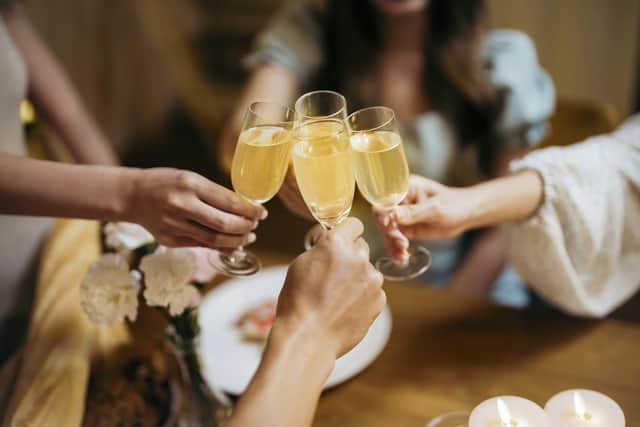
“I know, because it’s a lived experience – sparkling wine tends to be so much about the social ritual, and there’s this whole emotional element around it.
“When you open the bottle, the sound of the cork, pouring it into a beautiful glass, the bubbles, raising a toast together. Sparkling wine’s always been so much more about what’s inside the glass.
“But also, as I said earlier, there’s also this social ritual around it and people become very conscious if they’re a part of that moment.”
However, Frerejean-Taittinger says “when I was pregnant, I felt like I was a little bit on the sidelines. I wasn’t fully part of the culinary experience, the wedding, or the holiday with my friends.
“I felt like I was excluded. And I missed this beautiful experience. So, at least for us at French Bloom, we wanted someone who was choosing alcohol-free to feel like they could participate exactly in the same ritual as everyone else,” she explains.
Nowadays, the former Michelin Guide executive highlights how you can reach that audience, or those moments. “There’s such an opportunity, and incremental value for a restaurant or hotel.
“Maybe your customer orders that first glass of champagne but when the server comes back and says ‘Would you like a second glass, what can I get you?
“And they say ‘No we’re okay,’ there’s this big missed opportunity to continue this beautiful experience. I think moderation is really driving that… people don’t necessarily want five glasses of alcoholic wine during a five-course meal at lunch on a Tuesday.
“So here’s an opportunity for a sommelier team to maybe have two glasses of wine in that pairing, but have other non-alcoholic products like sparkling wine,” suggests Frerejean-Taittinger.
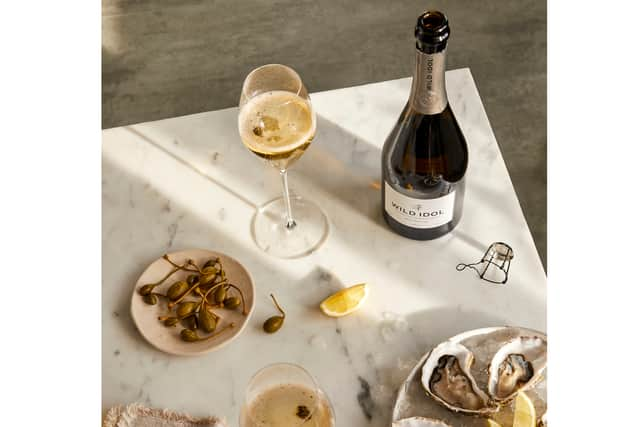
Tellingly, you’ve only got to cast your eye over a wine list in a fashionable watering hole, or Michelin-starred venue to note how the hospitality industry is expanding its premium non-alcoholic sparkling wine offerings.
Another another reason she says sparkling wine was so important for her in terms of developing their idea was that “I drank beer for the first time when I was pregnant. It was non-alcoholic beer but I’ve never been a beer drinker.
“I’ve always been a fan of sparkling wine, and what the IWSR [International Wine and Spirits Record] showed us recently is non-alcoholic purchases tend to be a direct substitute for your favourite alcoholic beverage.
“So this is why the UK, the USA and France are our biggest markets because they’re huge champagne and sparkling wine markets.”
Plus, Frerejean-Taittinger emphasises how non-alcoholic sparkling wine has transformed and evolved. Referencing how beer has been at the forefront and driving the non-alcoholic movement for the past 15 years, she says “non-alcoholic beer 10 years ago was almost undrinkable.
“Today, you’re at that level where it’s as good or very close. And five years ago, we were just at the beginning of that trajectory in the sparkling wine space. I think we’re approaching it today.
“Our ambition is very simple. We don’t want someone to say this is really good for alcohol-free wine. We want them to say this is delicious. And we’ve been in a constant quest for improvement.
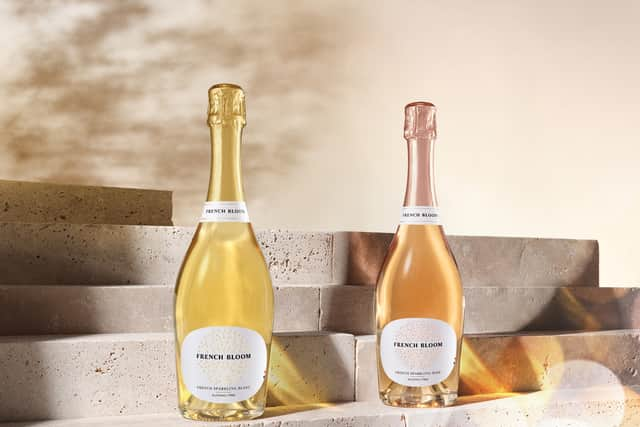
“And we’re on our 10th version of our Le Blanc, which was our first cuvée. Our 11th version of the Le Rosé. We are not stopping. After five years, we’re continuing to try to push the possibilities.”
And the future is looking rosy. Frerejean-Taittinger says they’re continuing to push the boundaries, highlighting how the quality of the liquid has to be there, “and of course it starts with the wine. We create base wines, always knowing we will eventually de-alcoholise.”
In summary, she says mistakes arise (even for them at the beginning) when you take a wine that’s blended and made to be with alcohol and then you remove the alcohol. “You have to go back and add sugar to cover that error.
“So what we started to do was completely rethink… choose our terroirs, grow our vines, harvest at a particular time, and age the wines differently – always knowing that we’re going to de-alcoholise.”
“We start with a very exaggerated base wine, almost undrinkable. Because when you de-alcoholise wine you lose about 60% of the aromas. So we need to overexaggerate because after we de-alcoholise, you’re essentially rebalanced and you don’t have to go back and make up what you lost,” she explains.
“So yes, there have been incredible innovations that French Bloom has integrated, but also the industry in general. Dealcoholisation is something people typically talk about first; for us it’s the last 5%,” adding how the dealcoholisation process has also improved.
The key ingredient, their grapes – organic chardonnay and pinot noir – hail from Limoux in the Languedoc, “the birthplace of sparkling wine, which is quite lovely in terms of storytelling,” notes Frerejean-Taittinger.
“Here we’re coming full circle. Sparkling wine was first created in Limoux about 100 years before champagne, and we believe with the development of our own domaine, our own vines, we’re helping craft this story for the future of sparkling wine.”
She continues. “Taking a step back, we’ve talked about the quality, but the ambition is to be a top 10 sparkling wine brand worldwide… the fact we’re non-alcoholic is secondary. So we want to transcend the non-alcoholic category.
“We’re not anti-alcohol… we know wine and sparkling wine with alcohol will exist for the next thousand years – and thank goodness for that because we still drink alcohol.”
But she says what they, the industry as a whole, and their customers represent is what they think is the future. And even with the buzz around zero-proof bubbles, “we’re still at the beginning of the line in this category.
“It’s moving fast and it’s not going anywhere. It’s not a trend, it’s a shift in consumption, it’s about choice.
“People are drinking better quality and just a little bit less. And when they’re not drinking alcohol, they still want to be free to choose what’s in their glass and maintain that experience,” she says confidently.