
Consultant cardiologist explores issues at the heart of the health crisis in the Mid-West
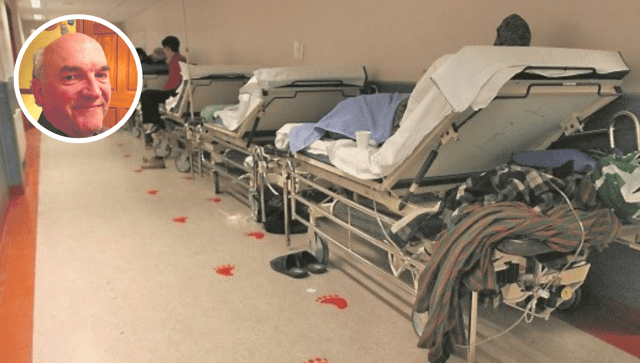

Overcrowded emergency departments (EDs) result in adverse consequences for both patients and staff. A Royal College of Emergency Physicians UK report in 2021 states that overcrowding leads to an increase in misdiagnoses and medical errors.
It estimates that if 67 patients stay 8 to 12 hours in an ED department, one patient will experience avoidable harm. This and other international reports indicate that patient mortality rises with overcrowding.
Sixteen-year-old Aoife Johnston died as a result of meningitis and sepsis at UHL in December 2022 and is reported to have been in the ED for 12 to 16 hours before appropriate treatment.
The Royal College and other international bodies have elucidated the causes of overcrowding in ED departments some of the more important ones include the following.
First, and the most important, is inadequate hospital bed capacity. In 2021, an ESRI report stated that Ireland had the lowest number of inpatient beds per capita in the OECD and Europe.
A 2008 HSE expert report on hospital services in the Limerick region by Horwarth Consulting and Teamwork Management Services advised that UHL would need 676 acute inpatient beds based on population trends that have since been exceeded and also recommended closure of the ED departments at Ennis and Nenagh.
In a HIQA report published in June 2022 following an unannounced inspection of UHL in March of that year, the number of beds at the hospital in 2020 was just 432, 244 short of that recommended.
98 beds were nonetheless added in late 2020 and early 2021 but this still meant the hospital was 147 beds short of that recommended 15 years earlier. More recently, a Deloitte report in September 2022 says the hospital will need an extra 302 beds by 2036.
In May 2023, the Minister for Health announced the accelerated delivery of a further 96 beds, a tacit acknowledgement of the failure by those ultimately responsible for our hospital system, our elected politicians, to resource and ensure the HSE rapidly implemented the recommendations made 15 years previously.
Second, high-bed occupancy rates are associated with overcrowding and hospital bed occupancy rates above 85% are associated with increased risk to patient safety and occupancy rates of 100% have been associated with increased mortality in Denmark.
UHL had occupancy rates of 109% in early 2023 and 105% in 2022 according to Deloitte.
Third, is closure of ED departments in a specific health region.
Those at Ennis and Nenagh were closed in April 2009 on the basis of the recommendations in the 2008 expert report, a decision that has exacerbated overcrowding at UHL.
The impact of overcrowding on ED staff is very significant. ED staff working in such conditions suffer moral distress, a psychological state manifested by unease resulting from professionals’ inability to provide the most appropriate care because they are constrained from doing so by the overcrowded departments.
Over a period of time, this may give rise to moral injury that leads to impaired function or longer-term psychological harm.
Some suffer burnout, a condition giving rise to depersonalisation, cynical or negative attitudes, emotional exhaustion, a feeling of decreased personal achievement and a lack of empathy for patients.
In addition, overcrowding leads to increased turnover of staff and is a major reason for staff reductions in emergency departments.
Both conditions were found in the HSE systems analysis report into the death of Aoife provided to Mr Bernard Gloster, CEO of the HSE in December 2023, on foot of which the CEO requested an independent investigation by Mr Frank Clarke, former Chief Justice into the circumstances surrounding Aoife’s death.
Both Mr Gloster and the Minister for Health have expressed a desire to have accountability and justice for the family which indeed the family should receive.
A few comments arise regarding the CEO’s request for such an inquiry. First, according to the HSE’s comprehensive 116-page guidance on incident management and systems analysis in October 2020, all factors that give rise to an error in the care of a patient are assessed, including active failures on behalf of individuals but also system factors, referred to as latent conditions such as overcrowding which contribute to active failures.
It states, if latent conditions are not dealt with then preventing future errors will not be satisfactorily achieved. These recommendations are similar to international guidance from the Institute of Medicine in the US in 2000.
Secondly, the systems analysis report which triggered the independent investigation will have identified individuals responsible for Aoife’s care and allowed discovery of system weaknesses that may have contributed to her death.
The guidance is so comprehensive that a question as to the necessity for the inquiry arises. Third, the terms of reference include the possibility that the evidence gathered during the inquiry can be used in legal claims, which might suggest a focus for the inquiry on individual accountability and not on system failures as recommended by national and international reports on healthcare safety.
In these circumstances, one may well ask who is responsible for the overcrowding at UHL given the delays in the much-needed beds?
Will the HSE, government departments and politicians in Leinster House be held in part accountable for this state of affairs? The Taoiseach’s enquiry in 2022 as to whether Aoife’s death was preventable may be in the affirmative if UHL's ED had not been overcrowded.
One sincerely hopes that Aoife’s family will receive accountability and justice from this inquiry into the tragic death of their loved one.
It is hoped that the inquiry may also in some way hold our politicians, government departments and the HSE accountable for the inadequate infrastructure in UHL and indeed make reference in general to the less than ideal infrastructural state of our public hospitals and their ED departments.
Dr John Barton is a consultant cardiologist based in Galway