
Limerick author speaks openly about pregnancy loss, infertility and endometriosis in new book


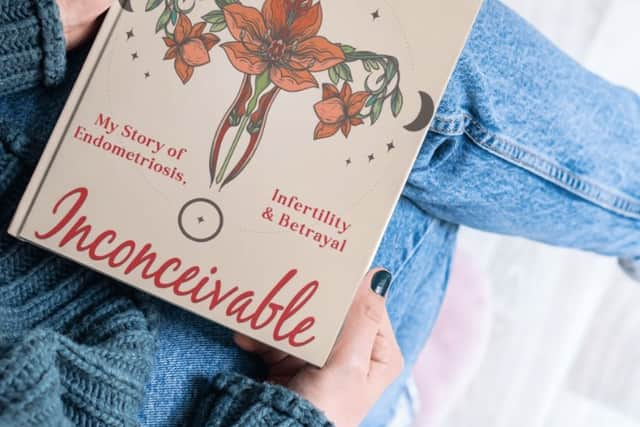
Sinéad Wade's new book "Inconceivable" is being released on May 21, living in Castlegarde, Cappamore, Limerick and originally from Gloucester, the book talks about infertility, pregnancy loss and endometriosis
WHEN you meet “the one”, people start asking when are you getting married, then if you get married, the questions start about when you'll have children and then if you have a child, people ask when that child will get a sibling.
These are not harmless, innocuous questions - they are intrusions on people's private lives and often very intimate, unseen, private struggles with infertility.
Sinéad Wade grew up in Gloucester in the UK and has lived in Limerick for more than 20 years - with a father from Galway and a mother from South Kerry, she always thought of Ireland as home.
“I always had this romantic dream of a stone cottage and now I live in a 300-year-old cottage in Castlegarde near Cappamore.”
From a young age, Sinéad, like many young women, suffered from painful periods and was told by more than one health professional that it is just part of life, that has to be accepted.
We now know that this is not the case and Dr Mary Ryan has run a very effective campaign about how young girls need to be educated about the potential red flags in their menstrual cycle, which if treated early, could save them from future infertility issues.
Dr Ryan, author of “It's Probably Your Period” stresses that period pain should settle down on day two and three and not last for the entire period, while periods should only last three to five days and anything longer or with debilitating pain should be investigated and treated.
Sinéad said that she remembers her parents once taking her to the emergency department because her periods were causing her so much pain that she was vomiting.
“Now, more and more, we know that painful periods like that are not normal,” Sinéad said.
“Such was my desperate want for a baby that when it wasn't happening immediately, I wanted to know why and was told relax and come back in six months - again, I was told to relax and that I'm only 25,” Sinéad said, adding that she did not get referred to a gynaecologist.
She said that from both male and female doctors, she was getting this narrative that she needed to relax, not overthink things and that pregnancy would just happen - for Sinéad and many others, this was not the case.
“At that point, I was 27, I didn't know any better and none of my friends were going through this.”
She had two laparoscopic surgeries - one included a D&C, often performed after a pregnancy loss to ensure the prevention of sepsis and also a flushing of her fallopian tubes.
The second surgery changed her life.
It was then that she found out that she had Stage 4 endometriosis which could be treated and was told she would need a surgical expert to help her.
In 2011, she had robotic surgery which lasted 11 hours and revealed adhesions as big as 4cm by 5cm, which had twisted her bowel.
Sinéad recalls one doctor telling her she had “sluggish tubes” and that she definitely did not have endometriosis, which was not true.
Over the course of a gruelling decade, she was put on different drugs, some of which paused the functions of her ovaries and prevented her from getting pregnant, at a time when she so desperately wanted to be a mother.
Herself and her now ex -husband tried IVF and nothing worked.
“I was devastated. I had been under this banner of 'unexplained infertility' and myself and my husband had been giving our embryos names - we did everything by the letter, but my cycles were all skewed.
Sinéad said that while she was willing to do anything and to put her body through anything, her mother and her partner were worried about the toll that all of these efforts were taking on her.
Speaking about how difficult it was to accept that there was no quick fix for her fertility issues, Sinéad said: “Trying to conceive is the one thing for women where there is nothing they can do - that took a toll on me personally. I found myself moving through most days under a cloud.
“The cruelty of infertility is that it is cyclical - you have hope, then you ovulate, convince yourself that you're pregnant and then you are devastated and you do it all again a month later.”
She said that it was a very isolating time and while her ex-husband was a constant support, it took its toll on her marriage and they parted ways in 2014.
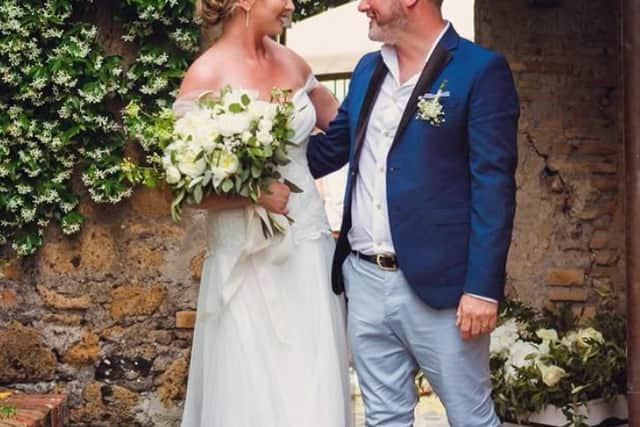
She reconnected with a lifelong friend John and they started a relationship without telling anybody.
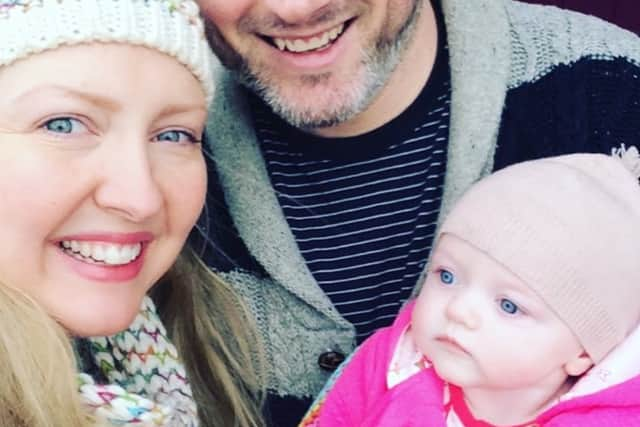
Sinéad suffered three pregnancy losses before getting pregnant with Lucy, who is now 10-years-old.
“At the time, my life was a mess, myself and my ex -husband had separated, I was in rented accommodation, but I had gotten pregnant.
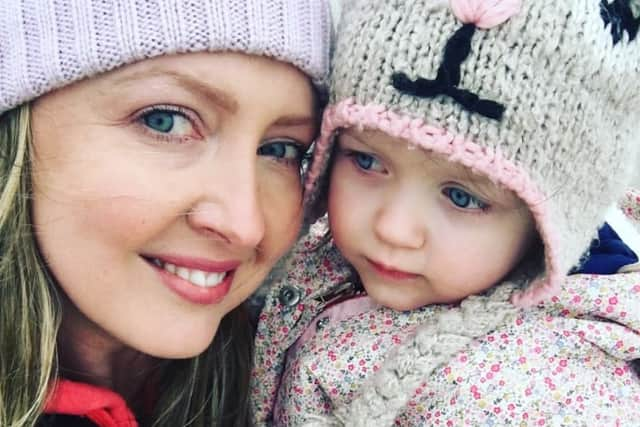
“She's 10 now and even still, every morning when I see her, I get butterflies.
“She is all I ever wanted - I am so glad that I didn't give up.”
While many stories like Sinéad's are often only told after someone has had a baby, and what is seen as overcoming the obstacles, Sinéad is adamant that she would have always written this book regardless of her own outcome.
“I was writing this book back when I was being told I wouldn't get pregnant.
“If I didn't have Lucy, I would have still written this book - as something for the women who did not get their baby and my ending without Lucy was going to be that I am ok.
“I felt that I could be a voice for women and Lucy has grown up knowing how hard it was for me to have a baby,” Sinéad said.
She believes that she was meant to be a mother and she never waned in that belief, no matter how dark and difficult things became.
“I was calling her to me and now we have our little family, my husband John, my stepson Ethan and Lucy - I count my blessings every single day.”
Sinéad also works in advocacy and hopes to share her story through her book as well as by speaking to young teenage girls and boys about what to expect in menstruation and how taking the right steps sooner can prevent problems later on in life.
“We need to normalise talking about reproductive health and tell young girls about the importance of an anti-inflammatory diet and how to keep an eye on symptoms during their periods.
She added: “If you haven't gone through this pain trying to get pregnant or dealing with something like endometriosis, somebody you love has.”
Sinéad's book “Inconceivable” is available for pre-order now and will be published on May 19. For more on Sinéad's story or to book her for a motivational talk, see her website https://sineadwadeinconceivablebackup.showit preview.com/home-2
The book will be launched in O'Mahony's Bookshop in Limerick city on May 21.