
NTA announce 'largest ever' walking and cycling survey for Limerick
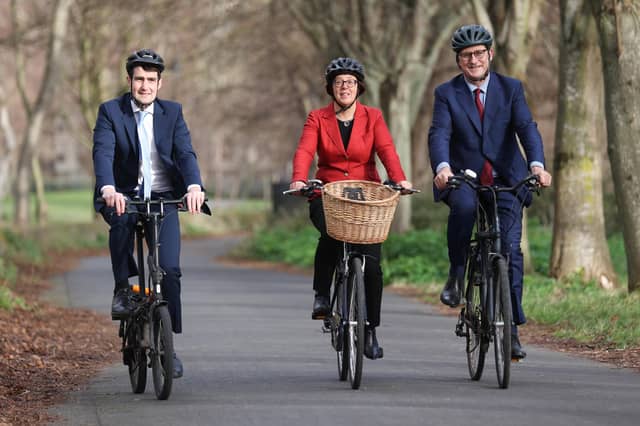

THE FIRST ever survey of walking, wheeling and cycling in the Limerick metropolitan area will be undertaken by the National Transport Authority (NTA).
The NTA was joined by Minister for Transport Eamon Ryan as they committed to undertaking the largest-ever survey of its kind in Ireland.
The Walking and Cycling Index will be expanded into regional Irish cities including Limerick having previously been conducted in the Dublin metropolitan area.
The results will provide high-quality evidence on people’s participation in, and attitudes to walking, wheeling, or cycling - what barriers exist for them and what would help them walk, wheel and cycle more.
This data will inform policy decisions and help support better planning for walking, wheeling and cycling in Limerick, and meet ambitious Climate Action Plan targets. It will be the first time collecting such in-depth data in Limerick.
Eighteen cities/city regions across Ireland and the UK already participate in the Index, including the Dublin metropolitan area.
Approximately 1,100 people in each of the Dublin, Cork, Limerick, Galway and Waterford metropolitan areas, representative of all residents, not just those who walk or cycle, will be surveyed.
Following the survey, individual reports will be prepared and will be published in early 2024 for each of the metropolitan areas.
Minister Ryan welcomed the NTA’s decision to extend the Walking and Cycling Index into Limerick.
“The Index will provide the information we need to put in place the walking, cycling and wheeling infrastructure that people want so that they can have the choice to switch away from cars on some journeys. We have a unique opportunity to use the data and information from the Index to create truly sustainable communities and help reimagine our cities for a net-zero future,” he said.
CEO of the National Transport Authority, Anne Graham believes the roll-out of the survey will provide the NTA with information “needed to plan for the future”.
“By gaining key insights into how people make active travel a part of their daily journey across our cities, we can roll out additional pedestrian and cycling infrastructure that attracts more people to choose walking, cycling, and wheeling,” she said.