
Dumping causes the future of clothes recycling banks in Tipperary to be questioned
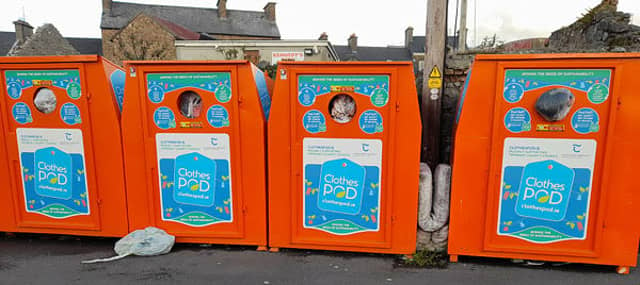

'The onset of fast fashion is causing difficulties'
The future of clothes banks may have to be considered because of the problem caused by dumping at such facilities.
The disposal of old and unwanted clothes may be limited to council recycling sites where staff are present, Denis Holland, senior engineer of Tipperary County Council’s Environment and Climate Action Section, told a meeting of Clonmel Borough District.
He said that textile disposal at clothes banks is a problem nationally, and he agreed that the onset of fast fashion is causing difficulties.
Some people who arrived at the banks and discovered they were full left their unwanted clothes behind them.
Cllr Siobhán Ambrose said that years ago people handed down clothes, but that didn’t happen anymore because clothes were so cheap to buy.Fast fashion had implications and more and more bags of unwanted clothes were being left at clothes banks and this was a dirty habit, she said.
She asked if there was any update following requests to use drones and cctv cameras to deter illegal dumping.
Cllr Ambrose also stated that dog fouling continues to be a huge problem. It was very difficult for parents who had children in buggies and for wheelchair users. She wondered if the council had plans to roll out another awareness initiative, as it had done in Cashel last year.
Cllr John FitzGerald said that clothes pods were a catalyst for bad behaviour. He also stated that some businesses generated “a seismic amount” of recycling products and he wondered if they could be catered for in some way.
Cllr Tom Acheson said that dog fouling is unsavoury and unhealthy, and is a particular problem on the Blueway riverside walkway and cycling track.
Cllr Niall Dennehy asked why had the government reduced subsidies for solar panels, and if Tipperary County Council had plans to instal solar panels on its properties.
The Mayor, Pat English, said there was “big talk” at government level about the availability of grants for septic tanks, but people couldn’t secure them. He said that only one such grant had been issued by the council in the first quarter of the year.
Cllr English noticed that in the household waste survey of 54 houses undertaken by the council, 19 properties were reported as being compliant. He wondered if this meant that 34 properties weren’t compliant.
In reply, Denis Holland said that the installation of solar panels on council property is a matter for the housing section. In the household waste survey, the council worked with people who weren’t compliant, and if necessary the appropriate legal action could be taken.
In order to qualify for a septic tank grant, he said that people must be living in a designated area and have their property inspected by the local authority. It wasn’t a financial issue, because the grants had been increased to €12,000, which was a sizable sum. It was inspection-driven and based on environmental-driven criteria. It wasn’t a case that anyone who had a septic tank on their property was eligible for a grant.
Mr Holland said that there were significant GDPR issues relating to the use of CCTV cameras to deter dumping.
Fergal Condon, administrative officer of the council’s Environment and Climate Action Section, agreed that dog fouling is a major problem. Funding had been made available for an extra dog warden, and they were currently going through the HR process to recruit another dog warden who could raise public awareness and patrol high-profile areas such as the Blueway.