
Tipperary author to launch major new study on the Young Ireland Rising
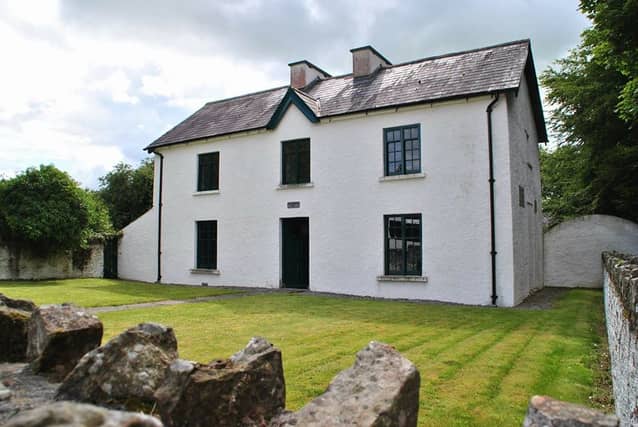

My mother had a saying ‘Long trotting comes to an end,’ and this certainly is true of my journey in the company of the Young Irelanders. I am not certain as to when I first heard of the Warhouse or the Widow McCormack’s house and its significance in Irish history.
Though Michael O’Carroll, principal teacher in Glengoole National School and a stern proponent of Irish Ireland, was our teacher, we never heard of Young Ireland or the Rising at Farranrory on July 29, 1848.
Neither was it on the curricula in Thurles CBS or the History Department in UCD in the late 1960s. I am still trying to work out why this was the case.
The centenary of the Gaelic Athletic Association in 1984 gave a great momentum to local studies in general, and I often encountered James Murray and Paddy Connell of Ballingarry parish, checking newspapers in the National Library. The rising tide of interest in local studies as distinct from national history, led to an upsurge in publications dealing with small intimate places and regions, such as counties. One such publication was Tipperary: history and Society, edited by Thomas McGrath and myself, published in 1985.
The first essay in that book was by Nicholas Mansergh on the local dimension in history. He described how, after reading an article in the Sunday Press by Michael Fitzgerald, a native of Ballingarry, he was inspired to visit the house, and his essay has an evocative
account of that visit.
It may have been that essay which inspired us to establish a local committee to get something done with the Warhouse. The committee, under the chairmanship of Martin Maher, was eventually successful in persuading the Irish government to acquire the Warhouse with some adjoining land and maintain it for posterity in memory of Young Ireland and 1848.
During all of this time through the 1980s, I often wondered why some thirteen well-dressed men -they were all men - strangers to Slievardagh were doing here in July 1848. Who were they, and what brought them to this part of Ireland?
Answering these questions is what I have tried to do in the first volume of my study entitled ‘Remember ’48: Young Ireland and the Rising’. I have brought the Young Irelanders from the cradle to the grave and identified all the locals who participated in and paid a price for having marched with William Smith O’Brien’s revolutionary army.
Though dismissed as a military farce by many historians, I do not see it that way, and I have tried to establish why so many locals, from Ballingarry, Mullinahone, Killenaule and The Commons, rallied to O’Brien’s standard. Volume one ends with the arrests of the Young Irelanders and members of their army throughout Ireland. It has over one hundred illustrations many of them never previously published.
Appendices identify the foot soldiers from Slievardagh and Tipperary and give them their place in history’s pages. Tipperary notables who are part of the cast include Michael Doheny, John O’Leary and Charles J. Kickham. John O’Mahony and Fr. John Kenyon, migrants to the county, are also on
stage.
Initially, I had intended to finish the study with the State Trials in Clonmel and the exile voluntary, of those who successfully escaped and involuntary, of those who were arrested. But it seemed to me that ’48 changed the lives of those involved forever, and the second volume, ‘Remember ’48: Young Irelanders beyond the Rising’, deals with the Young Irelanders after ’48.
It brought me to places beyond Ballingarry and to the new worlds of Australia (mainly the island of Tasmania, and the State of Victoria where Charles Gavan Duffy was premier in 1871), Canada, and the United States of America (to the killing fields of Antietam, Fredericksburg and Gettysburg).
John Kavanagh, who was wounded at the Widow McCormack's house, was killed at the battle of Antietam, where he fought with the Irish Brigade under the command of Thomas Francis Meagher.
I moved from the local to the global, but I still kept an eye on Ireland. I traced the careers of the ’48 men who never renounced physical force as a means of separating Ireland from the United Kingdom, Doheny, Kickham, O’Leary and O’Mahony are among those who espoused constitutional politics for the rest of their days.
Fenians and Fenianism spanned the Atlantic giving Irish politics a new
orientation. It was a complex movement and was ruthlessly put down. So much talent was lost to Ireland, and the question remains could things have been handled differently?
I describe the importance of funeral demonstrations, for example, those of Terence Bellew MacManus, Charles Joseph Kickham and John O’Mahony, in maintaining the memories of Young Ireland and the Fenians. There was also mass commemoration in 1898, but Young Ireland was
eclipsed in these by the emphasis on ’98.
The conclusion of the second volume fittingly brings me back to Ballingarry and the monument at The Commons to the national flag and the Young Irelanders, who met for the last time on this earth, as a coherent political body, in Sullivan’s public house on the evening of Friday July 29, 1848.
The books will be launched at the Famine Warhouse, Ballingarry at 4pm by Dr Thomas Mc Grath on July 29, 2023, the 175th anniversary of the Young Ireland Rising. The 17th annual Famine Walk from the Commons village to the Famine Warhouse, starting at 3pm, will precede the launch.
All are welcome to participate in both events.
The author William Nolan is a native of Ballinastick, Coalbrook, Thurles, county Tipperary and a former Associate Professor of Geography at University College Dublin.