
Tipperary Museum services bring speakers of international repute to Thurles seminar

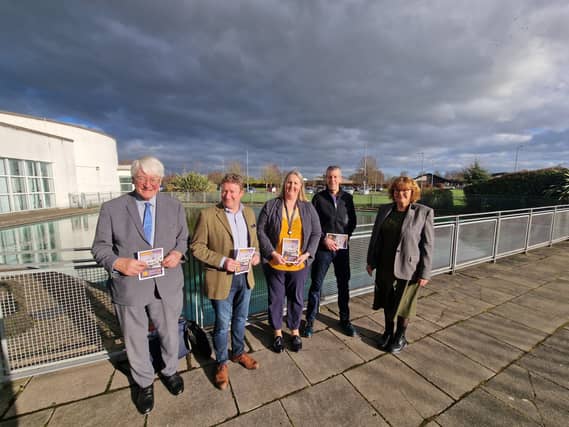

Well-attended one day seminar in Thurles as part of lecture series
On Saturday, January 18, a crowd of 60 people gathered in the TUS Campus, on the Nenagh Road, Thurles for a one-day seminar titled: A Quiet Revolution: The Making of Modern Ireland 1960 -2000.
The seminar was part of the wider lecture series of the same name run by Tipperary Museum’s Education Office annually. Each year an over arching theme is selected and monthly lectures, held between October and April, look at different aspects within the theme.
The one-day seminar in Thurles is a new feature of the series and aims to allow those who cannot make the monthly lectures in Clonmel attend part of the series. The hosting of the event in Thurles also allows for people from further afield to travel to attend.
As with the whole series the seminar aimed to bring speakers of national and international repute to the region.
The first of the days three speakers was Susan McKay, author and journalist. Susan is currently Press Ombudsman for Ireland, the first female to hold this position.
Susan’s lecture was tilted What sort of ladies are we dealing with here? How women transformed Irish journalism.
Susan’s lecture highlighted the difficulties women journalist encountered in the early days of women working in press and television. Susan used first hand accounts of pioneering female journalists such as Nell McCafferty, Olivia O’ Leary, Angela McNamara and June Levine.
The work of Irish Women’s Liberation Movement and the part played by many female journalists in the organisation was illustrated.
The role of the media in topics of concern to women on such programmes as the Late Late Show and the Gay Byrne Radio programme were also illustrated.
The second speaker of the day was Martin Mansergh, former Senator, TD and Government Minister. Martin was instrumental in the Good Friday Agreement negotiations. Martin’s lecture was tilted Achieving a new status – Ireland 1960 -2000
EEC
This lecture focused on the political issues of the period starting with the visit of American President John F. Kennedy to Ireland in 1963. Martin argued that to look at the period one needed to look at developments both before and afterwards.
He highlighted Ireland joining the EEC in 1972 as a key moment in both the political and economic development of the country.
The third and final speaker of the morning session was Diarmaid Ferriter. Diarmaid is Professor of Modern Irish history in UCD. He is well known for his contributions to numerous television and radio programmes and newspaper columns. He is also the author of numerous books.
His lecture Sex and the Archbishop: John Charles McQuaid and social change in 1960s Ireland used the archives of the Archbishop as the basis for the lecture.
Diarmaid informed the audience of the vast scale of the correspondence kept by the Archbishop of the Dublin Diocese during his tenure. The availability of such material allows historians to get a comprehensive picture of the individual, his personal evolution and wider societal themes.
While known particularly well for his friendship with Eamonn de Valera in the early days and his opposition to Health Minister Noel Browne’s Mother and Child scheme, the archives show the extent of his involvement in the many other social, moral, educational and religious affairs of the time and illustrate a very complex character.
After a lunch of soup, sandwiches and cakes the audience returned for the afternoon session.
Pat Leahy, political editor of The Irish Times, led questions to the speakers based on what they had said in the morning lectures, looking for clarification or expansion of many points.
The questions and comments from the audience demonstrated their knowledge of and interest in the subject but also the many experiences, both personally and professionally with the topics under discussion. Recurring themes of Education, employment, media and religion arose.
These will be the topics discussed at the remaining lectures in the series.