
'You will be ok. You have MS, it does not have you': Tipperary woman speaks ahead of MS Awareness Day
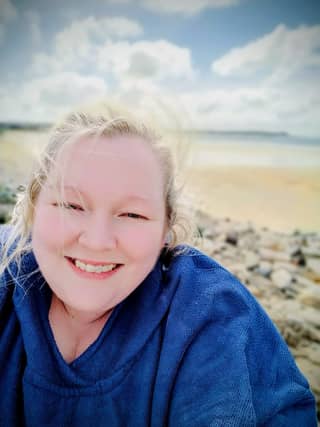

Clonmel lady Stephanie O'Brien is the 2026 Tipperary World MS Day Ambassador
For Stephanie O’Brien from Clonmel, World MS Day is an important opportunity to raise awareness of the real impact multiple sclerosis can have on a person’s life, including the effects that are often not immediately visible.
“It raises awareness of a condition that not many people know the true impact of on someone's life that lives with it” says Stephanie, who says that living with MS has brought challenge, change and a new understanding of herself, but it has also been a lesson in resilience.
“Living with MS isn’t easy, but it teaches you resilience and reminds you that while MS is part of your life, it doesn’t define who you are.”
Stephanie is the 2026 Tipperary World MS Day Ambassador for 2026. She is also PRO of the South Tipperary MS Ireland branch and is taking part in the 20 Dips in May Challenge as part of her efforts to raise awareness of multiple sclerosis and the realities of living with the condition. World MS Day takes place each year on 30 May and is a global awareness day dedicated to highlighting the experiences of people living with MS.
Stephanie says MS has changed her in many ways, making her more aware of her limits and more compassionate with herself, particularly as she continues to rebuild confidence after cognitive symptoms affected things that had once come naturally. She is also honest about the emotional impact of diagnosis, describing a time when she lost her sense of humour and struggled with anger and hurt.
“MS has made me more aware of my limits and more compassionate with myself. I’m still rebuilding confidence after cognitive symptoms affected things that once came naturally, and for a while after my diagnosis I lost my sense of humour and struggled with feelings of anger and hurt. It has also meant learning new ways to manage stress and overwhelm in situations I once would have easily shrugged off.”
For someone newly diagnosed, Stephanie’s message is compassionate, reassuring and realistic. She acknowledges the emotional upheaval that can come with diagnosis, while encouraging people to accept support and trust that they will find their way through it.
“You will go through a rollercoaster of emotions and not just once. Let the feelings flow. Take all the supports offered to you and listen to your team.”
“You will be ok. You have MS, it does not have you.”
The support of her local community and branch has been hugely important from the very beginning. Stephanie says she met her local group the day after she was diagnosed, something she now sees as a turning point. Nearly two years on, she is the PR officer for the local branch and values both the friendships and the opportunity to laugh together with people who understand.
“Hugely important. I met the crew the day after I was diagnosed. I think if I didn't go then and get that fear out of the way, I may not have gone and now nearly two years on, I'm the PR officer for the local branch and get to meet with some amazing people and the best thing is meeting up every couple of months with people who know what you are going through and have a good laugh together.”
MS Ireland has also played a major role in her life, providing practical support, access to services and a trusted point of contact when questions arise.
“A massive part. Deirdre Growney, our case worker is amazing. Always there if you need a chat or have questions or just to shoot the breeze. It's really good to have someone who knows the answers to any query relating to MS Ireland supports and anything else related to any MS supports. There are also online physio classes and we have yoga classes provided locally. I haven't had the chance to go yet but to know it's there if I want to is fantastic.”
For Stephanie, being part of the wider MS community means being able to connect with people who truly understand what living with the condition can feel like. She recalls how helpful it was to speak with another woman of a similar age while deciding on treatment, and how that conversation gave her confidence and peace of mind.
“It's great. I was very confused when picking my treatment and Deirdre introduced me to a girl around my own age who had just finished the treatment I was leaning towards. It was amazing. We spent about two hours just chatting about life and she told me about the treatment and how her life was after being diagnosed and finished the treatment and it just put my mind at rest and I have just finished my second year of that treatment. Being able to reach out to people who were in your shoes a couple of years before or even being able to ask questions if you have certain symptoms is amazing. MS isn't my only immune disease but it's the only one that has the accessibility to the supports that MS Ireland provide.”
Looking back, Stephanie says one of the things that surprised her most was not necessarily the need for answers, but how she handled them once she had them. What followed was a process of acceptance and a determination not to let MS consume her.
“My impatience in getting answers wasn't a surprise but I think what surprised me was how I dealt with the answers when I got them and I came to learn that that was acceptance that…ok that's happened, nothing I can do about it now and having the strength to not let it consume you.”
Fatigue remains one of the biggest challenges she faces, especially because it can worsen her cognitive symptoms and leave her feeling frustrated.
“Fatigue is my nemesis. My cognitive issues become worse when I'm exhausted and they really frustrate me. Some days you can laugh at that attempted word that left your mouth but some days you just want to cry and that's ok too.”
To help manage her MS, Stephanie has found her own ways of coping both physically and emotionally. Cold water, breathwork and keeping notes for herself have all become important supports.
“My go-to has always been cold water. My head goes quiet and I have a day without symptoms (probably from being freezing!) I also practice breathwork. Great for when you have a moment of panic. I tried talking therapy but it wasn't for me. Keeping a diary with little notes to yourself to look back on when you're having a bad day.”
One of the achievements she is most proud of is writing a book, something that grew out of an exercise suggested by her therapist. What began as advice written for someone she loved eventually became something much bigger, and helped her reclaim a sense of control.
“I wrote a book. As I said before, talk therapy wasn't for me. My therapist told me to write advice to someone I loved in my situation. So I did and it became a book. I was very proud of that but it was very scary, it was like giving people your diary with sometimes your darkest thoughts in a time of not having control. Writing the notes helped me a lot and I suppose putting the book together gave me back my control.”
Stephanie is also passionate about challenging the misconception that MS is always visible. She wants people to understand that someone may appear perfectly fine on the outside while dealing with significant symptoms that cannot be seen.
“One of the biggest misunderstandings is that MS is always visible. Many people with MS look completely fine on the outside while dealing with fatigue, cognitive issues, nerve pain, dizziness, or sensory problems that others can’t see.”
“It's very frustrating having to explain yourself when people can't physically see your struggle.”
Her message to others living with MS is beautifully simple:
“Be kind to yourself.”
Stephanie’s story is one of honesty, strength and self-discovery. It reflects the unseen challenges of living with MS, but also the support, courage and resilience that can grow through community and connection.