
Almost 19% of commercial units empty in Clonmel
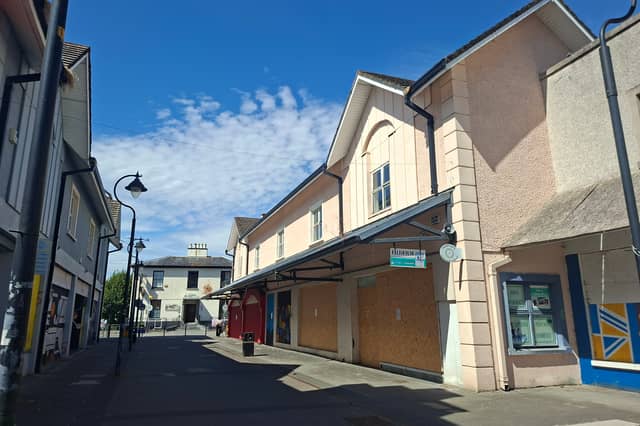

Vacancy levels in Thurles have dropped, while Nenagh enjoys the lowest vacancy rate in the county
The commercial vacancy rate of buildings in Tipperary was on average 14.6% in June this year, on a par with the national average.
It has decreased very slightly from the same time last year, but of the urban areas Clonmel had the highest rate at almost 19%, while Nenagh recorded the lowest at 13.3%.
In welcome news, Thurles saw a relatively sharp decrease in commercial vacancy, dropping from 16.6% in in June 2025 to 14.5% in June 2026.
The majority of these units in each town were categorised as ‘services’; the next highest category of vacant unis were retail or wholesale units, followed by buildings associated with health.
The figures were revealed in the latest GeoDirectory Commercial Vacancy Rates Report.
In its July report, Tipperary County Council reminded members that Commercial Rates remain payable on vacant property, and it is the responsibility of the owner to inform the local authority if the building is vacant, for letting, or closed for refurbishment.
Vacancy relief is applied at a rate of 100% to qualifying buildings where the rates bill is up to 5,000, at 80% where the bill is over that, but less than €10,000, and at 60% where the rates bill exceeds €10,000.
In its pre-budget submission, Tipperary Chamber called for the government to take action in the county, saying that although there had been improvements in Thurles and Clonmel, the “persistently elevated rates across all three towns demonstrate the scale of the challenge”.
"The Living Over the Shop grant, providing up to €140,000 for vacant upper-floor residential conversion, is a welcome initiative but its current scope limits impact in Tipperary’s town centres.
Many vacant and underused ground-floor commercial units and derelict shop fronts require investment that does not neatly qualify under existing schemes”.
"In addition, the €140,000 Living Over the Shop grant itself should be extended to include companies alongside individuals and sole traders. Many town centre buildings require professional, company-led refurbishment capacity to deliver viable conversion at scale. Expanding eligibility would increase delivery, support local contractors and convert more vacancy into housing”.