
Focus on labour efficiency at Ballyvadin Beef Farm in Tipperary


443 calves were purchased over a six-week period, with a single intake day per week.
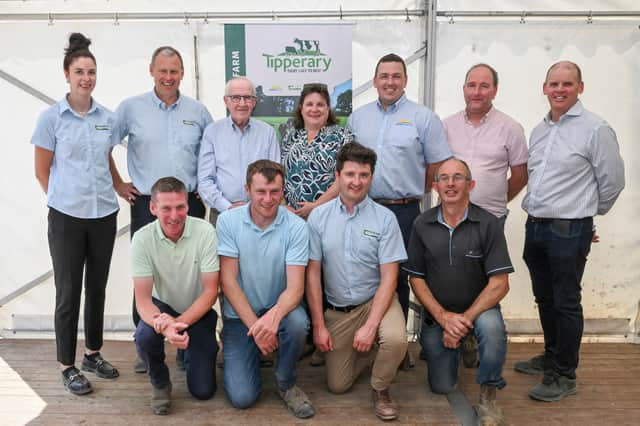
The Tipperary Dairy Beef Demonstration Farm at Fethard opened its gates to over a thousand farmers for an open day on Wednesday last week, 22 July.
Ballyvadin Beef Farm was established in 2022 to demonstrate best practice technologies and management for dairy calf-to-beef production. Operating as a “fully transparent commercial enterprise, the farm provides farmers with real-world financial and technical performance data to support decision-making” say Teagasc.
Following a 25-hectare expansion in 2025, the farm now spans 134 hectares, including 113 hectares of pasture dedicated to dairy-beef production. Despite its scale, the enterprise is managed with the equivalent of just 1.5 full-time staff members, reflecting its strong focus on labour efficiency.
The farm delivered €1,620 per hectare net profit in 2025, while generating a return on labour of €74 per hour worked. These results were driven by improved animal performance, efficient grassland management and strong beef prices.
Strong weight gain is achieved through good grassland management, including a planned reseeding programme incorporating clover, and a soil fertility programme driven by soil testing results.
Speaking at the Open Day, Chloe Millar of Teagasc emphasised the importance of maximising the number of days cattle are at grass to keep costs low.
Keeping good grass and silage quality in front of stock has helped to reduce the age at finishing.
Farm manager Jack Spillane spoke about labour efficiency on the farm, saying that 443 calves were purchased over a six-week period, with a single intake day per week. Calves arrive at a minimum weight of 42 kilos at 21 days of age and have received an initial pneumonia vaccination on the birth farm.
A simple teat feeder system is used and calves are weaned when they reach 85 to 90 kilos. Cattle are kept in large groups to minimise the number of grazing groups.
There was a lot of interest in the farm’s contract calf supply model. Nine spring-calving dairy farms provide a consistent supply of healthy, genotyped calves with high Commercial Beef Value (CBV) genetics.
The price paid for the calves is based on weight, sex and CBV.
Mathew Murphy from Dawn Meats spoke about the finishing strategy on the farm and how the profile of the calves is designed to suit the finishing facilities available on the farm.
This means 60 per cent early maturing breeds, said Matthew, and 40% late maturing breeds. He also emphasised the strategic use of concentrates at the finishing stage to minimise cost. Heifers and steers required 300 and 440 kilograms of finishing concentrate respectively.