
Jury hears of injuries sustained by Tipperary grandmother Josephine Ray


Jury hears evidence from State Pathologist who carried out post mortem examination
The jury in the murder trial of Hassan Ali Gori has heard that almost 40 injuries were identified on the body of Nenagh grandmother Josephine ‘Josie’ Ray during a post mortem examination.
State Pathologist, Yvonne McCartney and Forensic Scientist, Dr Stephen Clifford gave evidence this Wednesday in the trial which is being heard before the Central Criminal Court, sitting in Limerick.
The accused man, who is originally from Chad, has pleaded not guilty to murdering the 89-year-old at her home in Nenagh in August 2024.
On Tuesday, the jury heard from two Community Liaison Officers working for Tipperary County Council and it was revealed how Mr Ali Gori was residing illegally at St Joseph’s Park in Nenagh.
One of the Community Liaison Officers, Seamus O’Brien, told the jury that he had visited St Joseph’s Park, in April 2024, to speak with Josephine Ray, who, along with her daughter Mary Ray was named on the tenancy agreement.
Recounting his visit to the home he said: “I felt she was nervous speaking to me.”
A letter was subsequently sent to Ms Ray by the council addressing allegations of anti-social behaviour and unauthorised tenants.
Mr O'Brien stated how such incidents are “a breach of tenancy agreement”.
Majella Madigan, who also worked as a community liaison officer for the local authority, explained how she advised relatives living nearby in St Joseph’s Park, who had raised concerns about the occupants of 91 St Joseph’s Park, to get Ms Ray to seek a barring order against the two illegal tenants.
The family noted how it was unlikely she would seek a barring order herself, adding how “she wasn’t strong enough”.
The jury has also heard evidence from Garda Aoife Shine, who attended the scene of a domestic disturbance at 91 St Joseph’s Park on the evening of August 3, 2024.
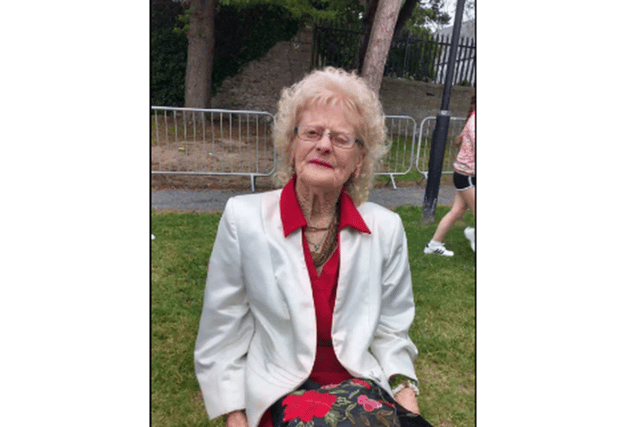
Garda Shine who was accompanied by her colleague, Garda Keith Fitzgerald, stated that Mary Ray was “upset” as she believed her partner, Mr Ali Gori was looking at and talking to prostitutes on his phone.
Garda Shine mentioned how Mr Ali Gori, seemed “frustrated” and “annoyed”. She described the incident as “verbal in nature” and told the court how all they could do in the situation was offer advice.
Garda Shine advised Mr Ali Gori and Mary Ray to take some time apart.
In an audio clip which was played to the court, Garda Shine can be heard saying “ye need to be mindful of your neighbours” and you “need to keep the noise down”.
State Pathologist, Yvonne McCartney and Forensic Scientist, Dr Stephen Clifford both gave evidence this Wednesday.
Dr McCartney said she identified approximately 40 injuries on Ms Ray’s body during a post mortem examination. These injuries included numerous areas of bruising on the body of the victim.
The State Pathologist said a range of samples were taken during the post mortem., including oral swabs, wet and dry swabs from underneath the fingers on both the left and right hand, as well as blood and urine samples.
The collected swabs and some items of clothing and jewellery belonging to the victim were given to an Garda Síochana to be sent for testing.
Dr McCartney, who was led through her evidence by Senior Counsel Lorcan Connolly, concluded by stating how it is in her opinion that external compression of the neck, "strangulation” and “smothering” were the cause of Ms Ray’s death. She noted there were “no other contributing factors”.
Separately, Dr Clifford, who is employed by Forensic Science Ireland, explained how pieces of jewellery, left hand swabs, right hand swabs, a single piece of hair, two pillow cases and FTA cards containing samples of DNA of Josephine Ray, Mary Ray and Mr Hassan Ali Gori were submitted by an Gardaí for forensic analysis.
She told the court how male DNA was found in the samples taken from the right hand of Ms Ray.
The forensic scientist then estimated how it is 28,500 times more likely that the DNA came from the accused rather than another unidentified person.
When questioned by defence counsel, Dr Clifford noted how as Mr Ali Gori lived in the same home as the victim, the finding of Mr Ali Gori’s DNA may not be "significant".
The trial continues before Mr Justice Seán Gillane.