
May of many colours at Cabragh Wetlands
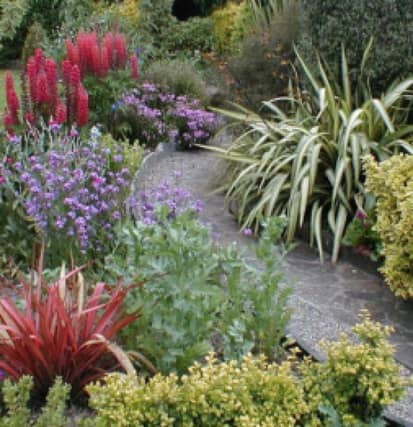

Town gardens are a kaleidoscope of colour, bluebells and wisteria, cherries and apple blossom, whitebeam and maple, rhododendron and camelia, heather and furze, willow and maple-dazzling colour that lifts the heart and tells of better days to come.
Bealtaine, May Day, has been, and is, a special day for people across the world.
Whether it’s the great military parades, the great marches remembering the workers of the world, the traditions of dancing around the Maypole or the piseogs and superstitions of skimming the well or placing eggs in the neighbour’s field, its primeval connection must be related to the great flaring and emergence of nature across every natural habitat in the land.
Town gardens are a kaleidoscope of colour, bluebells and wisteria, cherries and apple blossom, whitebeam and maple, rhododendron and camelia, heather and furze, willow and maple-dazzling colour that lifts the heart and tells of better days to come.
This year it coincides with the announcement that the country will soon open up and that we can once again tuck into nature’s visual feast. Tipperary landscape experts, John G O Dwyer and Roz Purcell have been outlining the huge possibilities of getting close up and personal with Irish nature in the hills, along the valleys, by the lakes or in the woods - all leading us to appreciate the wonderful country in which we live.
For the moment we cast off our concerns around biodiversity, global warming, extinction and breathe in the early air of a bright May morning and feel all the better for it.
Two trees that gladden my heart are the whitebeam with its delicate pale green leaves that will soon turn to a much darker shade and one of the last to come into leaf but well worth waiting for - the beech. The tree of the planter uses this early summer light to enchant and adorn many a woodland, estate or domestic residence. Set all this to music, i.e. the Dawn Chorus and one has at hand the experience of a lifetime. Yet, two major Irish trees have not come into leaf - the ash and the oak. If the ash opens first ,then we will get plenty of rain i.e. a s oak but if the oak bursts forth before it then the rain will be slight i.e. a splash.
We cannot refer to the oak without remembering the natural tragedy that occurred in the Killarney National Park. The oak has always been the primary tree of the Irish landscape - a position recognized in early Irish poetry and folklore. Ancient broadleaved woodlands had shrunk from covering nearly 100% to 0.2% of the land surface since the Neolithic farmers felled their first tree some 6,000 years ago. Over the centuries, Ireland has become a huge open space. The most widespread and characteristic remnants of these broadleaved forests are dominated by sessile oak of which the Killarney valley contains the largest and most important sessile oak woodlands in Ireland with the native woodlands there extending to about 1.200 hectares.
Mild winters, cool summers, high rainfall and a high percentage humidity provide ideal conditions not only for tree growth but also for liverworts, mosses, ferns and lichens. They are the closest to a tropical rainforest in these northern latitudes. We might like to think that they are descended from early Christian times. Certainly, prior to 1580, they were without impact from man. Then they were heavily exploited up to 1700 for charcoal and bark for the tanning industry. They recovered in the next hundred years but were ruthlessly felled again between 1800 and 1815.
They have since regenerated and now show the characteristics of an ancient woodland and are now thought to be the closest existing fit to the ancient oak forests. Therein lies their uniqueness.
We must wait to see whether the sessile oaks reaching up to 21m with the upper branches forming an interlocking canopy which allows only 20% of the sunlight to reach the forest floor have been damaged beyond repair. Most of the Killarney valley oak woods are below the 200m contour line although Doogarry Wood extends up to 280m. Let’s hope that much of this oakwood, tracing its characteristics back to pre-human Ireland, has survived.
There are very few oaks in Cabragh Wetlands. We have planted a few sessile and pendunculate trees , more for recognition and educational purposes than anything else. However, one of the great woodlands of Tipperary, Killough Hill, forms a green backdrop to Cabragh Wetlands. On the Cabragh side this ash and hazel woodland with an odd mature oak has flourished but we must be ever vigilant of the rapacious nature of the modern aggregate industry to ensure that the “bluebell wood” continues to thrive as an outstanding haven of Irish nature.
Stay safe, hold firm, we are almost there. Don’t risk all we have achieved.
Slan go fóill.