
Survey of Tipperary’s Holy Wells is revealing some great stories and tales
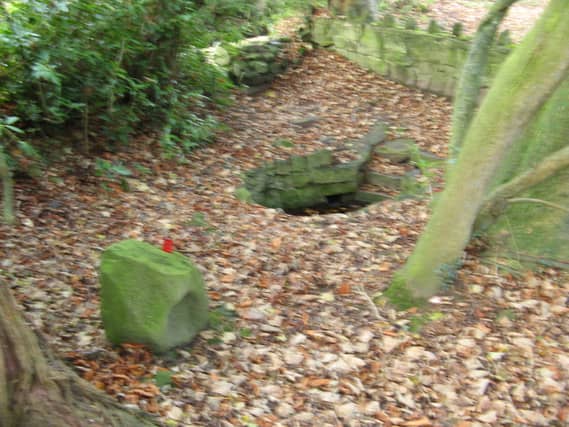

The survey is being carried out by Tipperary County Council. If you have any information about wells in the county, they would love to hear from you.
The Survey of Holy Wells in Tipperary has been underway since the beginning of October byTipperary County Council's Heritage section.
There has been two strands to the survey; research by heritage consultant Derek Ryan into historical references, information and practices on the holy wells in the County and a survey of questions for members of the local community to fill in about their local wells. Both strands have been yielding some great information and so a decision was made to extend the closing date of the survey to allow members of the public more time to submit information on their local well.
Ladyswell Thurles
One example found in the research was of the pattern at Ladyswell in Thurles (Also known by the townland name of Mullauns or sometimes Turtulla) in the Tipperary Star from 1955 (9th April). It records a lecture given on the holy well by Rev. John O’Neill of St. Patrick’s College in Thurles.
He says that the earliest written reference (based on a “strong presumption”) to the pattern at the well dates back to the 1400s and a letter by the Earl of Ormonde. In the letter he extends safe conduct “to all pilgrims who wish to visit Thurles on the feast of the B.V.M., next, following for three days before and after the feast”.
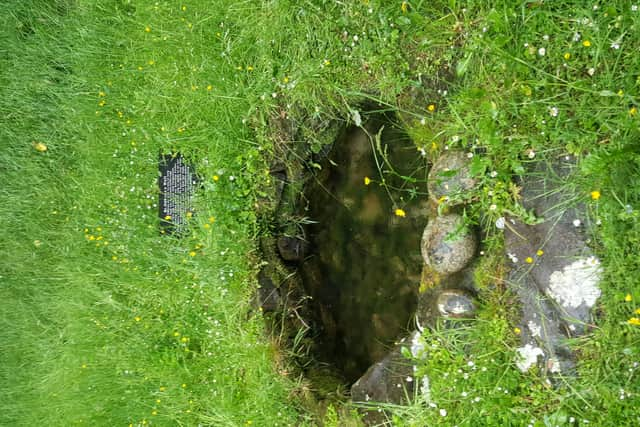
St Odhran's Well, Latteragh
The custom was that men would visit the well in the morning and women in the evening. Unfortunately we know nothing about the prayers said at the well. As far as we can gather there was no set formula of prayers, probably the Rosary was recited and also we do know that Mass was said there at the tree in the left corner of the field.
Also, in later years, the stone which now lies at the entrance was, I am told, struck three times by a small stone or by one’s foot or hand, blessing the Name of the Father, Son and Holy Ghost. Money was placed in the well and rags on a bush nearby”.
The article goes on to detail a cure at the well and also a story about a boy who took money from the well and ended up with sores on his lips!
St Augh's Well Terryglass
Tipperary County Council has also received a number of fantastic responses to the survey from the local community. One example is about St. Augh’s Well in Terryglass, which has a reputation for a cure for eye complaints. The correspondent refers to some of the rounding rituals at the well that they remembered as a child.
“My earliest childhood memories are of the visits to the eyewell during the month of May each year. The tradition was to make the pilgrimage on three Saturdays within the month, however many people attended on all Saturdays within the month. The ritual consisted of beginning on the flag stone facing the rising sun and continued around the well on the remaining four flag stones saying the creed followed by five Our Fathers and five Hail Marys repeated on all the flag stones.
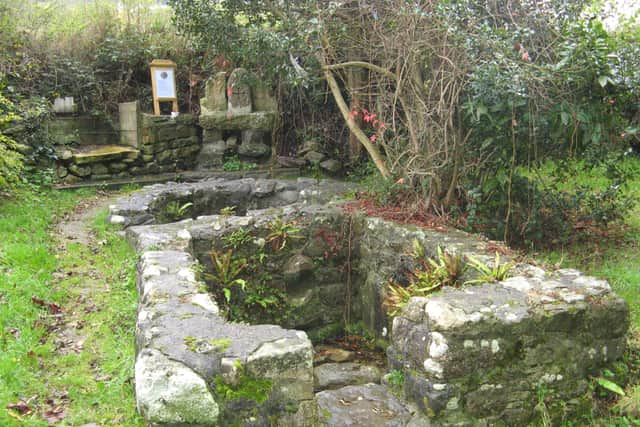
Tobar Iosa, Cahir
“I would attend with my parents and four sisters up until adulthood and immigration. My earliest memories are from the mid sixties upwards until the early 2000s when mostly the older members of the community were still continuing with the tradition.”
Sites and Monuments Records
The main record of holy wells across Ireland are the Sites & Monuments Record (SMR) and the Record of Monuments and Places (RMP). These we have used as the baseline for which holy wells are recorded or not. In total there are 107 holy wells recorded in the County Tipperary. To date the research has uncovered references to at least 15 unrecorded holy wells whose locations we can pinpoint. I will look at five previously unrecorded holy wells to give the reader an idea of what is may still be out there and unrecorded.
Clonamuckoge More
St. Cronan’s Well at Clonamuckoge More near Loughmore is not included in the SMR or RMP. It was recorded in the Schools Manuscripts of the Irish Folklore Commission from the 1930s as follows “…its waters are supposed to cure sore ears.
Those living near still remember people coming and even taking bottles of this water away to cure others. They usually left some offering at the well.” It is still visited by locals today.
Poulacapple West
St. Michael’s Well, not far from Mullinahone, is another holy well not included in the SMR or RMP. Again the Schools Manuscripts records the following about it “It is known as St Michael's Well or Tobairín Donn or Tobar Rí an Domhnaigh. The water is supposed to cure sore hands. The well is walled in and there are bushes growing around it."
We found the above reference to it on duchas.ie (a fantastic resource where all the Schools Manuscripts are stored online) and shared it via my Facebook page “The Tipperary Antiquarian” requesting any information on the well. Mullinahone Heritage & History Group shared the post and Siobhan Dunne was able to pinpoint its location. It was then possible to “see” it using Google Streetview as it is located at the side of a road. Thanks to both Mullinahone Heritage & History Group and Siobhan Dunne for their help.
Town Parks
The information plaque at Clareen Well in Carrick-on-suir says that it is “A source of water supply to the people of the town for centuries”. However Breathnach suggests that is was also a place of pilgrimage in 'History Lore & Legend through the eyes of the Young". On page 21 he records the following "It is said to have been blessed by a Black Friar in the 15th century. Pilgrimages were held there up to 1830." Again this holy well is not included in the SMR or RMP.
Ballincurra
This well, not far from the village of Templederry, was recorded in the Schools Manuscripts on duchas.ie as being a holy well. “There is a holy well in Patrick Lee's field in Ballincara and there is a sgeach bush growing overhead it. This well sprung from a rock and there is a small stream flowing out of it. Sometimes people go there to pray and do rounds and they go to get a cure for sore eyes and several other things.
If a person had sore eyes it is said they would be cured if they bathed them three times in the Holy Well, but it is not specially recommended for the cure of any particular disease. When people are leaving the well they generally leave something near it, such as medals or money.” A local correspondent has confirmed it is still there and we hope to speak to them in due course about any other information they have about it.
Summerhill (Glenkeen Par.)
St. Kieran’s Well. This well is recorded in the SMR as a well but not as a holy well. However folklore in the Schools Manuscripts and a local correspondent have confirmed that it is a holy well.
In the Schools Manuscripts from the 1930’s it is recorded thus “Tobar Ciarain. About a mile outside this town on the road to Templemore there is a holy well. It is said that the water from this well will cure sore eyes. You must bathe your eyes with the water three times before you are cured.
A few years ago this owner of the field tried to change the course of the stream that flows from the well but the well went dry and when he let the stream back on its old course it started to flow again. Anyone who is cured must put some money or a medal in the well. Rags maybe seen on the hawthorn over the well and coins and medals are laying at the bottom of the water.”
It was also recorded in the Irish Tourism Board report on the area in the 1940s saying “it has a reputation for the cure of various eye troubles. The cure is effected by bathing the eyes with the water and praying at the well.”
There are also a large number of possible holy wells that we have references to but no exact locations and we look at another 5 of those below.
The well of the “Good Woman’s Son”
Is given as being located in an area called Boola which may be in the townlands of either Ballynahow or Ballycahill. The Heritage of Holy Cross page 105-106 says "the 'Good Woman's Well or the 'Holy Well' is not given on the 1840 map but is reputed to be the surface well in Hayes's farm at Boola which is close to the little river known locally as the Soolivane. Up to a generation ago people came to the well out of devotion; it is reputed to have special powers for the healing of ailments associated with the eyes or the head in particular."
The well is linked to some wonderful folklore as to how a fragment of the true cross came to Holycross Abbey.
Cloughjordan
There are references to at least two holy wells near Cloughjordan in the Schools Manuscripts but very little locational information. “There is a well below Cloughjordan. It was said that a saint came to it in olden times to get water. It was about a hundred years ago. It was said that if anyone who had ringworm went to the well three times they would be cured. They had to drink the water. Anyone who had sore eyes used to go to it three mornings and wash their eyes. They would be cured.
There was a man and his name was Mr. Maher. He hurt his knee. He was told about this well. If he fasted for three days and went the third day to the well and took some water from the holy well he would be cured. He washed his knee with the water and in a few days he was better.”
“There was a well near Cloughjordan. It was a Saints well. The Saints name was St Catherine. It was said that if anyone who had sore eyes would go to the well three mornings and washed their eyes with the water they would be cured. Anyone who had a ringworm would be cured if they went three times to the well and drank the water. Anyone who had sore legs would be cured if they fasted for three days and went to the well the third day and drank some water. It is in Mr. Kennedys field. There is a well in Woodville it is in Mr. Mackeys grove. It was called St Veronicas well. Anyone who had the flue were cured if they went to the well three mornings and drank the water.”
St. Mollerans
It is not clear if this reference to a holy well in Carrick-on-suir was in Tipperary or over the border in Waterford but either way it is not recorded. It was referenced by Canon Power as being “a quarter of a mile or thereabouts from Carrick beg on the old Mothel road is a reputed boly well St. Molleran’s to which devotees – it is said, at one time resorted.”
Glenbreedy
This possible holy well near Borrisoleigh may have been dedicated to St. Bridget. It was referenced in the Schools Manuscripts on duchas.ie. "There is a well in Glenbreeda called St Brigid's well. It was in another field long ago and two women washed clothes in the well and (all) the water cleared away (and) The women swept the well and shook holy water in it, but the water never sprang up again. It sprung up in the adjoining field". It is likely that Glenbreeda is the townland of Glenbreedy.
Duncummin
There were meant to be five holy wells in the vicinity of Emly. Two are well known (St. Aibhes and St.Peters)and this one may be in the townland of Duncummin and known as “Tobar na Cille”. The Schools Manuscripts recorded the following about this well “There is a holy well in Patrick O'Brien's land near the road. A hawthorn bush grows beside it. It cures vomiting and whooping cough. The old people around had great faith in its healing powers. Many of the present generation remember seeing the old people making their rounds.”
Tipperary County Council would be grateful for any information on the exact locations of any of these wells.
One of the outcomes of the Survey is the creation of a holy wells website for the County and an associated database. Once this has been created we will detail all of these references to holy wells and hopefully the public will be able to help in identifying more of these unrecorded holy wells.
In the meantime Tipperary County Council is still looking for the public to respond to the survey with information on their local holy wells such as folklore and a record of cultural traditions associated with holy wells;
the identity and location of any 'missing' holy wells in County Tipperary;
and specifically we ask;
Do you know if the well is dedicated to a particular saint?
What is the name of the well as it is known locally?
Is there a pattern day set for this well?
Are there associated customs such as rounds, particular prayers, depositions?
Does the well have curative powers attributed to them and for what illnesses?
Are there stories of specific people that have been cured by a well?
Other folklore or history associated with the well? Wells moving location etc.
Do you have any photos of the well that you would like to share?
If you know of any holy wells in your area, please join this community project by emailing your information, stories and photos to the project TipperaryHolyWells@ tipperarycoco.ie Or submitting through the project portal here https://consultations. tipperarycoco.ie/ consultations/tipperary -holy-well-survey
This survey is an action of the Tipperary Heritage Plan 2017-2022 and funded by Tipperary County Council and The Heritage Council.