
KILDARE WILDLIFE WATCH: Lesser Celandine is an early bloomer
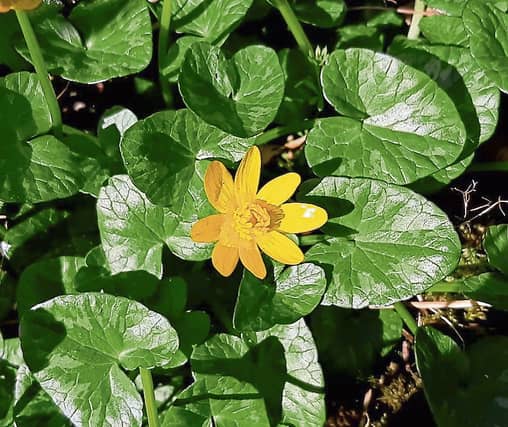

Nuala Madigan from the Bog of Allen Centre
I mentioned ‘the first signs of spring’ last week and as I write this piece Ireland is in a winter weather advisory for ice and snow so maybe I was a little early to mention spring!
While gorse is already in bloom it is not the only wild plant that you can expect to find in bloom this week. Lesser Celandine (Grán arcáin as Gaeilge) is another example of an earlier native wild plant that blooms at this time of year.
According to the Wild Flowers of Ireland website, Lesser Celandine can be found in bloom as early as December through to May, so you have plenty of opportunity to discover this wild plant in your community over the coming weeks and months.
If you decide to have a look in your community for Lesser Celandine try under hedgerows, or woody areas or along the banks of your local river or canal.
Lesser Celandine is a hairless plant, the leaves are heart shaped glossy and dark green. The flowers are bright yellow, star shaped and open on bright days but will also close on duller days.
It is believed that some flowers open and close reacting to changes in light intensity to help their chances of being pollinated.
As it is an early flowering plant and unlike Gorse which had a pea shaped flower that was difficult for invertebrates to access the nectar, Lesser Celandine is more accessible and as a result it is considered an important early source of nectar for invertebrates including bumblebees.
Its leaves are a source of Vitamin C and it is said this is why it is also known as Scurvywort.
If you don’t find the bright yellow flower of Lesser Celandine in your community this week don’t forget to keep a watch for their distinctive heart shaped leaves.
Other signs of spring to begin to watch for in your own garden will be the emergence of the leaves of ornamental bulbs that you planted last autumn including Crocus, Snowdrop and Daffodil.
If you spot a local wildlife species and would like to learn more send your wildlife image to [email protected].