
KILDARE WILDLIFE WATCH: The life and times of the green shield bug

Nuala Madigan from the Bog of Allen Nature Centre
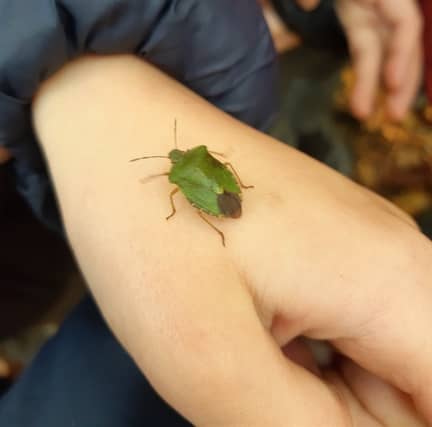
While facilitating a workshop with a group in Tannery Park in Rathangan recently the students identified a common green shield bug (fríd scéithe ghlas as Gaeilge).
The common green shield bug is native and is one of fifteen true shield bugs that are resident in Ireland. Looking at the picture you will probably guess why they are so called as their body is very similar in shape to that of a medieval shield used by knights! The common green shield is approximately 12-13mm in length and this bug is easily recognised by its bright green colour with tiny puncture marks and brown wings tips.
As the this shield bug has wings they are able to fly however their wings are short and if you do observe a shield bug it will often by crawling rather than flying.
The colour of the body helps this shield bug to blend into its surrounding habitats which include gardens, parks, woodlands and grasslands.
Shield bugs do hibernate in winter and it is known at this time of year for them to change shade to help them blend in with autumn colours. In spring and after mating the female lays clusters of barrel-shaped eggs on the undersides of leaves of decideous trees, which is the food plant of their young.
The eggs hatch into wingless nymphs, that are rounder in shape than the adult and green with a black patterned back. These crawl between plants to feed and the nymphs go through five stages of growth, or instars, eventually becoming adults by autumn. Now is the perfect time of year to see if you can identify a shield bug in your community before they begin their winter hibernation.
Shield bugs are not insects they are divided into their own group as they have piercing, beak-like mouthparts for extracting the juices from plants and other invertebrates.
However you don’t need to worry as the common green shield bug does not bite humans or cause any damage to plants growing in our gardens.
If you come across a wildlife species that you would like help identifying contact me at [email protected].