
Co Kildare veterinary nurse being treated for Lyme Disease says 'after 22 doctors finally I was officially diagnosed'
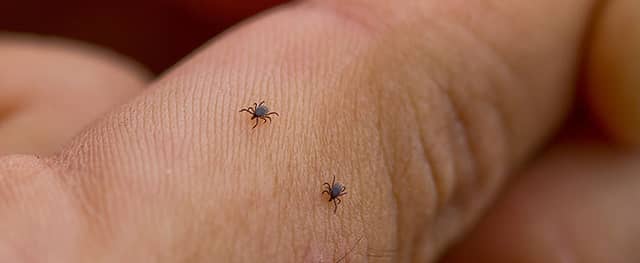

A Co Kildare veterinary nurse with over 20 years experience is appealing for more GPs to become aware of Lyme Disease, a condition she never heard of until her health seriously declined.
Siobhan Coleman (39), says that she did not think that Lyme Disease existed in Ireland until she became extremely sick.
She had to take time off from work last year due to chronic pain, it all began around 2016. She still has not returned to work.
For more than a year her health began a slow and steady decline. Many neurological symptoms were manifesting including nausea, dizziness, joint pains, painful red eyes, noise, sound sensitivities and fatigue.
She said: "I knew something was not right, a gut instinct, yet clueless to the cause. I had regular visits to my GP, I always had a healthy lifestyle, never any serious illness. My symptoms were repeatedly dismissed. All routine tests performed were normal. Eventually experiencing chronic hip pain I simply could not continue, my body felt so broken, I felt broken. I was diagnosed with early degenerative osteoarthritis with bilateral trochanteric bursitis, referred to a rheumatalogist where on examination I was injected with steroids in both bursa. He was dismissive of my ongoing symptoms, suggestive of anxiety perhaps, cognitive behavioural therapy advised and simply sent me on my way.''
Her health continued to decline. She said: ''At this point I was struggling both physically and emotionally. I was later hospitalised multiple times on order of my GP, developing seizure activity, speech and vision problems to add to the now growing list of symptoms. On request I asked to be tested with the standard Elisa test for Lyme disease. My results were negative three times in total, little had I known how highly inaccurate this testing was. I was advised psychiatric assessment and medication as I could not be ‘labelled ‘ with any medical condition.''
The neurologist said she had ‘functional neurological disorder ‘, a diagnosis that she wasn’t willing to accept. She was referred to a neurophyscologist for therapy sessions.
She said:"I organised for my blood to get tested through a German lab specialising in tick borne diseases, my GP reluctant to help, another battle. Foreign Lab reports that were not recognised by Irish doctors. My results were positive, I had Lyme disease, several co infections and viruses all transmitted by a tick bite. I was relieved, finally after several months I could set out a treatment plan to recovery."
In October 2017 Siobhan attended a Lyme specialist.
She said: "He indeed validated my illness, I had Chronic Lyme Disease. I was completely relieved , he listened to me and set out a treatment plan with long term antibiotics and supplementation . After 22 doctors finally I was officially diagnosed after almost two years. I broke down in tears. He spoke of how difficult a disease to treat, a stealth bacteria, a clever bacteria, evading both the immune system and potentially antibiotic protocols. By this time I resembled a person with Parkinsons with whole body tremors, unable to hold a pen, unable to stand unaided. He spoke also of ‘Tick Borne encephalitis’ which he believed I had, the Lyme disease was attacking my brain and central nervous system.''
Now recovering, with the help of her husband and sister, the headaches have eased and that she is nolonger in a wheelchair. She is receiving antibiotic treatment but it will be some time before she can return to work.
She says that GPs are not educated about Lyme Disease and that she had to fight a battle to get treatment.
She said: "I was in for the battle of my life, certainly testing stamina and strength of any character. I am extremely blessed to have such great support in my sister and my husband who became my carers, hauling me through the hard times. We were in this together, without my husband's support I dread to think. It has been the roughest times of both our lives. A journey no human being should have to endure. Lyme disease literally derailed my life, horrifying to live through."
While Lyme is more common in areas with a large deer population, retired UCC zoology professor and key Lyme expert in Ireland, Eoin Healy pointed out that Lyme disease is also carried in cattle, sheep, and goats. Prof Healy says that areas where the vegetation is moist, rough and not heavily grazed is high risk for Lyme disease. He cites the West of Ireland, up hills surrounding the Galtee, Knockmealdown, along with counties Cork and Tipperary and the Wicklow Mountains, as being areas prone to Lyme. He is keen to stress that Lyme can be caught anywhere.
Symptoms of Lyme disease
Include:
- Rash at site of bite or on other parts of your body
- Unexplained hair loss
- Headache, mild or severe
- Seizures, pressure in head, white matter lesions in brain.
- Twitching of facial or other muscles, facial paralysis (Bell’s palsy, Horner’s syndrome)
- Tingling of nose, (tip of) tongue, cheek or facial flushing
- Stiff or painful neck
- Jaw pain or stiffness
- Dental problems (unexplained)
- Sore throat, clearing throat a lot, phlegm, hoarseness, runny nose
- Double or blurry vision
Vigilance is needed in wooded or tall grassy areas where ticks may reside.
- Wear long sleeved t-shirts and trousers when out.
- Tuck your trousers into socks or boots and tuck shirts into trousers to minimise the chance of ticks getting to exposed skin.
- Wear light coloured clothing to make any attached ticks easier to spot.
- Check yourself and children every couple of hours for attached ticks..
- Avoid wooded areas with tall grass and try to stay in the centre of trails to avoid tree branches, leaves and long grass where ticks usually lie in wait for an unsuspecting victim to brush past.
- Once home check your entire body for ticks. Important areas to check are behind the ears, inside the outer ear, under the arms, behind knees, the trunk of the body and the scalp.
- If you find any ticks remove them.
- Using thin tweezers grasp the tick as close to the skin as possible and pull upwards with a steady even pressure.