
'I got pacemaker when I was three' - Kildare woman on living with a heart condition
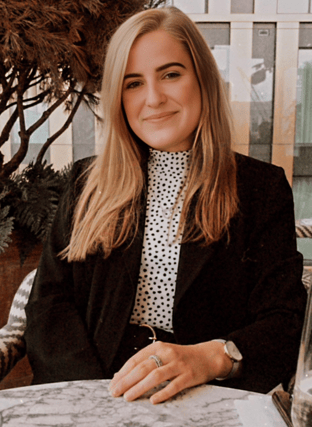

Grace Davitt has shared her story of her positive, active life
Grace Davitt, a woman in her 30s from Celbridge in Kildare, has shared her story on living with a form of congenital heart condition ahead of Global Congenital Heart Disease (CHD) Awareness month.
"I was diagnosed when I was born and I done a couple of weeks in Crumlin hospital and then they diagnosed me then and I was on a kind of wait and see after that," Ms Davitt began.
"I got my pacemaker inserted when I was three and the batteries changed when I was 13, and then I got the whole new unit in 2015," Ms Davitt explained.
"Growing up, I was fortunate enough to have a relatively normal childhood with the condition but I suppose it was my own normal," Ms Davitt said.
"I had to go to appointments every 6 months and it was only in recent years that I've been changed to go in yearly, which has helped because I don't have to dedicate that time to going to appointments," said Ms Davitt.
"I had complete heart block when I had the pacemaker inserted at three and I have moderate tricuspid regurgitation, so the pacemaker really helped my functioning," Ms Davitt said.
Ms Davitt explained that she was able to play sports, do dancing, swimming, hockey and running throughout her youth and into adult life.
"I never went blue or I never fainted thankfully and still to this day I'm 30 years of age and I never fainted," Ms Davitt said.
"I just know my own limits when I need to, if I get out of breath....the oxygen going into my heart would't be great but my body has been able to manage that," Ms Davitt said.
"Im lucky enough that I've been able to travel, go to college full time and at that time I was working part-time as well and going out doing normal college things. It was only before I had the new unit in 2015 that I knew in myself that I wasn't functioning as well and that showed up in various check-ups, and so I was scheduled for the new system and when I got that it was a massive change in my life completely," Ms Davitt said.
Ms Davitt said that a struggle for her in particular, emphasising that all heart conditions are varied with their own limits, would be that she would lack energy sometimes and would be tired and fatigued and she has also suffered up and down with health anxiety.
"Sometimes you might think that there's something wrong like feeling a funny heart beat and a lot of the time it could just be health anxiety," Ms Davitt said.
When asked what advice she would give to a young person dealing with a heart condition she said:
"Take it as it comes, it's very individual, even though it is limiting in some regards you can live a very full life with it and the doctors, nurses, cardiologists have your best interests at heart. If your going to an appointment try and put a positive spin on it and go out for a meal, go shopping so that its not too heavy and if needs be, be open and talk with somebody. Use the resources that are there Hearts Children Ireland that are available."
February is Global Congenital Heart Disease (CHD) Awareness Month and the charity Heart Children is hosting a conference for young people and adults with the disease.
The event will take place at Chartered Accountants House, Pearse Street, Dublin 2, on February 22 from 9.30am-3.30pm.
The conference aims to offer people impacted by the condition an opportunity to network with their peers, and to meet and ask questions of medical experts.
Sheila Campbell, CEO of Heart Children said, "The Beat Goes On conference offers an opportunity for young people and adults with congenital heart disease, living throughout Ireland, to come together for an event that will inform, empower and build connections. Unfortunately, some can go through life without knowing anyone else with the condition. Having the benefit of peer support and the phone number of someone to call or text when times get tough can be an invaluable aid.
“The conference, which we run annually during Global Congenital Heart Disease Awareness Month, is a space to build our community, to create awareness of this common medical condition, and recognises the fact that it is one of the world’s most serious health issues at birth.”
Anyone who would like more information on the conference, or who wish to register to attend free of charge, can visit www.heartchildren.ie or telephone 01 8740990.
CHD is where a baby’s heart does not develop correctly during pregnancy and there are almost 19,000 people living with the condition in Ireland.
Each year, between 500 and 600 babies are born here with CHD, which is more than three times the number of children diagnosed with cancer annually.
Dr Rachel Power, a Heart Children board member and consultant paediatrician with expertise in cardiology at University Hospital Limerick, said, “In most cases, we still don’t know why congenital heart disease happens. Having a mother, father or sibling with the disease does slightly increase the risk above that of the general population. In a very small number of cases there can be maternal factors, such as poorly controlled diabetes or inappropriate anti-seizure medication, however, it is important to assure parents that these issues can be addressed.
“Parents can also be reassured that most maternity hospitals in Ireland now offer a foetal anomaly scan at 20 weeks which will look at the four chambers of the heart. This is key in identifying the condition and ensuring that appropriate birth plans are in place, including access to a paediatric cardiology centre. As a result of advances in surgical techniques, the very welcome news is that over 97 per cent of children born with congenital heart disease are expected to reach adulthood. Indeed, there are more adult patients now living with the condition in Ireland than there are children.”