
KILDARE WILDLIFE COLUMN: Fairies - beware of the Primroses in May

Nuala Madigan from the Bog of Allen Nature Centre
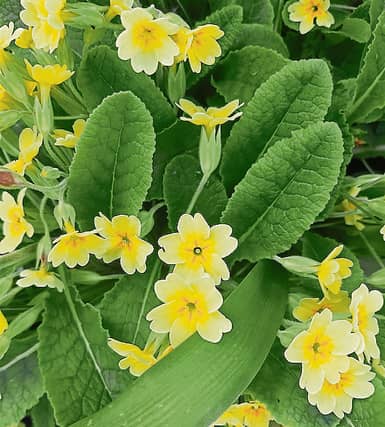
The native Primrose (Sabhaircín as Gaeilge) is now in bloom. Of all the spring wildflowers I think the Primrose is one of the most easily recognised by people of all ages.
If I remember correctly, it is also one of the first wildflowers that we are introduced to in schools, However, it is many years since I was a student so maybe ask your local young people if this is still the case!
In making this comment, I wonder does an interesting fact I read on www.wildflowersofireland.net about the meaning of the Latin name for Primrose (Primula vulgaris) have something to do with why we learn the Primrose as one of our first wildflowers.
When translated into English, Primula vulgaris means ‘first flower’. You will find Primroses growing on grassy banks, roadsides and woodlands throughout your community this week.
Its pale yellow five-petalled flower has a deeper coloured yellow centre and the large hairy green leaves are wrinkled.
Due to the different shapes of the flowers, at this time of year the Primrose can be easily identified from another native wildflower, the Cowslip.
However, as the leaves absorb the last of the sunlight in late summer it can be tricky to tell the difference between these two wildlfowers from just the leaves alone, as both have large wrinkled hairy leaves.
From the National Folklore Collection it is said in times past that a string of Primroses hung across your door on the first three days of May prevented the fairies from entering a home, as they were unable to pass under or over the string.
Are you interested in learning more about biodiversity? Although it is a few weeks away yet I encourage you to save May 19 – 28 in your diary as this will be National Biodiversity Week.
Throughout our communities there will be many great events that you can take part in and I will be sure to let you know how you can get involved closer to the time.
Don’t forget if you come across a wildlife species that you would like help identifying, I would be happy to help, contact me at [email protected].