
KILDARE WILDLIFE WATCH: Grasshoppers attract females by chirping

Nuala Madigan from the Bog of Allen Nature Centre
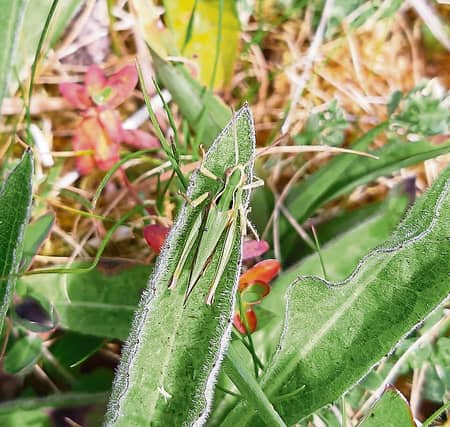
This week while attempting to organise some wildlife images, I came across this image of the common green grasshopper (dreoilín teaspaigh as Gaeilge).
I was struck by how camouflaged it is amongst the green vegetation and thought to myself no wonder it is so difficult to see them in the wild!
This camouflage is of course to help them avoid being predated, and while you might not see this little invertebrate, you can often hear this grasshopper in the summer in its habitat of meadows and grassland. The grasshopper makes a ticking sound and the males also make a ‘chirping’ sound when they rub their large hind legs against their wings, creating the noise, or should I say song to attract a female.
As its name suggests the common green grasshopper is a relatively common grasshopper and you can watch for it from April to October each year, which of course means you will have to wait another few months before you will come across this little invertebrate in your community.
You can identify this grasshopper by its green colour and sometimes brown sides.
This particular grasshopper has black, wedge-shaped markings on its thorax that don’t reach all the way to the back edge. They have strong hind legs and are also very good at flying, particularly on warm days. The adult common green grasshopper cannot survive the winter so they have a very short lifecycle. Males attract females by making a ‘chirping sound’ in summer, sometimes the female will also respond with sound.
Once mating is complete, the female will lay a large egg pod under the surface on dry ground. This egg pod will remain in the ground over winter before the young emerge. These young are called nymphs, and while they look like the adult they will go through a number of moults before maturity is reached in June.
Once the adults mate and the female has laid her eggs, these will eventually die before the winter and their lifecycle is complete.
If you come across a wildlife species that you would like help identifying contact me at [email protected].