
Pennywort used to be used to treat boils


Kildare Wildlife Watch
After my colleague came back from the long weekend she spoke of a wild plant that she had observed growing on a stonewall over the weekend.
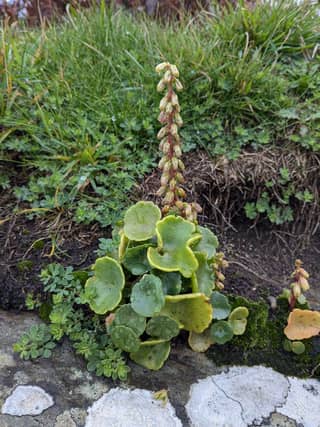
My colleague called the plant navelwort (Cornán caisil as Gaeilge) and I responded saying I was not familiar with this plant, however on seeing the image my colleague had taken of the wild plant, I immediately responded with ‘you mean pennywort’. In Ireland there are many examples of wildlife having two or more different common names, especially as some wildlife is referred to by their Irish name rather than English name. A good example of this is ragwort which in many places is referred to as Buachalán, a shortened version of its Irish name Buachalán buí.
Not all wildlife will have different names based on their Irish translation. Take for example gorse, which is also referred to as whin or furze depending on where in Ireland you are, and who you are talking too.
Even between countries, common names for wildlife can differ. In Ireland we have a wildflower known as rosebay willowherb, yet this same plant is called fireweed in Canada.
To avoid confusion between wildlife species, each wildlife also has a scientific name, which is standard no matter what country or county you are in. Navalwort or pennyworts’ scientific name is Umbilicus rupestris.
This plant is native to Ireland and grows in crevices in stonewalls nationwide. It is believed to be called pennywort as its leaves are hairless and round, similar in size to an old Irish penny.
It is also called navelwort as these same leaves have an indent in the centre, similar to a naval. This wild plant flowers between June to September each year. The greenish yellow flowers are held on pinkish round spikes.
In the schools’ folklore collection, which dates to the 1930’s and was collected by teachers, pennywort is referred to as helping to treat boils. While pennywort flowers until September, my colleagues did photograph it on the Bank Holiday weekend, so this week watch for this wildflower growing in stonewalls in your community.
If you would like help identifying a wildlife observaKon in your community you can contact me on [email protected].