
Green Party Minister takes to the Slieve Blooms on the trail of the Hen Harrier

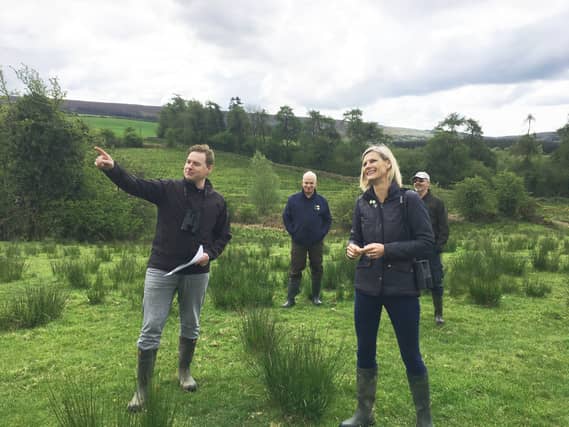

Minister of State, Senator Pippa Hackett visits High Nature Value Farm
Super junior Laois Offaly Minister Pippa Hackett took to the Slieve Blooms as National Biodiversity week got underway to see first-hand what is necessary for the protected Hen Harrier to flourish in the Slieve Bloom mountains.
Minister of State Hackett visited what is called a 'high nature farm' of George and Hazel McBryde, near Kinnitty.
The area is part of the Hen Harrier Project, which is supported by the Department of Agriculture through funding under the EU’s Rural Development Programme. Farmers participating in the results-based project receive payments for delivering sustainable benefits for biodiversity.
“The hen harrier is not just a beautiful bird of prey, it is also an indicator species of a healthy ecosystem, so it is vital that this area of the Midlands would be hospitable to them," said Minister Hackett.
"During my visit I heard that there are six confirmed breeding pairs in this area, and possibly more. Of course, we didn’t see any because they are sitting on their nests and we were very careful not to disturb them but I’m hoping to return later in the summer to see them in flight,” said the Green Party senator.
The Minister continued by highlighting to the importance of the Hen Harrier Project.
“May 22nd is International Day for Biological Diversity and it is really important we do all we can to heighten awareness of projects supporting Ireland’s beautiful protected species. The hen harrier is a rare, ground-nesting bird of prey and for them to nest, breed, hunt, and rear their chicks the land needs to be managed is a sustainable way. That’s why farmers, like George and Hazel, are so important, and I look forward to being able to continue to support this wonderful work.”
Fergal Monaghan is the Hen Harrier Project Manager.
"We are delighted to have Minister Hackett here in the Slieve Blooms Special Protection Area. This region supports one of the largest Hen Harrier populations in the country. The birds that nest and rear their chicks here depend on the habitats that farmers maintain. These farmland habitats do more than just support Hen Harriers, they benefit other wildlife, store Carbon, and improve water quality, all important public goods delivered through Agriculture," he said.
Farmers are paid for their participation in the project on the basis of conservation work.
More on the project here.