
Laois fire fighters move out of old station into temporary home

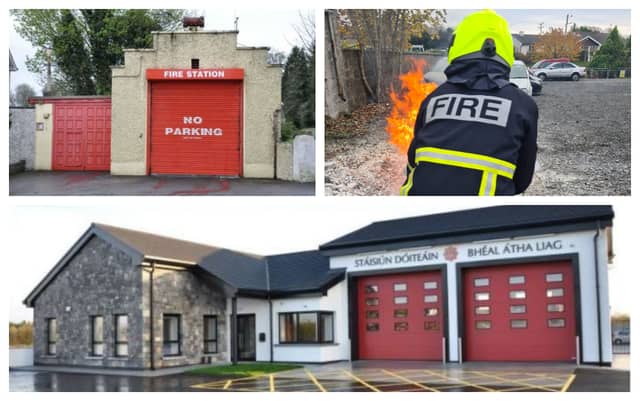

Electric Picnic home Stradbally is waiting to get a new fire station
The Laois Electric Picnic town of Stradbally has taken a step further on the journey to replace its small 50 year old fire station.
The fire crew at the station has now been moved out to temporary quarters, ahead of a new promised station.
The crew's temporary base is the old Civil Defence building, a former squash court on a 0.34ha corner site near the junction of the N80 and the R427.
The next step is to build their new station on that same site, one fit for their expanded activities.
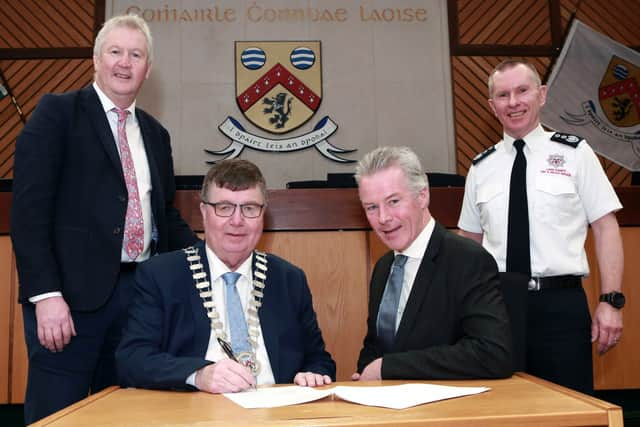
Pictured at County Hall for the signing of a contract with NODE Architecture, for the design and delivery of a new Fire Station in Stradbally, were: Simon Walton Director of Services LCC, Cllr Paschal McEvoy, Cathaoirleach, Noel O'Dwyer NODE Architecture and Declan Power Chief Fire Officer - Laois Fire and Rescue Service. Photo: Michael Scully
For some years, Laois County Council have said Stradbally Fire Station is no longer fit for purpose and that the training and welfare needs of a modern fire and rescue service, cannot be sustained in the existing Station.
At the same time, call volumes increased significantly, making Stradbally one of the busiest stations in County Laois. In 2024, it was the third busiest of the eight Laois stations, responding to 127 emergencies.
It is one of two new fire stations prioritised for Laois by the county council, to be followed by one for Rathdowney.
The Stradbally station will have two bays for fire tenders, along with enough space for suitable training, welfare and equipment storage.
The existing Civil Defence building will be demolished and removed after the station is built.
Along with the new fire station, a Fire Service Drill tower will be constructed to train firefighters.
There will be an underground water storage tank for pump purposes, a Drill yard, and temporary Depot /Parking for Civil Defence for local events like Electric Picnic.
The station will include rainwater harvesting as an environmentally friendly 'green' initiative.