
Laois General Election voters here's your guide to Ireland's unique elctoral system


Explainer on General Election voting process
Ireland has a unique and some say complicated electoral system so it's important to know how to vote when going to your polling station.
The Electoral Commission says you will firstly need to check if you are entitled to vote. You can find details on the Commission's voter eligibility page. It is too late to register for the 2024 General Election.
Once you are registered to vote and you meet the eligibility criteria for voting, a polling information card will be posted to your registered home address before polling day.
When voting in Irish elections you will be provided with a ballot paper for each election you are eligible to vote in.
When you arrive at your polling station on polling day, you will be asked to say your name and address. You may be asked for identification so have your ID ready for inspection.
If the polling staff are satisfied with your identity, and your name is on the Register of Electors, the Presiding Officer will stamp the necessary ballot paper(s) and give them to you. You should make sure your ballot papers are stamped. If they are not stamped they will not be valid.
Take your ballot papers into the private voting compartment or booth. The Commission says that filling your ballot paper in correctly is vital to having your vote count.
Ireland uses proportional representation (PR) for voting in elections with each voter having a single transferable vote (STV).
It is used in General, Local, European, Presidential and Mayoral elections.
The Commission says that using the PR-STV system means that voters can vote for as many or as few candidates in order of their preference.
Each ballot paper contains short instructions on how to vote. Voters are urged to read and follow the instructions on your ballot paper carefully. Pencils will be provided, but you can bring your own pen or pencil if you wish.
The ballot paper will show a list of names, in alphabetical order, party emblems and images of each candidate. There will be a box to the right of each candidate's name. You mark your preference for each candidate in the box to the right.
You mark a ‘1’ in the box beside your first choice candidate and, if you wish, a ‘2’ in the box beside your second choice candidate, a ‘3’ in the box beside your third choice candidate, and so on to as many candidates in the field if you wish.
“By marking a ‘1’ beside a candidate you are saying: ‘I wish to vote for this candidate.’ By marking a ‘2’ beside a candidate you are saying: ‘If my first choice candidate does not need my vote because they have already been elected or excluded from the count, I want my vote to go to this second candidate.’
“By marking a ‘3’ beside a candidate you are saying: ‘If my first and second choice candidates do not need my vote, I want my vote to go to this third candidate’”, it says.
The Commission explains the purpose of a preference approach.
“This system of voting gives you a wide variety of choice. You can choose many different candidates and mark them in order of your preference. You can mark your preferences for as many or as few candidates as you wish. This is your decision,” it said.
To ensure your vote is counted, the Commission advised that you make sure you mark your preferences as clearly as possible. It adds that if you do not want to fill out a preference for all candidates on the ballot paper, the box beside those you are not voting for must be left empty.
Voters are cautioned not make any other mark on the ballot paper. If you do, the Commission says your vote may be considered invalid/spoilt and not counted.
If you have a visual impairment, a Ballot Paper Template will be available at every polling station and you can use it to cast your vote.
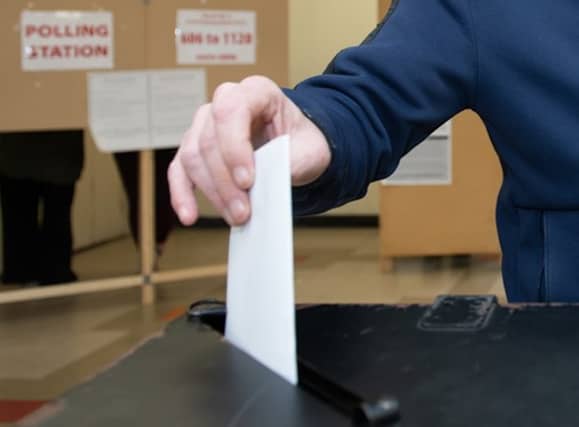
When you have voted you should fold your ballot paper, return and place it into the ballot box at the same station.
The Returning Officer in each local authority is responsible for managing their local election. Each local authority pays the cost of running their own election.
The Local Authority also manages the Electoral Register.