
Portlaoise Chief Psychiatrist's evidence central to RTE Investigates programme

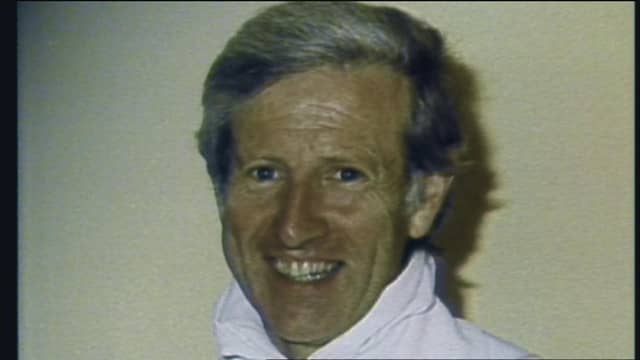

Evidence from the late Chief Psychiatrist at St Fintan’s Hospital in Portlaoise, Liam Hanniffy, is central to an RTE investigates programme into the death of Fr Niall Molloy in Co Offaly in 1985.
The death of the 52 year-old Roscommon priest at a house in Clara, Co Offaly during a wedding shocked the nation and led to widespread speculation.
RTE Investigates now claims: "Fr Niall Molloy was badly beaten and died on the bedroom floor of a married couple that he had been friends with, and in whose house he had his own bedroom. There were three people present at the time, businessman Richard Flynn, his wife Thérèse and Fr Molloy.”
Richard Flynn, the only person charged in relation to the death of Fr Niall Molloy, died in 2017.
Before his death earlier this year, Liam Hanniffy, who was Chief Psychiatrist at St Fintan’s Hospital in Portlaoise, and who had assessed Richard Flynn, spoke to RTÉ Investigates about this. He described a "relationship almost akin to marriage inside of another more correct marriage… it was a tough situation to face... . I saw both of them having a problem. She for not seeing she had a problem in trying to sustain a marriage at the same time she was trying to sustain a serious boyfriend".
The RTE programme states that in a written account Richard Flynn described how he had concerns about the priest’s relationship with his wife. They’ve obtained documents outlining how he “butted him [Fr Molloy] into the face several times with my head…”
“At this stage, I had another lapse of memory. Then I remember hitting him one punch on the left side of the jaw. Then I had another black-out and the next thing was I saw him lying on the floor,” the document obtained by RTE continue.
And according to the psychiatric assessment Richard Flynn told his psychiatrist that while he only remembered hitting Fr Molloy one punch, he said: “I must have hammered him.” In his report, psychiatrist Liam Hanniffy concluded, “I believe this frenzied attack was due to the sudden release of subconscious anger on Mr Flynn’s part – anger, resentment and frustration that had been repressed by him consciously or unconsciously for the greater part of his married life- and which, again in my view, constituted prolonged, sustained and intense provocation.”
"The bubble burst at that stage where Richard was concerned because for all the years for quite a long number of years, quite a long number of years he had restrained himself," Mr Hanniffy said.
Senior Lecturer in Law, SETU Niamh Maguire believes: "if the psychiatric assessment was available to the prosecution, I think it would've been a completely different outcome. I think it definitely would've grounded a conviction. And I think there would've been enough evidence in that to potentially go to the jury and leave it to the jury as to whether to convict."
Watch Tuesday night's special report on Prime Time at 9.35pm Tuesday. October 11 on RTÉ One and RTÉ Player.