
Portlaoise trolley numbers surge after worst summer month of hospital overcrowding

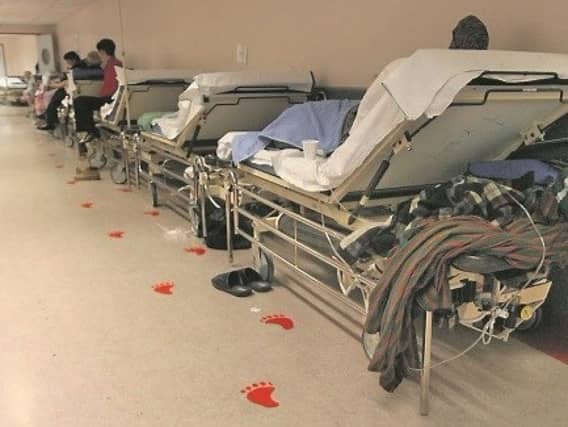

Trolley numbers have surged at Portlaoise hospital just a day after figures confirmed that May was the worst summer month on record for patients who are trying to get a hospital bed.
Irish Nurses and Midwifes Organisaiton figures for Tuesday, June 5 revealed that there were 26 people waiting on trollies in the A&E of the Midland Regional Hospital Portlaoise.
This was well ahead of its sister hospital in Tullamore which suffered big overcrowding problems in May. The Portlaoise trolley count was the same as the level as Tallaght hospital where 26 patients were waiting.
Tullamore, Tallaght and Portlaoise are in the Dublin Midlands Hospital Group (DMHG) which also includes Naas General and St James in Dublin. There were 21 patients waiting in Naas and six in St James.
More than 1,700 patients in the Dublin Midlands hospitals were left waiting in trollies throughout May.
Staff at Tullamore were forced to put 598 people on trollies during the month. It was the worst hit DMHG hospital by overcrowding in May.
There were 532 patients left on trollies or on wards waiting for beds in Tallaght. Naas had to deploy 329 trollies or temporary beds for patients.
The Offaly, west Dublin and Kildare hospitals all had worse figures than in May 2017.
Meanwhile, Portlaoise had to use 284 trollies down slightly on last year. The hospital that used the least number of trollies was St James' which had 150 people accommodated temporarily in May.
Nationally there were more than 9,000 people on trollies in May at hospitals around the country. It is a record the high figure for a summer month.
These figures show an overall increase of 12% on the same period last year, May 2017.
Nurses said these figures confirm that overcrowding is an increasing problem year on year and a feature of patient care throughout the whole 12 months. They said Irish hospitals are constantly overcrowded, working above the recognised safe occupancy level and demand for emergency admissions, even in the peak summer period, continues to grow.
INMO General Secretary, Phil Ni Sheaghdha said INMO are seeking a total re-look at the national planning process and particularly The Winter Initiative, as solutions to this constant and worsening crisis cannot wait for funding injection in late November or January when the escalating problems are out of control.
"We live in a society which expects a long wait, and a lack of privacy and dignity when attending EDs. It is not acceptable! It is a basic human right that a person deemed as requiring hospital admission is admitted to a suitable bed which is appropriately staffed.”
“Complacency must be replaced with proactive planning, aimed at correcting, not simply reducing, the numbers to make it look somewhat better.
"In line with the HIQA recommendations of 2012, the aim must be: patients never have to experience care on corridors and inappropriate spaces in EDs. These HIQA recommendations, are like a fairy-tale, considering the worsening problems with overcrowding since its report,” she said.
Under a HSE plan there are plans to downgrade Portlaoise hospital and redirect many patients to Naas, Tallaght and Tullamore.