
Prisoner who killed cellmate guilty of manslaughter by reason of diminished responsibility

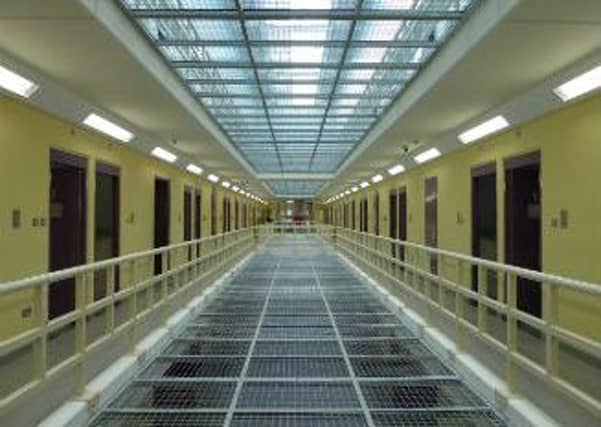

A mentally ill prisoner who scalded his cellmate with hot water before strangling him has been found not guilty of murder but guilty of manslaughter by reason of diminished responsibility by a jury at the Central Criminal Court.
After deliberating for four hours and 25 minutes over two days, the jury foreperson told the registrar that a majority verdict had been reached and that Michael Connolly (55) was guilty of the manslaughter of Mark Lawlor in Cloverhill Prison in 2019.
The jury had heard that Connolly, who is originally from Louth, believed that Mr Lawlor (37), from Drumcondra, had “some kind of exalted identity like a king” and was "a kingpin of Dublin" when he killed him in a cell in the prison.
Connolly had pleaded not guilty to the murder of Mr Lawlor by reason of insanity.
The jury had been told that a disagreement on the findings of two psychiatrists was “the nub of the case”.
Judge Ms Justice Siobhan Lankford told the jury on Monday, August 2 that they had to choose between the expert psychiatric evidence of Dr Stephen Monks and Dr Sally Linehan in order to decide whether the accused was entitled to the special verdict of not guilty by reason of insanity or a verdict of manslaughter by reason of diminished responsibility.
The jury had heard evidence from both Dr Monks and Dr Linehan that Mr Connolly suffers from paranoid schizophrenia. Dr Monks also said that his colleague Dr Brenda Wright said Mr Connolly presented as “floridly psychotic” when she assessed him.
However, while Dr Monks said that the accused did not understand the nature and quality of his actions, Dr Linehan said she did not think he was suffering from his mental illness to such an extent as to bring him within the definition of deserving the special verdict of not guilty by reason of insanity.
Ms Justice Lankford told the jury that they did not have to be unanimous in their verdict and that the court would accept a majority verdict not below 10-2 from the seven men and five women.
In returning the verdict, the foreperson told the court registrar that it was one of a 10-2 majority.
Ms Justice Lankford thanked the panel for their service in what she said was a "difficult" trial and excused them from jury duty for five years. Ms Justice Lankford then adjourned the matter to October 2, for mention, when a suitable date for sentencing will be assessed. Victim impact statements are also to be prepared.
At the outset of the trial, counsel for the Director of Public Prosecutions, Tony McGillicuddy SC, said that the attack took place in Cloverhill Prison on the night of Friday, November 22, 2019, into the early hours of Saturday, November 23.
Mr Lawlor and Connolly had both been remanded to the prison on unconnected matters and the two men were sharing a cell.
Mr McGillicuddy said that at 11.34pm on the night, a call light was activated by prisoners in the adjoining cell, who heard a scuffle and someone calling out “Davey” or “David”. The prisoners thought it was Mr Lawlor and he sounded hoarse, so they thought he was choking. A prison officer responded and when he looked into the cell, he saw Connolly on top of Mr Lawlor with his hands around his neck. The cell door was opened, and prisoner officers took Connolly off Mr Lawlor. Mr Lawlor was pronounced dead at 12.55am.
Counsel said a psychiatrist found that Mr Connolly had delusional beliefs, including that the prisoners were in league with prison officers in “a homosexual conspiracy”. Counsel said the psychiatrist noted that Mr Connolly had formed the delusional belief that Mr Lawlor had “some kind of exalted identity like a king”.
Prison officer Adrian Richmond gave evidence that when he looked into the cell, he saw Connolly on top of Mr Lawlor.
“He looked up, and his eyes never blinked. I always remembered it was very strange,” said Mr Richmond, adding that Mr Connolly showed no reaction to the light of the prison officer’s torch shining into the cell and he made no sound.
Mr Richmond said that Connolly was very calm when he was removed from the cell by prison officers.
“It was unbelievable how calm he was. He was totally calm and didn’t resist in any way,” said the witness.
Colm Burke, an assistant chief prison officer, gave evidence that he saw Mr Lawlor lying on the bed with a chair across his chest and Connolly lying across the chair with his hands around Mr Lawlor’s neck.
He said he saw blood smears on the window in the cell and on the wall, and directly under Mr Lawlor’s head was “a massive pool of blood”.
Garda Inspector Darragh Kenny confirmed to Mr McGillicuddy that a post-mortem revealed that Mr Lawlor had sustained multiple superficial burns with blistering on his face, neck and arms, which were consistent with having been scalded by having boiling or hot water thrown at him. There were two lacerations to the back of Mr Lawlor’s scalp, which may have been caused by a sharp edge such as his head being struck against the bar or leg of the bed. He suffered manual strangulation and straddling of the chest, causing asphyxia leading to death.
Detective Garda Ronan Coffey gave evidence to Fionnuala O’Sullivan BL, prosecuting, of the garda interviews with Mr Connolly, in which Mr Connolly said he thought Mr Lawlor was “a kingpin of Dublin”.
“I thought I would get revenge. I thought of boiling the kettle and pouring it over him; I thought it would be enough, but it escalated to murder. Cloverhill is as bad as Shawshank, they’re all at it,” the accused told gardaí.
Det Gda Coffey went on to confirm to defence counsel Michael Bowman SC that Connolly also made references to the Norse god Odin and to the Catholic Church.
Consultant forensic psychiatrist Dr Stephen Monks gave evidence to Mr McGillicuddy that Mr Connolly’s first contact with the mental health services was in 2013, and he was assessed as being psychotic due to substance-induced psychosis.
Dr Monks said that Mr Connolly was again admitted to the mental health services in 2015 after he set fire to his own house, and on that occasion the diagnosis was schizophrenia. Dr Monks said that in 2019, the accused’s diagnosis was schizoaffective disorder.
Dr Monks gave evidence that following the killing of Mr Lawlor, Mr Connolly was assessed by a psychiatrist who said Mr Connolly had apparent thought disorder. Dr Monks said that his colleague Dr Brenda Wright said Mr Connolly presented as “floridly psychotic” at that time.
In her charge to the jury, Ms Justice Lankford said that in order to meet the criteria for a special verdict of not guilty by reason of insanity, the jury had to be satisfied that the accused did not know the nature and quality of the act, did not know that what he was doing was wrong, or was unable to refrain from committing the act.
The judge said that both consultant psychiatrists who gave evidence in the case agreed that Mr Connolly was suffering from a mental disorder at the time of these events, and they both agreed with the diagnosis of paranoid schizophrenia, but they disagreed on the matter of whether he was entitled to the defence of the special verdict.
Ms Justice Lankford said that while Dr Monks said that the accused did not understand the nature and quality of the act, Dr Linehan said that, after reviewing the accused’s interviews with the gardaí, she found he understood he had killed another person.
“This is the most significant issue you must resolve. The nub of the case is which psychiatrist’s evidence do you prefer,” the judge said.
Ms Justice Lankford went on to say that Dr Linehan had given evidence that it would be appropriate for the jury to consider a verdict of guilty of manslaughter by reason of diminished responsibility.
After beginning their deliberations, the jury returned with a question for Ms Justice Lankford, asking on what dates Dr Linehan had seen and assessed the accused. They were informed that Dr Linehan interviewed Mr Connolly four times between March 2021 and April 2022, while Dr Monks saw him twice in December 2022.