
Law adopted in Offaly in 697AD features prominently in prestigious new book

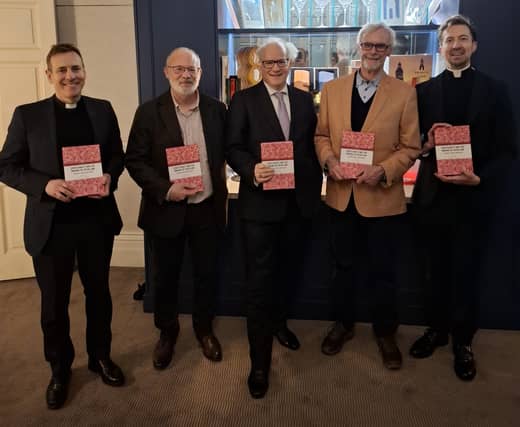

Cáin Adomnáin - the Law of the Innocents - sought to protect civilians in time of strife
THE Law of the Innocents 697 AD, also known as Cáin Adomnáin and at a later date called the Great Law of Birr, which sought to protect civilians in time of strife, is given a prominent place in a new book entitled Christianity and the making of Irish Law: violence, virtue and reason.
The book, published by Routledge of Abingdon, Oxon and New York and supported by Notre Dame university, is a collection of essays, edited by David H. McIlroy, on notable figures in Irish history who contributed to the making of Irish law from early times up to the twentieth century. The book examines the role played by Christian thinking in inspiring and formulating Irish law over the centuries.
Prominent among the contributions is a chapter on the Law of the Innocents by local Birr man Dr Jim Houlihan. This law, adopted by ninety-one Irish leaders in Birr in 697, led by the High King of Ireland and inspired and drafted by Adomnán of Iona, reaches across the centuries to the present day with its concern for the innocent victims of war. It has resonances for us in today’s world where so much suffering is being inflicted on the innocent victims of war, most notably Gaza and Ukraine.
The book contains a total of seventeen contributions on individuals who, over the centuries have had an influence on the making of Irish law, with particular emphasis on the role of their Christian beliefs. These include chapters on such prominent and diverse figures in Irish history as James Ussher (1581-1656), Edmund Burke (1729-1797), Daniel O’Connell (1775-1847), John Henry Newman (1801-1890), Patrick Pearse (1879-1916), James Joyce (1882-1941), John Charles McQuaid (1895-1973) and Éamon de Valera (1882-1975).