
Long-term report: Is the Volvo ES90 one of the easiest EVs to live with?
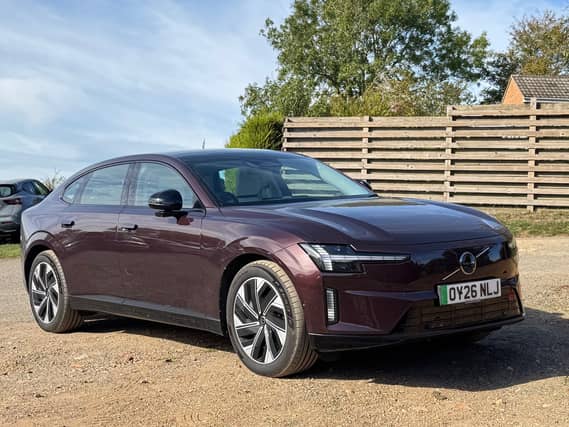

Jack Evans has been driving the big ES90 for a few weeks now, but how is it all going?
Volvo has long been the brand to choose if you want no-nonsense design and incredible practicality. Take a look at the Swedish brand’s back catalogue, and you’ll find it filled with spacious, family-friendly cars like the V70, the V50, and, more recently, the XC40 and XC90.
The thing is, you can’t always keep trundling along doing the same old thing, which is why we’ve now got a new breed of models with this car – the ES90 – being one of them.
In many areas, the ES90 is still pretty old-school Volvo. With 488 litres of boot space – plus a 22-litre ‘frunk’ – it’s pretty practical, while inside you’ll find comfy seats and a very good audio system.
But underneath, the ES90 uses a brand-new platform, and one which is shared with the EX90 and the Polestar 3. As well as being used to accommodate larger batteries and up-to-date powertrains, this setup also brings a huge amount of computing hardware to run various operations of the car. See? Not just any old Volvo.
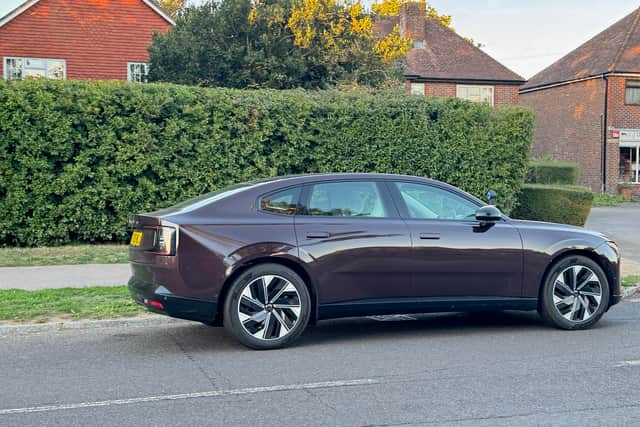
And ‘this’ ES90 has been in my custody for a few weeks now and I’ve been finding out if it’s able to blend together new and old-school Volvo into one electric vehicle.
Let’s start with the good bits. With a full charge, the ES90 is showing around 320 miles of range. We’re in the Single Motor Extended Range model and while the official range is 412 miles, even getting 320 feels like more than enough. In fact, I’ve yet to have a smidge of range anxiety, and with a maximum charge speed of 350kW, it’ll easily deal with the quickest chargers currently available in the UK.
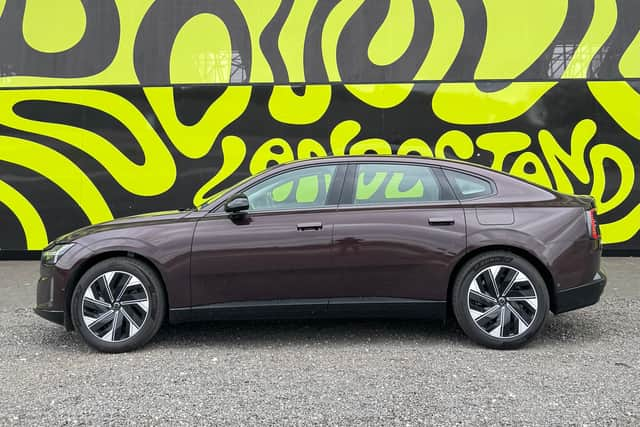
Honestly, I find the ES90’s range and driving experience to be the best thing about it. It is wonderfully quiet and, when you’re on the motorway as much as I am, that’s a very helpful trait to find in a car. Even though it may look like a saloon from the photos, it sits much higher than your typical four-door, so you feel like you get a raised view of the road ahead which isn’t a bad thing either.
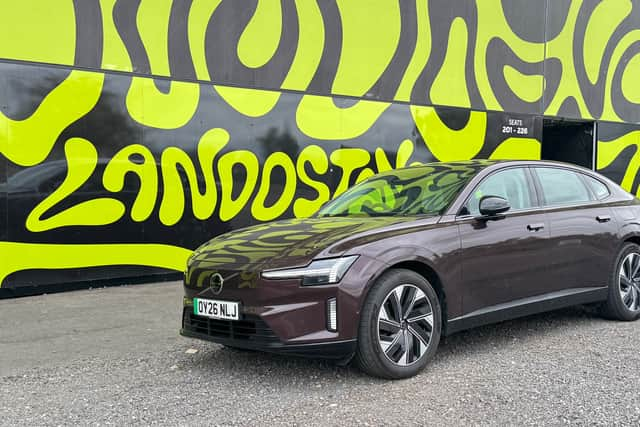
I’ve already done several long-distance trips – including up to Northamptonshire and back in the day from the south coast – and it’s during these journeys where the ES90 feels properly into its stride. With a full charge from home, I only needed to top up for around 15 minutes to get a decent ‘buffer’, though I’m pretty sure I could’ve got there and back in one charge if I’d tried hard enough.
The powertrain is smooth, too, and with 329bhp, I’ve yet to feel like I’d rather be driving the more powerful twin-motor car. Rearward visibility isn’t the best, mind you, though it’s better than in the completely screen-less Polestar 4, in fairness.
I’ve even been getting on well with the Google-based infotainment system, particularly the Google Gemini service. One press of the dedicated button and I can quickly get a round-up of the news, which is helpful if I’ve just missed an hourly update on the radio.
It might sound boring but the cruise control is one of the easiest to use that I’ve ever tried, too. One flick of the column-mounted gear selector and cruise control is engaged; do it again and it switches off. It’s great.
But it hasn’t all been plain sailing with the ES90. Many of the issues lie around the wireless proximity key, which I’ve been having a Jekyll-and-Hyde-style relationship with recently. For a while, the proximity key worked fine, locking and unlocking the car while it was in my pocket. Recently, however, it seems to have died and, despite placing it on the wireless charging pad to top up, it’s still as dead as anything.
It means that I’m now using the key card, tapping it against the driver’s door handle to unlock and lock the car. For the most part that’s fine, but if you want to quickly get something out of the passenger side of the car, you need to go back around to unlock the vehicle at the driver’s door. Then, once you’re inside, you’ve got to place the card on the wireless pad or the car simply won’t start – and many a time I’ve had it in a jacket pocket and spent a few minutes trying to find it again in order to move.
Volvo has always been known for its solid, reliable approach to hardware, and this key feels like a big departure from it. Please, Volvo, just put a normal key back in.