
UK Drive: The Range Rover goes electric – but has it lost its spark?
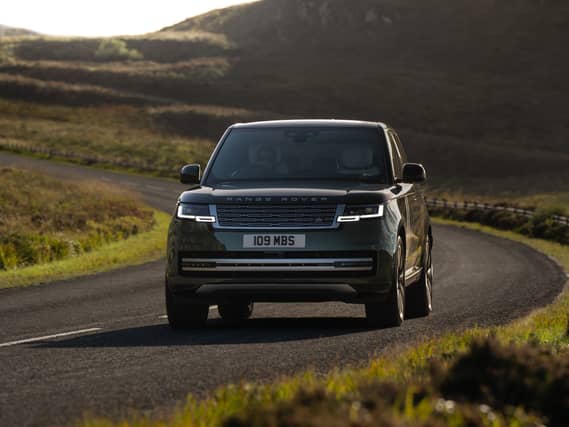

The Range Rover Electric has finally arrived, and there’s one important question – does the addition of full-electric power improve the icon?
What is it?
What’s new?
The idea of an electric-powered Range Rover has been on the drawing board for over a decade, but it’s only now that the car has been fully realised. It comes at a time when sister brand Jaguar is about to embark on an electric future, and firms such as Bentley are readying their own super-luxury electric SUVs in the shape of the new Torcal.
What’s under the bonnet?
Underpinning all of this is an in-vogue 800v architecture, ensuring rapid recharge times; in fact, Land Rover claims a 10-to-80-per-cent top-up will take just 22 minutes.
What’s it like to drive?
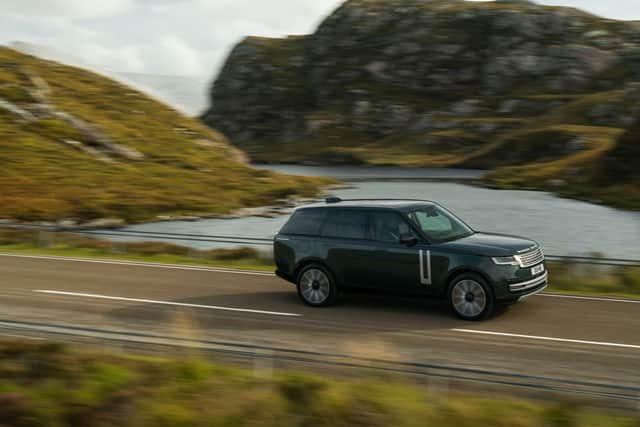
The Electric gets two-chamber air suspension rather than the regular Range Rover’s single system to better deal with the EV’s additional weight. In particular, the upgraded suspension better prevents the car from squatting on its rear axle and the body pitching under hard acceleration and cornering. Meanwhile, the brakes have been retuned to work better with the electric motors, plus there’s a ‘Single Pedal’ feature that even incorporates a ‘Chauffeur Stop’ to make bringing the car to a halt as elegant as possible.
The twin motors throw out 542bhp, and with the Electric taking just 4.3 seconds to get from 0-60mph, it’s the quickest Range Rover you can buy. It’s certainly fast in a straight line, but it goes about its horizon-chasing in a very sophisticated way – no theatrics, no fake petrol noises, no hurling the driver into their seat. It’s ruthlessly fast but in a very dignified way.
Handling-wise, we were driving the car on some challenging sections of the famous North Coast 500 road, and it was at its best in ‘Dynamic’ mode. Not only does that give the full-fat 542bhp (other modes give less power), but the stiffer suspension of this setting made the car more balanced; in ‘Comfort’ the suspension was frantically trying to keep the car soft and wafty, but twisting roads resulted in a rather blancmange-like experience. But in normal, low-speed driving of the type that many city-dwelling Range Rover drivers do, the combination of sheer silence and comfortable suspension is utterly beguiling.
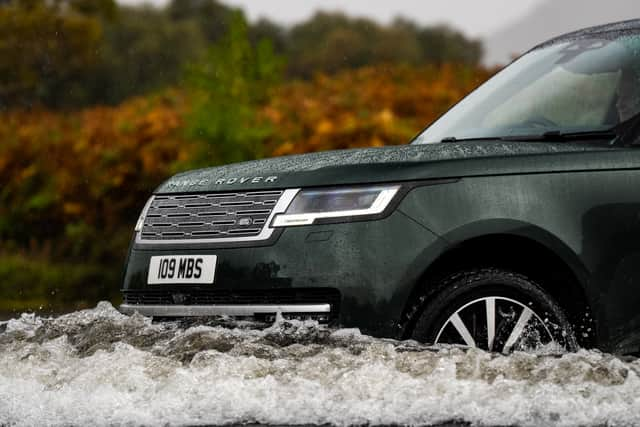
More impressively, the Electric loses none of the standard combustion-engined Range Rover’s imperious off-road ability. There’s the same 900mm wading depth, and there’s no complex low-range gearbox – the torque from the electric motors and off-road terrain are perfect together, ensuring lightning-fast responses.
How does it look?
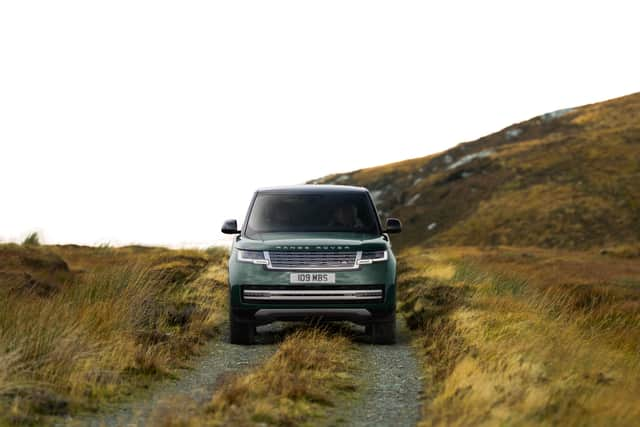
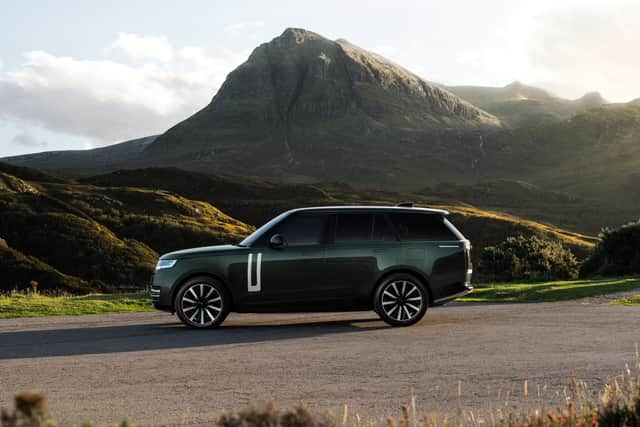
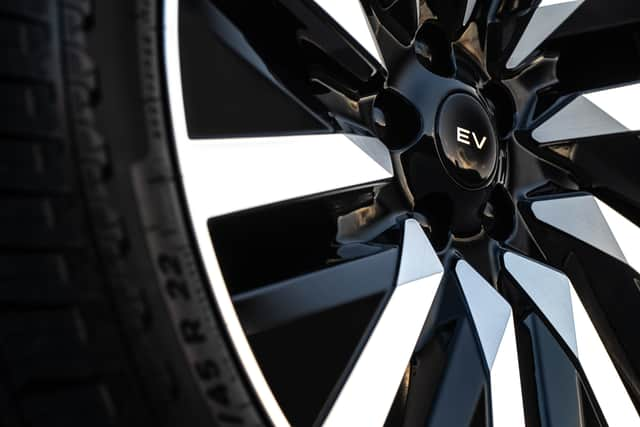
To help you in the game of spot the difference, there’s a blanked-in front grille, no tailpipes, and different wheel designs – and they all have centre caps with ‘EV’ on them.
What’s it like inside?
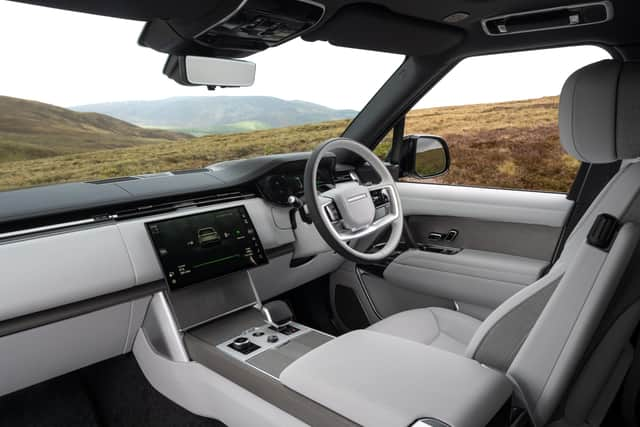
Interior space is the same as it is on the petrol and diesel versions – there’s no raised floor or obvious intrusions into the cabin. One thing that’s worth noting, though, is the Electric only comes in standard wheelbase and top-end SV long-wheelbase guises – the seven-seater option isn’t offered.
What’s the spec like?
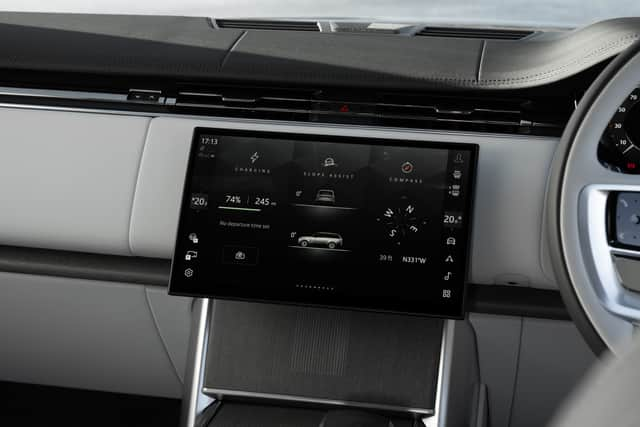
For the standard wheelbase car, the lofty Autobiography model is the first trim available for the ‘lecky Range Rover, so that brings a sliding panoramic roof, a posh Meridian sound system, 24-way heated and cooled front seats that are also massaged, plus ‘Executive Class’ rear seats, plus other features. Prices start at £154,000.
The Electric-only First Edition adds a bundle of special features such as ‘Tailgate Event Suite’ seats, plus a limited, more traditional Range Rover colour palette, those leather-free seats, and costs from £157,610. Meanwhile, SV and SV Black ramp up the luxuries and bespoke trim options, and cost from £174,230 and £190,320 respectively.
Verdict
After a long day’s drive on fast-flowing roads and even some off-roading and wading through a small loch, the Range Rover Electric returned around 2.5 miles per kWh – not sparkling compared to some electric SUVs, but not bad considering the car’s sheer size and weight (2,810kg unladen). There is a nagging concern that the Range Rover’s delayed arrival has pitched it into a world of more efficient SUVs with longer ranges, and that the big Rangie EV could look a little behind the curve in the very near future.
But there’s no doubt that electric power really suits the Range Rover – in fact, in many instances, it’s better than the petrol and diesel versions. Land Rover has done a stunning job at electrifying one of its icons, and eye-watering price tag aside, we expect it to be a very popular choice.