
Accident and emergency waiting times performance falls slightly, figures show
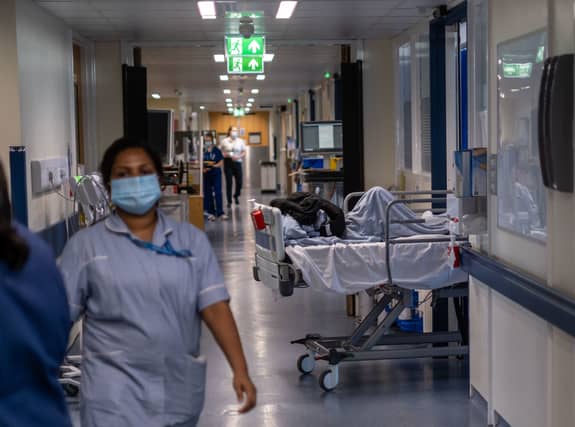

Performance against accident and emergency waiting times targets has fallen for the second week in a row – with the latest figures showing more than three out of 10 patients waited longer than the four-hour target time.
Hospital A&E departments dealt with 23,625 patients in the week ending February 12 – with the four-hour target missed in 7,572 cases.
Just over two thirds (67.9%) of patients were seen and either admitted, transferred or discharged within this time – down from 68.6% the previous week and from the 70.3% achieved in the week ending January 29.
- In the week ending Feburary 12, 7,572 patients spent four hour or more in A&E - up from 7,256 the previous week
- There were 2,256 patients who spent eight hours or more in A&E - up from 2,174 the previous week
- 973 patients were in A&E for 12 hours or more - down from 1,052 the previous week
Public Health Scotland data for the most recent week showed that 2,256 patients spent more than eight hours in A&E – up from 2,174 in the week ending February 5
There were 973 patients kept in A&E for half a day or more in the week ending February 12, although this total was down from the 1,052 recorded the previous week.
The Scottish Government has set the target of having 95% of all patients in A&E treated and then discharged, transferred or admitted within four hours.
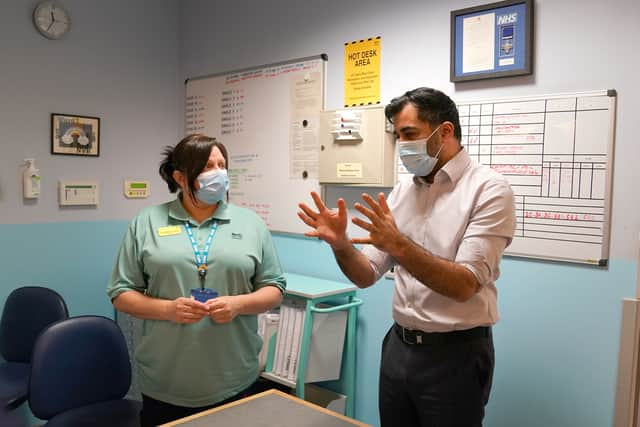
Health Secretary Humza Yousaf stressed the weekly figures would fluctuate, as he insisted the Scottish Government was doing “everything we can” to help the NHS through the “sustained pressure” being experienced this winter.
But Scottish Conservative health spokesman, Dr Sandesh Gulhane, said: “After an extremely brief respite, A&E waiting times are once again heading in the wrong direction on Humza Yousaf’s watch.
“Close to a third of patients were not seen within the SNP’s own target waiting time, which has now not been met for over two and a half years.”
Dr Gulhane said: “Humza Yousaf’s flimsy recovery plans have failed to remobilise our NHS and longer and longer delays at A&E only increase the number of needless deaths in our hospitals.”
With Mr Yousaf now standing to be Scotland’s next First Minister, the Conservative MSP claimed the health secretary was “distracted” by his leadership bid “rather than getting a grip of the crisis in our NHS”.
Branding Mr Yousaf the “worst health secretary since devolution”, Dr Gulhane insisted: “Suffering patients and my burnt out colleagues on the frontline deserve a health secretary fully focused on his brief and trying to repair the damage he’s done to our NHS, rather than one bidding for an undeserved promotion.”
Labour health spokesperson Jackie Baillie also insisted it would “disastrous for Scotland if Humza Yousaf’s failure was rewarded with a promotion to the top job”.
Ms Baillie stated: “The crisis in A&E is still putting lives at risk every week and piling unmanageable pressure on to NHS staff.
“At a time when we desperately need to see real progress, things are going in reverse under this negligent Health Secretary.”
Scottish Liberal Democrat leader Alex Cole-Hamilton said: “Under Humza Yousaf’s NHS Recovery Plan, we have seen the worst waits in history across A&E.
“We were promised improvements but instead waiting times have spiralled on his watch.”
Mr Yousaf said: “We are doing everything we can to help the health service through the remainder of this winter and are providing £8 million to boards to buy 300 new care beds to help alleviate pressure caused by delayed discharge – which continues to be a major factor impacting performance.
“As part of our nationwide approach, patients who no longer need to be in hospital are being urgently reassessed and those clinically safe to be discharged will be safely moved home or to an interim placement in a care home – freeing up beds for those most in need.”
The Health Secretary added: “We will continue to see fluctuations in weekly figures over winter and I am grateful to staff for their continued exceptional efforts in the face of sustained pressure.”