
Aftershock rattles Morocco as rescuers continue search for earthquake survivors
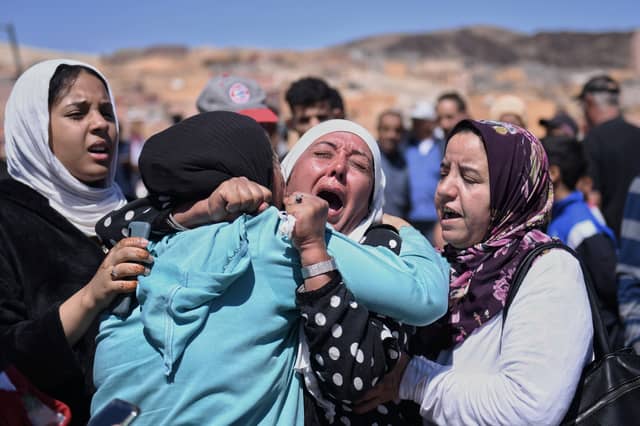

An aftershock rattled Moroccans on Sunday as they mourned victims of the nation’s strongest earthquake in more than a century and worked to rescue survivors, while soldiers and aid workers raced to reach desperate mountain villages in ruins.
The disaster killed more than 2,000 people — a number that is expected to rise.
International aid crews were prepared to deploy, but some grew frustrated waiting for the government to officially request their assistance.
“We know there is a great urgency to save people and dig under the remains of buildings,” said Arnaud Fraisse, founder of Rescuers Without Borders, who had a team stuck in Paris waiting for the green light.
“There are people dying under the rubble, and we cannot do anything to save them.”

“It’s a catastrophe,” said villager Salah Ancheu, 28. “We don’t know what the future is. The aid remains insufficient.”
Residents swept the rubble off the main unpaved road into town and people cheered when trucks full of soldiers arrived. But they pleaded for more help.
“There aren’t ambulances, there aren’t police, at least for right now,” Mr Ancheu said.
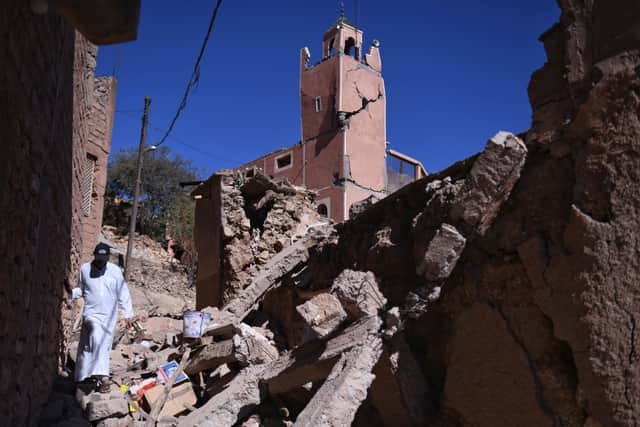
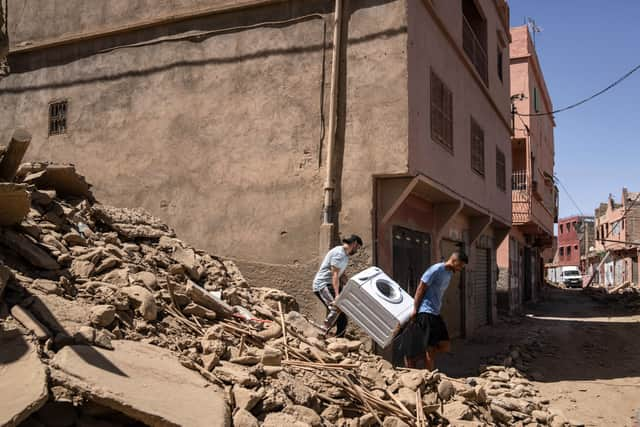
The worst destruction was in small, rural communities that are hard for rescuers to reach because the roads that snake up the mountainous terrain are covered by fallen rocks.
These areas were shaken anew on Sunday by a magnitude 3.9 aftershock, according to the US Geological Survey(USGS).
It was not immediately clear if it had caused more damage or casualties, but it was likely to have been strong enough to further unsettle people living in areas where damage has left buildings unstable and residents fear aftershocks.
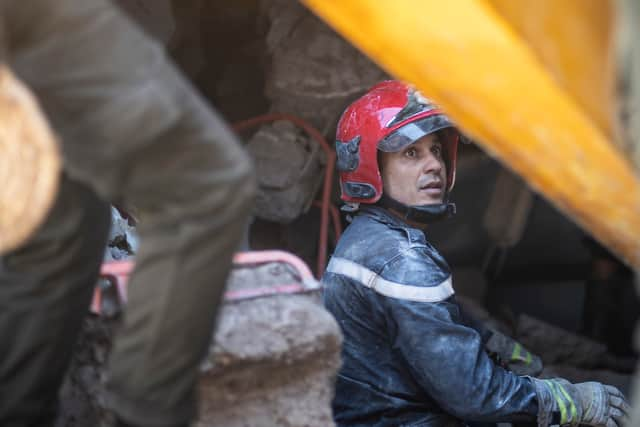
A total of 2,012 people were confirmed dead and at least 2,059 more people were injured — 1,404 of them critically, the interior ministry reported on Saturday.
Flags were lowered across Morocco, as King Mohammed VI ordered three days of national mourning starting on Sunday.
The army mobilised specialised search and rescue teams, and the king ordered water, food rations and shelters to be provided to those who had lost their homes.
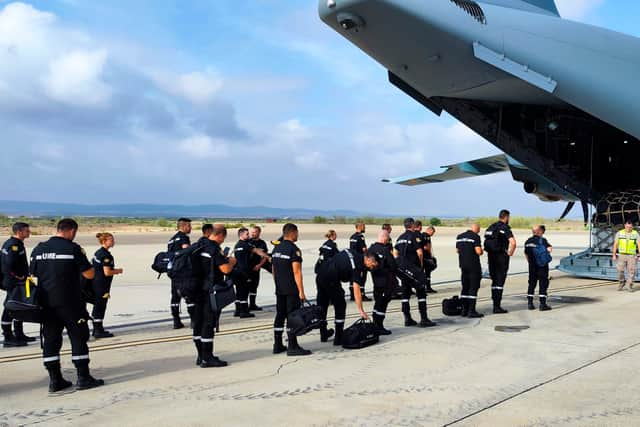
But Morocco has not made an international appeal for help like Turkey did in the hours following a massive quake earlier this year, according to aid groups.
Aid offers poured in from around the world and the UN said it had a team in Morocco co-ordinating international support.
About 100 teams made up of a total of 3,500 rescuers are registered with a UN platform and ready to deploy in Morocco when asked, Rescuers Without Borders said.
In a sign Morocco may be prepared to accept more assistance, a Spanish search and rescue team arrived in Marrakech and was headed to the rural Talat N’Yaaqoub, according to Spain’s Emergency Military Unit.
Foreign minister Jose Manuel Albares said in a radio interview that Moroccan authorities had asked for help.
Another rescue team from Nice, France, was also on its way.
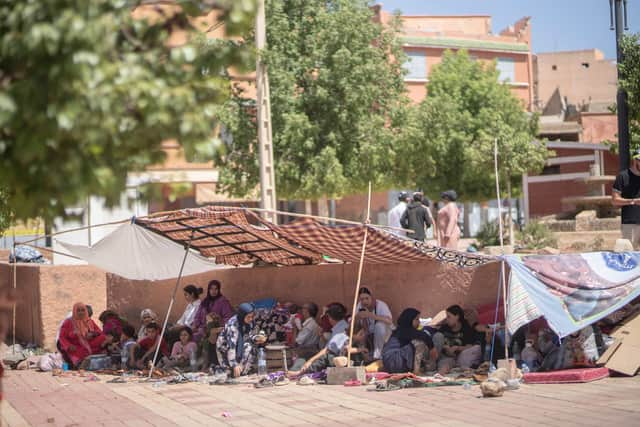
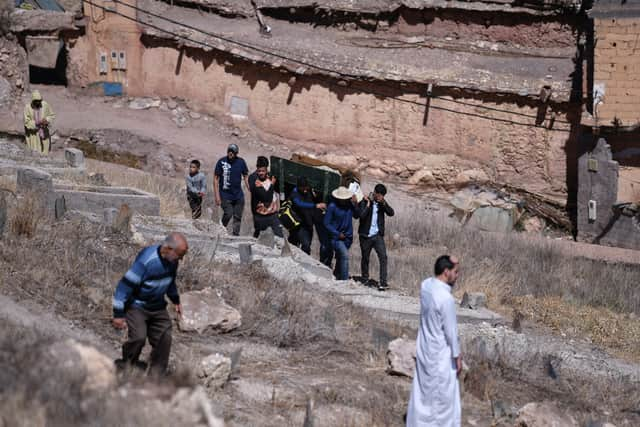
Devastation gripped each town along the High Atlas’ steep and winding switchbacks, with homes folding in on themselves and people crying as the dead were carried through the streets.
The quake had a preliminary magnitude of 6.8 when it hit at 11.11pm, lasting several seconds, the USGS said. A magnitude 4.9 aftershock hit 19 minutes later, it said.
The collision of the African and Eurasian tectonic plates occurred at a relatively shallow depth, which makes a quake more dangerous.