
Avid horse rider who had stroke at 13 and was left partially paralysed credits beloved horse for helping her move again
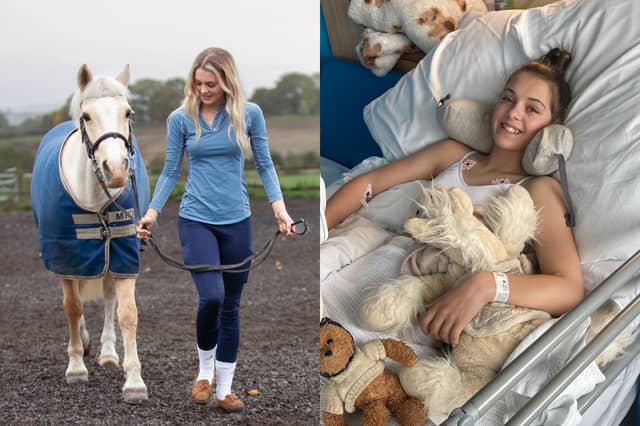

An avid horse rider who had a stroke aged 13 which left her body partially paralysed has credited her beloved horse for helping her learn how to move again.
Summer Chard, now 15, who lives in Newbury, West Berkshire, with her mother, Liane, 39, her father, Lee, 41, and her 18-year-old brother Harry, was feeling “a bit poorly” in March 2023 and was resting up ahead of a family wedding – but she suddenly struggled to sit herself up in bed as her body felt “so heavy”.
Her mother, Liane, who worked with children in care but has since stepped back to look after her daughter, rushed Summer to hospital where she was initially treated for inflammation on her spine, but when her movement did not return after a few days, doctors suspected something more serious had occurred.
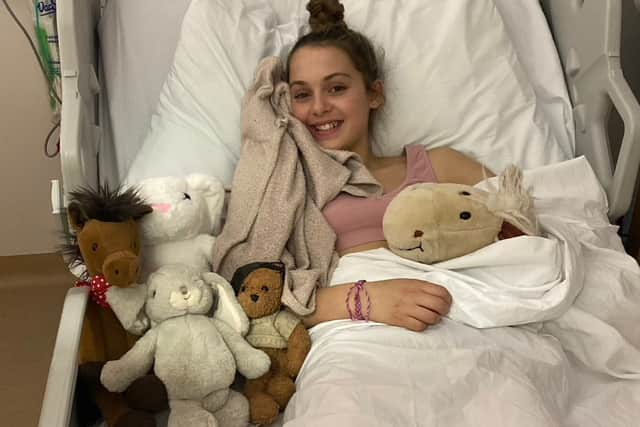
Thought to have suffered a stroke, Summer was left paralysed from the neck down to her waist and she began physiotherapy to help her regain her movement – as she could not wash or dress herself, brush her hair or walk unaided.
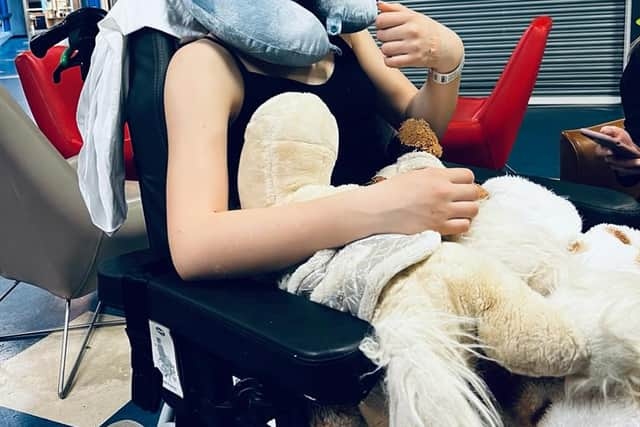
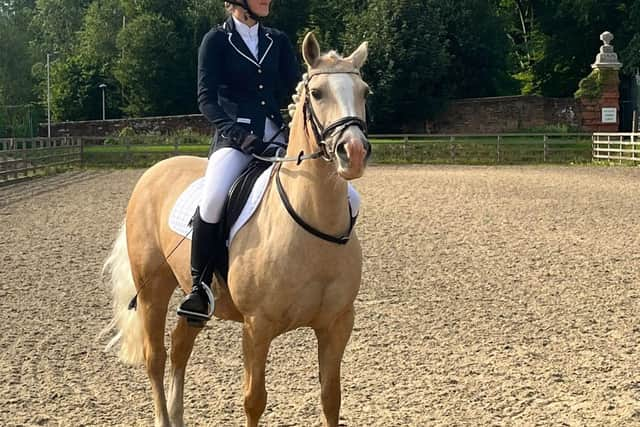
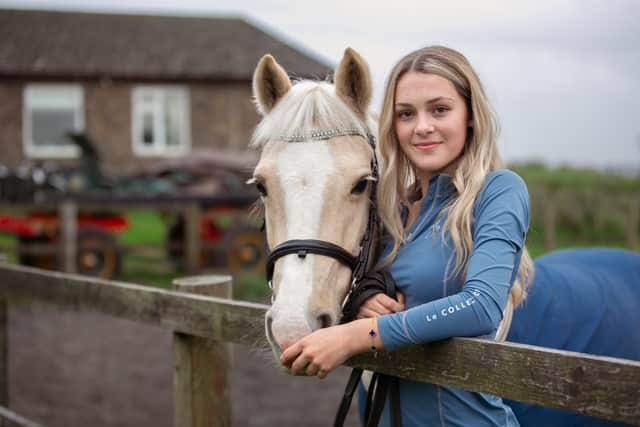
The return home was hard however, as Liane said they “watched Summer walk around the house learning what she couldn’t do anymore”, but after reuniting with her horse, Cindy, a 15-year-old palomino Welsh Section D, Summer has made leaps and bounds in her recovery – and she was soon back on her horse “plodding” around the stable yard.
Summer, who has regained most of her mobility although some issues persist with her hands, is now back at school on a reduced timetable, and she credits the “patience” of her horse for helping her get back on her feet and for keeping her in a “positive” mindset.
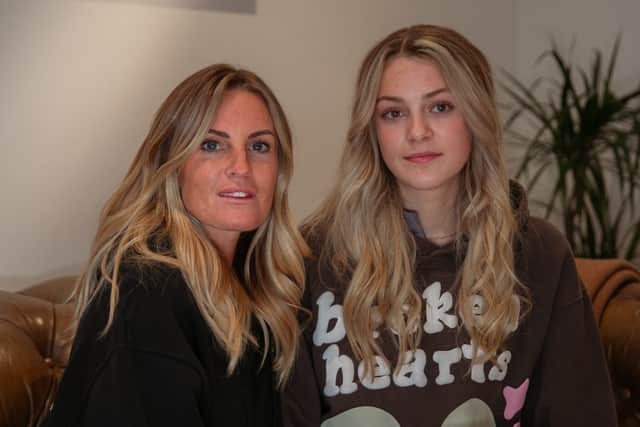
“If it wasn’t for her, I would have been in such a different mindset.
“You can always find the positives in everything and I always think that everything happens for a reason.
Several hundred children are diagnosed with a stroke every year in the UK, according to the Stroke Association.
Summer, who was “massively into sports” and has a particular passion for horse riding, was aged 13 when she started to feel “a bit poorly” on March 16 2023.
The following day, Summer recalled feeling “absolutely fine” but she was resting up at home in preparation for a family wedding the next day, where she was due to be a bridesmaid.
All of a sudden, Summer said her both of her arms “stopped working”, comparing it to a pins and needles sensation.

“I was thinking, ‘I’m sure I’ll be fine’, and my brother was playing around with my floppy wrist,” she said.
Later on, Liane recalled asking her son, Harry, to check on Summer – but it was found she could not sit up in bed.
“Lee and I were saying, ‘come on Summer, up you get’, but she couldn’t,” Liane said.
Realising something was seriously wrong, Liane drove Summer to their nearest A&E department at Reading Hospital.
From there, Summer was admitted and underwent several tests, including an MRI scan which revealed inflammation on her spine – thought to be the cause of the paralysis she was experiencing.
She was treated for transverse myelitis, a rare neurological condition caused by inflammation of the spinal cord.
“By day five though, Summer still wasn’t moving her arms and at this point, she was bed bound,” Liane said.
“Something takes over your body and you just go into fight mode.
“It wasn’t until Summer still couldn’t move her hands and I was putting her into a wheelchair to wash her hair that I thought, ‘I don’t know what’s going on here’.”
“Summer was still unable to move at this time, and the consultants there had come together and said the likely cause of her symptoms was a stroke, because the treatment for transverse myelitis hadn’t worked,” Liane explained.
Summer said it was “nice” to finally have a reason for her symptoms, while Liane said she “did not really believe it”.
“I thought, ‘she’s 13, old people have strokes’ – I’d never heard of children having them,” Liane said.
“Now it had been labelled as a stroke, there was no treatment or medicine as such, it was down to Summer and how she would respond,” Liane said.
She recalled how Summer’s determination to get back on her feet “blew away” everyone around them.
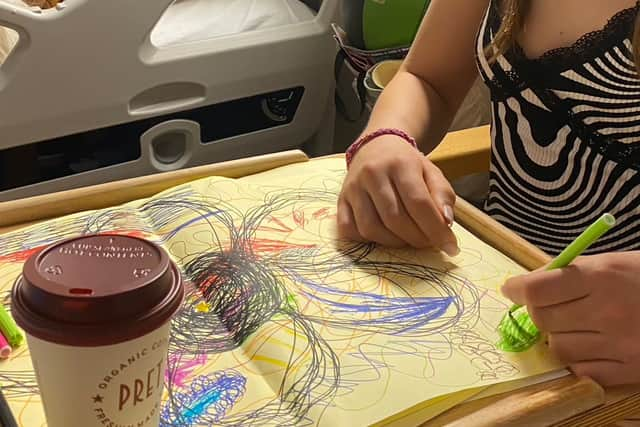
Over the next few weeks, Summer started physiotherapy sessions and tried to be as active as she could on the hospital ward, making her bed and getting out of it each morning.

She returned home on April 3 2023 which was “quite hard” as she had to relearn how to complete simple tasks, such as washing and dressing herself and tying her shoelaces.
“I wanted to go back home but a part of me didn’t, because I wasn’t the same person as who I was when I left,” Summer said.
Liane added: “That’s when all the emotions kicked in because we just watched Summer walk around the house learning what she couldn’t do anymore.”
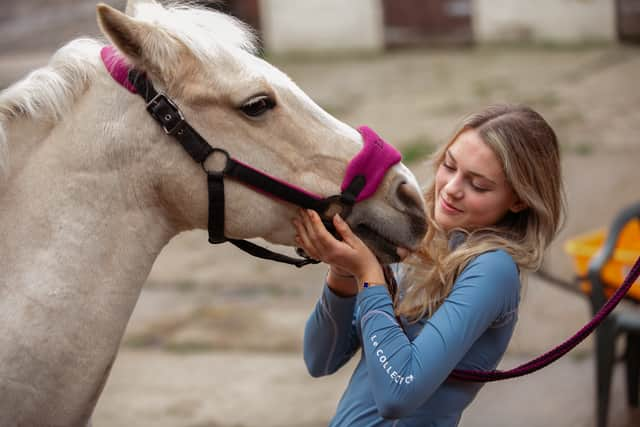
“We went to the yard and Summer asked us to leave her with Cindy, because she wanted unhook her head collar,” Liane recalled.
“She spent about an hour sitting on the floor, just using her thumb to try and do it over and over again, and Cindy was so patient with her.
“When it finally clicked in, Summer was buzzing.”
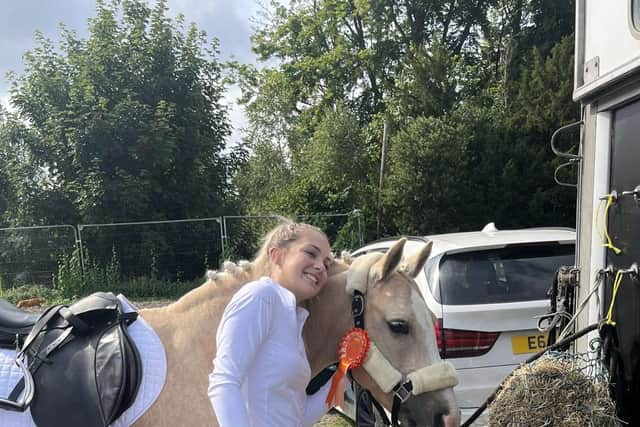
“Summer said ‘I trust her’, but I’ve seen them when they ride, they go very fast,” Liane said.
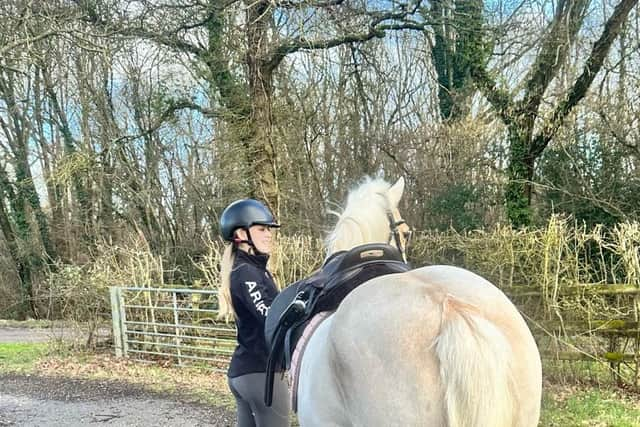
“She still couldn’t really use her arms but we lifted Summer on and Cindy just plodded along, it was amazing to see.”
Completing tasks in the stables with Cindy, such as lifting her arms to put on her saddle and attaching the reins, has helped Summer in her progress.
“My progress has gone so gradually but everyday I’ve seen that I can do things again, I just do them in a different way.
“I got so much stronger and it felt so good because I feel I can be independent again.”
Summer said Cindy is the “most amazing horse” and she has also helped to improve Summer’s confidence – and they recently returned home from a three-day pony camp at a nearby riding school.
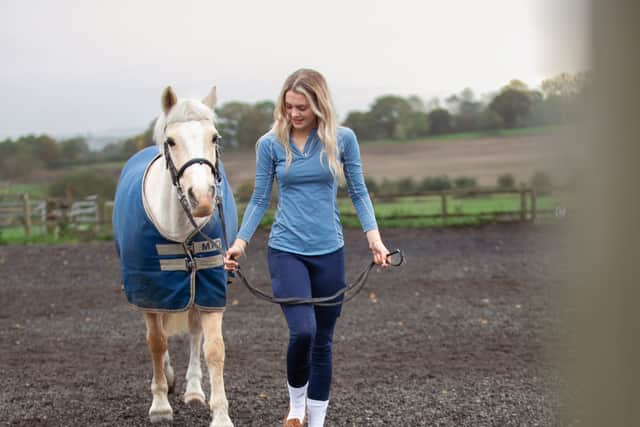
In the future, Summer said she would “love” to open her own riding school to teach individuals with disabilities, injuries or mental health issues how to ride horses.
“Most of my progress has come from Cindy, and horses do help people in everyday life – not just with a stroke but also with your mental health,” Summer said.
“I’d love to show people how they can adapt and use horses to help them, that would be my dream job.”
For more information, visit the Stroke Association website here: stroke.org.uk