
Bee-eater chicks hatch in Norfolk quarry in ‘vivid reminder’ of warming world
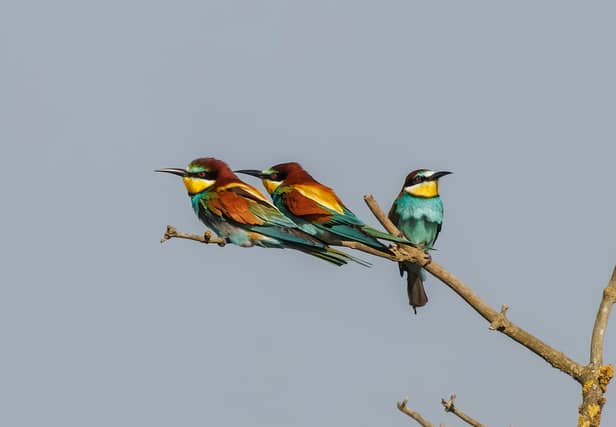

Rare bee-eater chicks have hatched in a Norfolk quarry in a “vivid reminder” of climate change, conservationists have said.
The colourful birds normally nest in southern Europe and northern Africa, but there has been a notable increase in nesting attempts by the species further north, including in the UK, in the past 20 years as the world warms, the RSPB said.
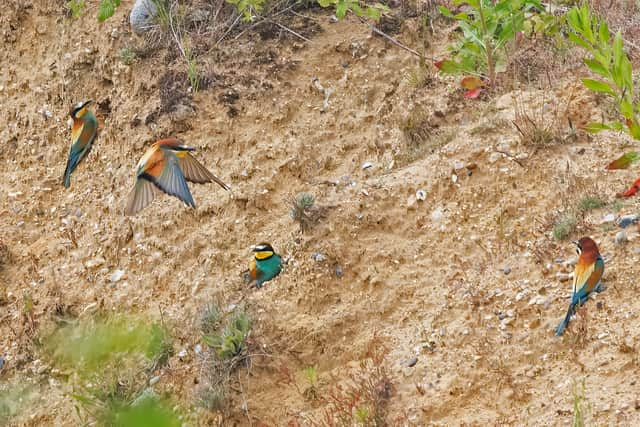
RSPB staff and volunteers from a local bird group have been monitoring the site night and day to ensure the birds have the best chance of raising their young to fledging.
They have spotted an increase in activity bringing food to one of the two burrows, indicating that chicks have hatched.
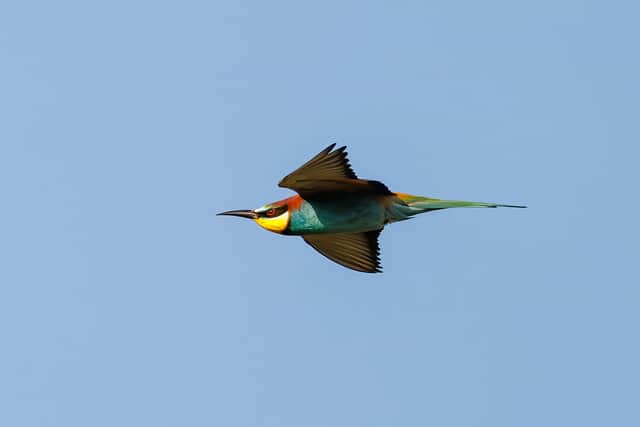
Bee-eaters – which are about the size of a starling and easily recognisable from their claret-red backs, yellow throats and turquoise bellies – raise their chicks communally.
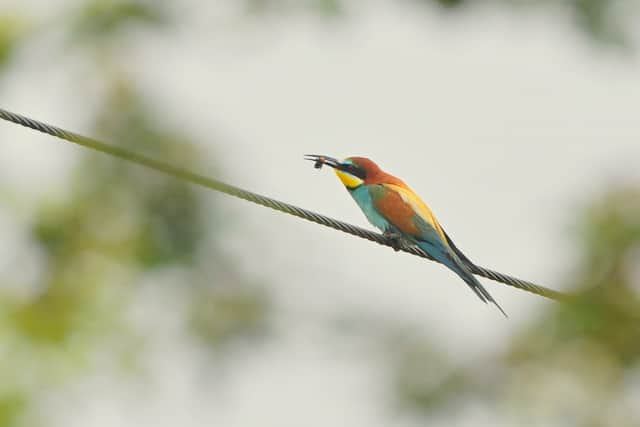
They feed on various species of bees, dragonflies and other flying insects that they catch in mid-air.
The chicks hatched as the UK sweltered in a record-breaking heatwave, and conservationists said the expansion of their northern range was a warning that hotter, drier summers and searing temperatures would become the norm without urgent action to curb planet-heating greenhouse gases.
There have been six recorded breeding attempts by bee-eaters in the UK in the past 20 years, with the last successful bid on the Isle of Wight in 2014.

The charity’s director of conservation, Katie-jo Luxton, said: “While it’s good news that that these chicks have hatched, this remains a very vivid reminder of the changes being wrought by our overheating planet.
“Bee-eaters are a species found commonly in the southern Mediterranean and northern Africa, and as our planet warms they – along with other species – are being pushed further north.
“Like canaries down a coal mine, bee-eaters nesting in the UK are an early warning of what climate change has in store for us all.
She urged the next prime minister to honour the UK’s commitment to cut emissions to net zero by 2050, and put the recovery of nature at the fore.
The birds are expected to remain at the quarry until the end of summer, before flying to southern Africa for the winter as a group.
Around 15,000 people are thought to have visited the site, which has a viewing area and car park – with a £5 charge to help pay for the monitoring – to the east of the quarry, and more have checked progress on a live webcam.