
Couple put off by UK’s ‘tricky’ surrogacy process find ‘Colombian fairy godmothers’ to birth their three children
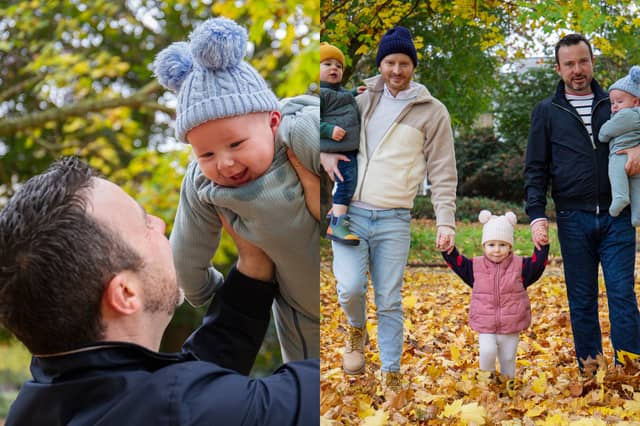

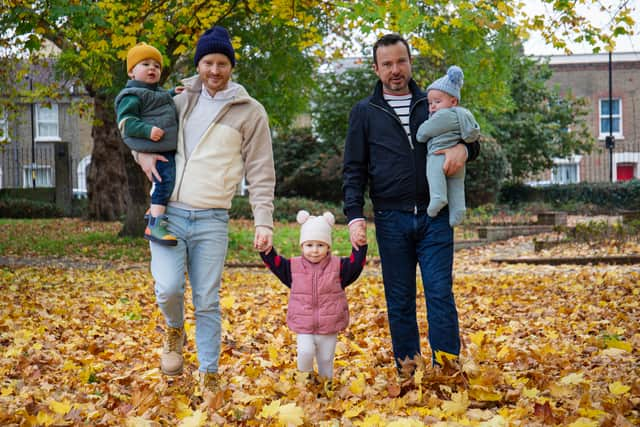
A couple who were put off by the UK’s “tricky” surrogacy process have paid tribute to their “Colombian fairy godmothers” after all three of their children were born to South American women.
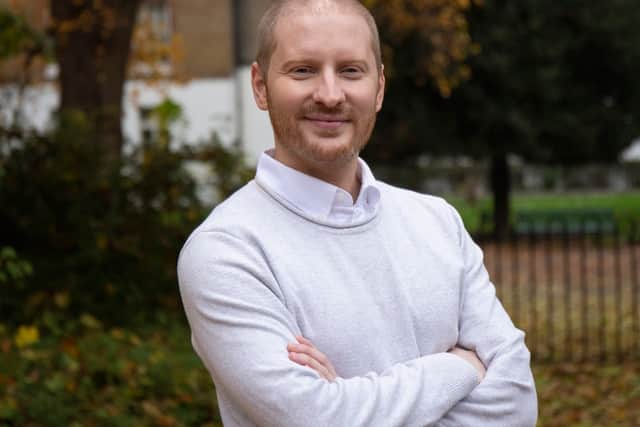
Shaun Thomas, a 36-year-old pharmacist who lives in London with his partner, banker Paul Brennan, 40, decided to start a family during the pandemic but soon realised UK surrogacy laws and costs made their dream difficult to achieve.
Along the way, they discovered many end up joining private Facebook groups to try to find a surrogate.
After researching surrogacy in countries such as the US, Cyprus and Canada, they found hope in Colombia where they embarked on their surrogacy journey in 2022 due to it offering affordability, ethical services and “having high class egg donors”.
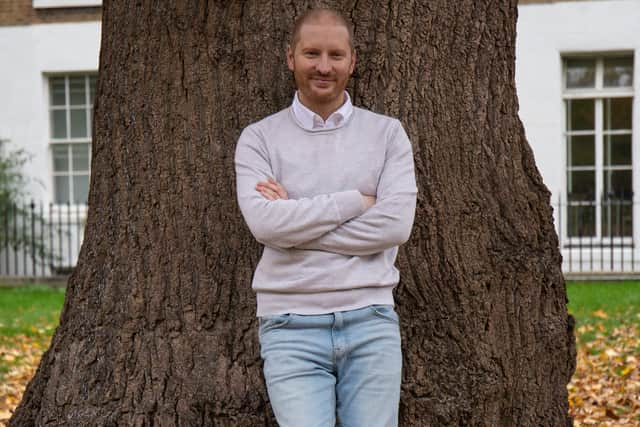
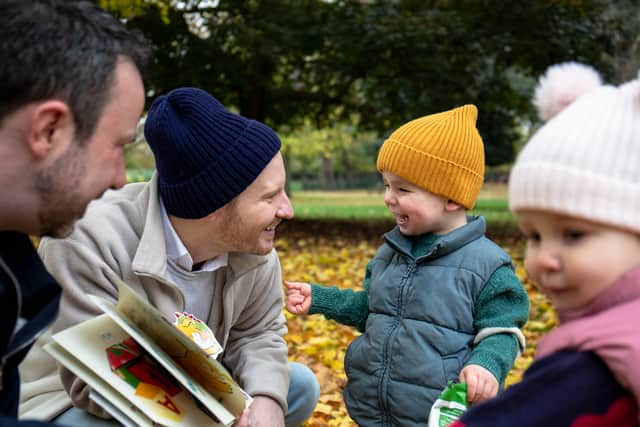
Now, the children are learning Spanish to connect with their roots, and Shaun helps guide others on similar paths through his website and consultancy service, The Surrogacy Father.
Shaun told PA Real Life: “You have to be very careful (using the Facebook groups), it’s almost like an underground operation.
“It’s not regulated and there can be so much misinformation.
“You see other people finding their surrogates on there and it makes you question yourself to think ‘why haven’t we been picked?’.
“It can be a really lovely thing for other people but trying to find a surrogate is a very tricky thing.”
They chose the surrogacy route as they “liked the idea” of having a “biological connection” to their children.
However, after consulting friends with surrogate children and lawyers and conducting their own research, they realised that surrogacy in the UK would be a challenging and long process.
According to the Surrogacy Arrangements Act 1985, it is illegal in the UK to advertise for a surrogate or to arrange a surrogacy agreement for commercial gain.
Non-profit organisations can support intended parents and surrogates but any agreement made is not legally enforceable.
Shaun explained: “To join one of the not-for-profit organisations, you’d pay around £1,000 as a joining fee and they don’t match you with potential surrogates.
These issues have led to the popularity of Facebook groups where parents hope to meet a surrogate.
Shaun joined one of these groups and discovered it hosted casual meet-ups between surrogates and intended parents but found it “felt a little artificial”.
Because of the law, when posting in there, members must not be too explicit on what they are looking for to avoid advertising themselves.
If a surrogate is found, in the UK, the potential obstacles don’t stop there.
At birth, the surrogate is the child’s legal parent, and if the surrogate is married or in a civil partnership, her spouse is usually the second legal parent unless they don’t consent.
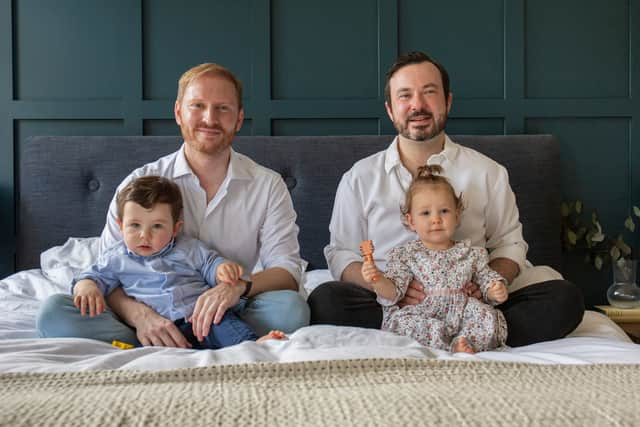
He said: “In an ideal world we would have had a UK surrogate journey for so many reasons – the language, the logistics, and having an even longer bond with the surrogate.”
They explored other options, such as the US, but found it would cost between £145,000 and £200,000 for one child.
A friend also suggested Kenya, but they felt it “was not appropriate for (them) as a same-sex couple”.
While continuing their search online, the couple discovered Colombia as a potential surrogacy option, costing around £50,000 per child, and were intrigued having both visited the country on holiday.
In 2022, they decided to go ahead.
Shaun and Paul used the same egg donor, with half of the eggs fertilised by Shaun and the other half by Paul to create embryos.
Each set of embryos was transferred to a different surrogate, with their menstrual cycles synchronised to enable transfers on the same day.
This method aimed to “replicate a twin pregnancy”, and both transfers were successful.
Shaun said: “We just felt so lucky that it took the first time, we couldn’t believe it and were very excited.”
Shaun said they were kept informed of all scans and appointments and they flew out for the 20-week scan to meet the surrogates again before the birth.
Both babies were due on the same date, but Margot, conceived using Shaun’s sperm, was born six days earlier than Tomas, who was conceived using Paul’s sperm.
“It was a whimsical experience and no matter how much you read about becoming parents, it’s still brand new to you,” Shaun said.
“It’s a magical thing.”
Paul took six weeks of paternity leave, while Shaun took a year off to “look after the children”.
In 2023, Shaun and Paul had three embryos remaining and felt they owed it to themselves to attempt further transfers.
The first transfer failed, the second ended in miscarriage, but the third, using Paul’s sperm, was successful.
Their son, Rian, was born in July 2024.

Since then, they have remained in contact with the surrogates and have books that explain to their children they were born through surrogacy.
Shaun said: “We see the surrogates as Colombian fairy godmothers, but they’ll always be part of our lives, because if it wasn’t for them, we wouldn’t have our children.”
As their egg donor was Colombian, the children are half Colombian, and Margot and Tomas are bilingual in Spanish and English to “give them as much opportunity to explore” their roots when they are older.
Shaun has also launched a website and social channels, The Surrogacy Father, to support others exploring surrogacy and is an independent international surrogacy consultant.
To further help prospective parents, Shaun will be speaking at Growing Families’ UK/EU Surrogacy and Donor Conception Conference on May 10 in London. For more information, visit: www.growingfamilies.org/london-event-2025.