
Dad paralysed after ladder fall in his 20s who turned to drugs says ‘it’s not about the fall, it’s about the bounce’


A father-of-two left paralysed from the waist down in his mid-20s after falling 10ft from a ladder at a construction site, who then turned to alcohol and drugs as a coping mechanism, has said he is “celebrating rather than commiserating” the incident 30 years on by completing a skydive for charity.
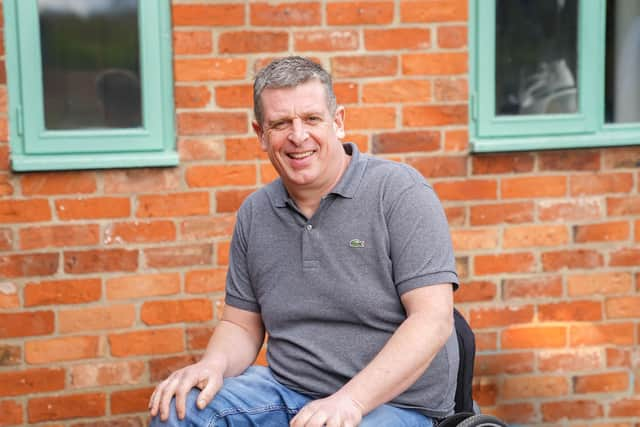
He was taken to the Queen’s Medical Centre in Nottingham, where he was initially reassured by paramedics that he would be OK – but after an X-ray and a CT scan Jason, now 55, was told he had significant spinal injuries and would never walk again.
After an operation to insert two titanium rods in his back he was transferred to Lodge Moor Hospital in Sheffield for rehabilitation, which involved lying flat on his back, being turned every three hours to “stop bed sores”, and being “wheeled into a shower and showered on a waterproof bed”.
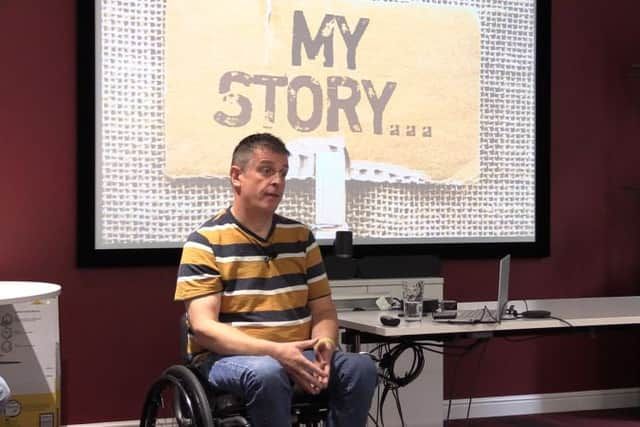
After being discharged four months later, Jason, who is incontinent and uses a wheelchair, said his mental health continued to deteriorate.
His marriage then ended, separating him from his children Abbi, now 33, and Sam, now 31, and he felt he just “existed” through life, later ending up on life-support following a “severe reaction to ecstasy tablets”.
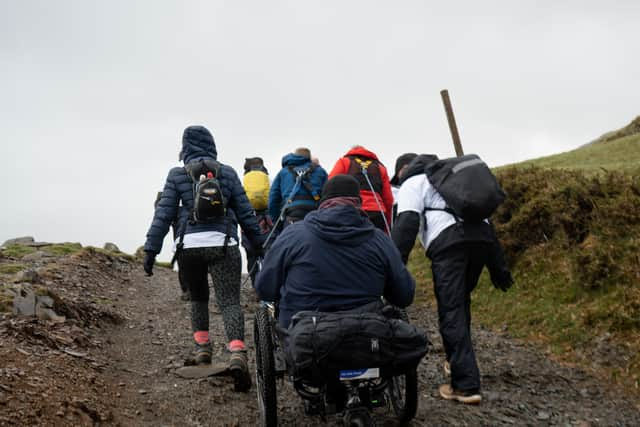
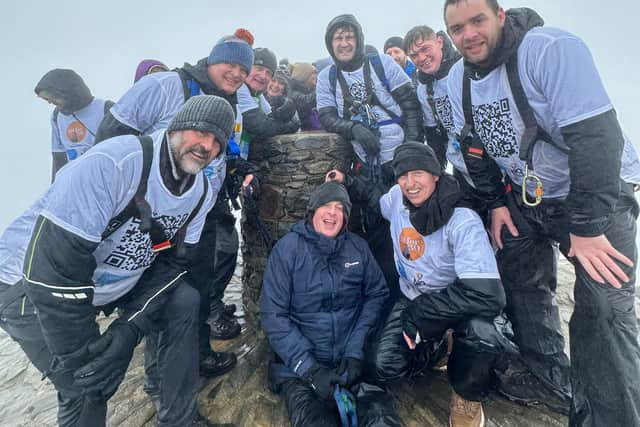
To mark the 30th anniversary of the accident, Jason has taken part in activities to raise money for two charities, the No Falls Foundation and Mental Health UK, including climbing Mount Snowdon and speeding down the fastest zipline in the world in North Wales, and he will undertake a 15,000ft tandem skydive in June.
Jason said he wants to show people what they can achieve with the correct “mindset”, as his “wheelchair has taken him further in life than his legs ever would have done”.
“I’ve turned my life around and I now actually enjoy life – I’m in the best place mentally since my accident.
“My life has completely changed, but I have to work on this every day, and I’ll never stop.”
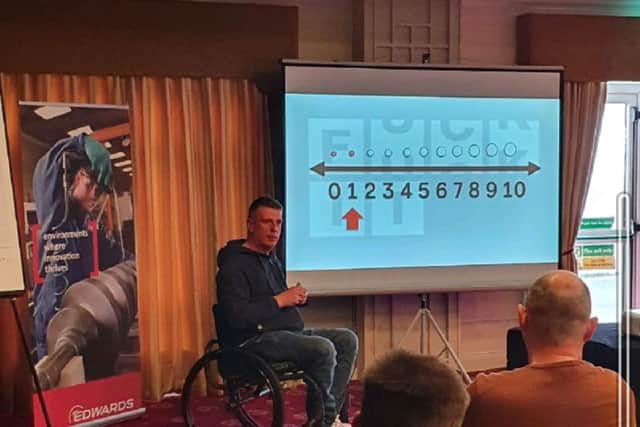
Now, however, his priority is talking about mental health and wellbeing and how it can “impact choices”.
“Sometimes we always focus on the darkness, what we’ve lost, or what’s happened to us, the most horrendous things, but no matter how bad the situation is, there’s always a chink of light,” he said.
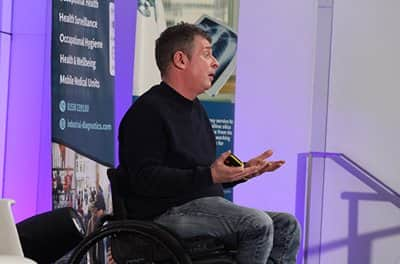
Jason has struggled with his mental health, particularly anxiety, since his early 20s.
On the day of the accident, Jason said, he arrived at work hungover from the night before, just “to get a wage” – he said he “didn’t want to be there”.
Looking back, he feels that if he had had the courage to talk about his mental health, perhaps he would not have climbed the ladder, which he realised was “unsafe”, in the first place.
For a while, Jason thought there may be a “miracle cure” for him, but spending time in rehabilitation was an “eye-opener”.
He struggled to accept how his future looked and “blamed (his) wheelchair for everything”.

He said: “I never thought I’d (take drugs), but I was at such a low point that it seemed like, why not?
“I thought I was invincible – I thought I’d had one accident, so there was no way anything else bad was going to happen to me ever again.”
Jason said the drug-taking “escalated” and he became unpleasant to be around.
This had a detrimental impact on his family and friends, as they felt they had to “tiptoe around him all the time”.
In 1995, Jason took two ecstasy tablets in a club and ended up in hospital with suspected serious brain damage and multi-organ failure, and was placed on life support.
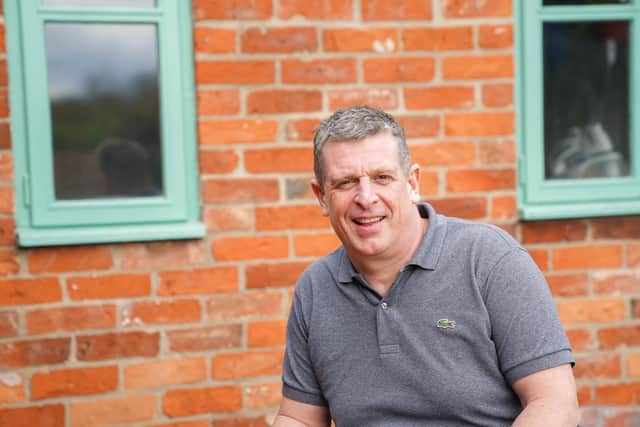
He then spent the next two weeks in intensive care, fighting for his life and battling pneumonia, and this has left him with brain injuries which affect his memory and speech.
Jason said “nearly dying” only further affected his mental health and he was “ashamed of what (he’d) done”, but he knew he had to “pull (himself) out of this hole”.
He then discovered a new hobby, water skiing, which gave him “a purpose and a hobby”.

In 2005, Jason said, he received compensation for the accident – £408,000 – but it was not until he met a man called Dan Terry, who was giving behavioural safety talks, in 2008, through a “chance meeting”, that his life changed and he began working as an inspirational speaker and sharing his story with others.
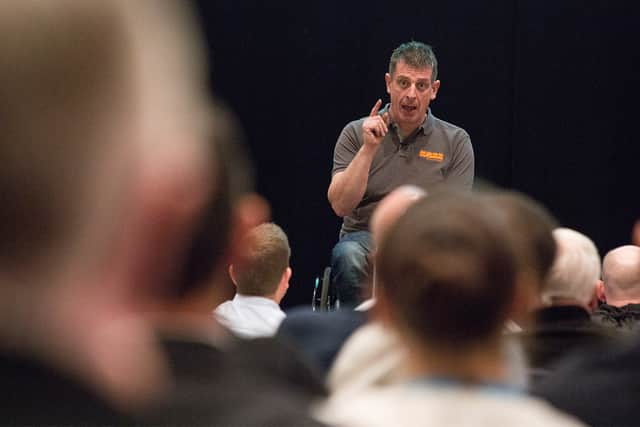
He has since delivered presentations all around the world about workplace safety and culture, and set up his own companies, Jason Anker Live and Proud2bSafe, and he now works for Anker & Marsh with Professor Tim Marsh, who inspired his interest in wellbeing in 2017.
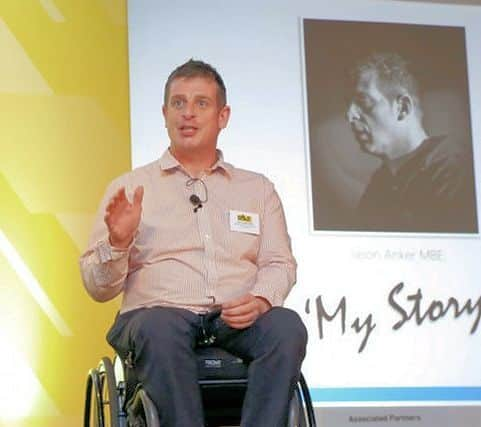
He hopes that by sharing his story it will encourage a more open workplace culture to discuss mental health and he said “it’s not about the fall, it’s about the bounce”.
“Now I practise my gratitude and, believe it or not, I’m grateful for my wheelchair today,” Jason said.
“I can share my accident story to try and prevent people having accidents, but I can’t change it for me.
“All I can change is my attitude about being in a wheelchair and, since I’ve done that, literally my life has completely changed.”