
Discovering the highest tides – and freshest lobster – in Canada’s New Brunswick

A fin and the dark grey curve emerge from the water, ducking back down just as quickly. The pelting rain has given way to a misty sky, the light peaking through parting clouds, just in time for our small eight-seater boat to spot a minke whale.
We’re sailing through Passamaquoddy Bay, an inlet of the famous Bay of Fundy, straddling the border between Canada and the USA.
Part of the Maritime Provinces, New Brunswick – Canada’s only official bilingual province – is famous for its nautical culture, delicious North Atlantic seafood and its unusual oceanography. Yet surprisingly, compared to so many other natural wonders, it’s yet to receive many crowds and feels somewhat undiscovered by British tourists.
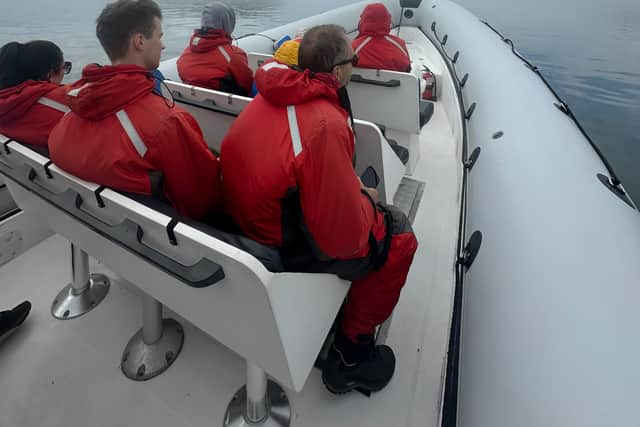
During a VIP Zodiac boat tour ($99/£56) with Jolly Breeze Whale Adventures, setting off from the charming and pristine resort town of St Andrews by-the-sea, we watch whales, a huge colony of seals basking and swimming in the sun, and an eagle perched on a red spruce tree top long enough to get a good stare at its magnificence.
But this body of water is special for more than just wildlife.

Hopewell Provincial Park (entry $15.85/£9) provides an ideal spot to witness the effect of this unique occurrence. At low tide the bay empties out as far as the eye can see leaving a huge mud flat, with a fascinating ecosystem. During mud shrimp mating season in the first two weeks of August, up to 50,000 sandpiper birds descend, explains our guide Joe. “It’s quite spectacular.”
But head down to the seabed after the water has swept out (at 9-10am it’s quiet) to walk the 1.2 mile stretch alongside the spectacular cliff face and coves. What’s known as ‘flower pot rocks’ – slim at the bottom and bulging out upwards, with trees growing on top – rise out of the sand and a natural ‘lover’s arch’ has formed as part of the natural sandstone creations shaped by tides and time.

Several more national parks with excellent walking trails, swimmable rivers and beaches can be found along New Brunswick’s coastline, including Fundy National Park. Later that day, an accessible 30-minute hike takes me to a viewing deck to see the 500-million-year-old canyon, Walton Glen Gorge.
While the 92-square mile Kouchibouguac National Park (an indigenous word meaning river of long tides) has everything from forest, lagoons, salt marshes, beaches, dunes and barrier islands, as well as the warmest ocean waters (by Canadian standards) to swim in. On another afternoon, we hop into kayaks to paddle through the clear waters of Kouchibouguac River – seeing no other boats or people along the way.
Saint John, on the Bay of Fundy, may have an industrial edge (it’s an important shipping dock) but it’s a safe, walkable town with a trendy edge and a growing food and drink scene. A devastating fire in 1877 burned down huge portions of the city, but residents worked hard to save the Saint John City Market (the oldest market in Canada) which today is packed with street food and craft stalls.
You might not think of wine-making when you think of Canada but New Brunswick wine is up and coming. Magnetic Hill Winery in Moncton is leading the way, and being an overall cooler climate, dropping to minus-30 degrees Celsius in the winter (but easily up to 30 degrees Celsius in the summer), blends work best as the grapes are typically high in acid.

“Blueberries are really important in New Brunswick,” says Gilliane who takes the tours, traditionally a key ingredient for the indigenous population and wild blueberries are the largest by GDP agricultural product exported from the province. “But it took a long time for hotels to get on board with blueberry wine,” she admits.
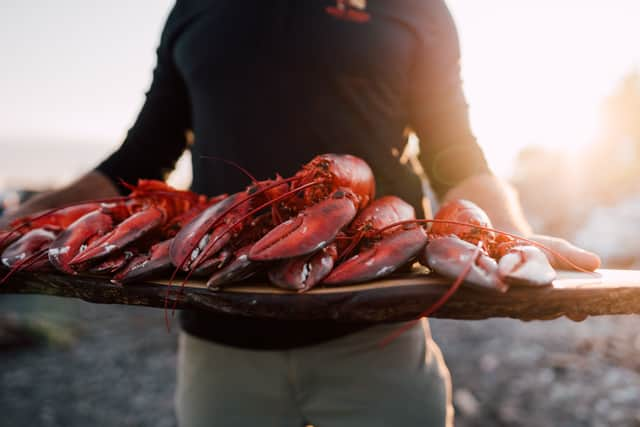
One night, at the Corks and Claws event, I dig into eight tasting dishes of lobster, each cooked up by a local restaurant or supplier – from a smoked barbecue brisket and lobster dip to lobster seafood chowder – each paired with a glass of wine. Another event sees locals compete to take apart and eat two whole lobsters the quickest in front of a cheering crowd – without tools. It’s quite the spectacle.
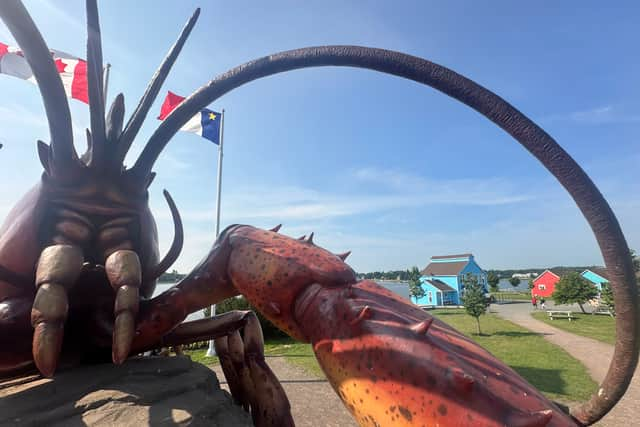
The festival ends with the closing down of the main street and a long table set up down the middle of it. For La Grande Table ($45/£23pp), 700 people sit down to tuck into a dinner together of a perfect deep red lobster each, served whole and cold – around here that’s considered the most flavoursome way.
Part of the culture and abundant on these shores, everyone around me at the table seems to know what they’re doing when it comes to “taking their one’s apart”. A woman opposite, Sheila, takes pity on my pathetic attempts to break into the shell and spends most of her meal giving me advice for where to angle my cracker, while the man next to me continually passes me extra napkins.
As Pascal says, “It’s like a big cookout, a big family.”
For people whose daily lives are shaped by the ocean, it’s become the event of the year.
How to plan your trip
For more information on the destination, visit atlanticcanadaholiday.co.uk and tourismnewbrunswick.ca/