
Dumpster diver toasts success with Guinness from a haul and slashes monthly food bills to under £100 for two while saving for house deposit
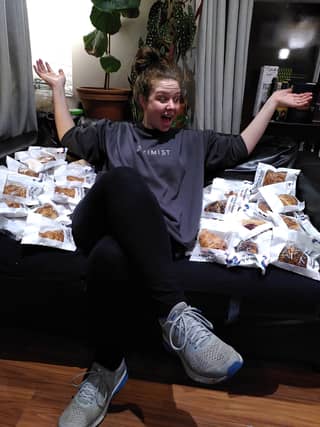

A dumpster diving professional is toasting her success with hauls including a four pack of Guinness which have helped slash her food bills to less than £100 a month for two and are helping her to save a deposit for a house.
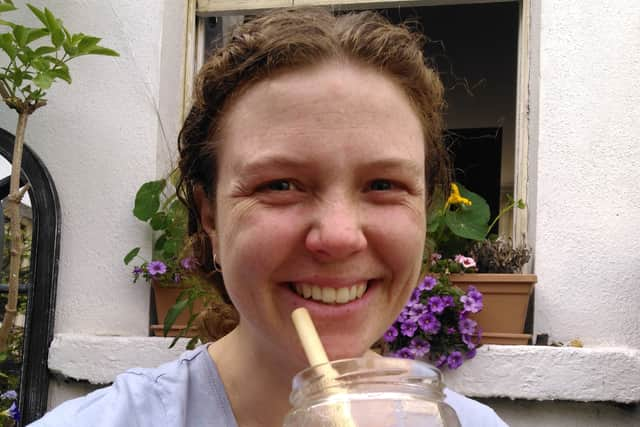
Cutting waste while saving money are the driving forces for marketing manager Caitlin Weich, 29, who combines using a food sharing app with plundering supermarket dumpsters for discarded goods to slash her outgoings and help her protect the planet.
By also collecting unwanted food from friends and neighbours in her lunchbreak, Caitlin, who lives in Dublin, Ireland, with her lawyer boyfriend Adam, 28, says they eat like kings on a pauper’s budget, adding: “We spend as little as 100 euros (£85) a month for the two of us.
She added: “Some weeks, I could save 40 or 50 euros (£34-£42) by dumpster diving and getting food the supermarkets are throwing out.”
After studying ‘freeganism’ – the practice of reclaiming and eating discarded food – Caitlin even managed to live for a month without spending a penny on food in February 2021, by using unwanted or leftover groceries from friends, neighbours and dumpsters.
Now she is eager for other people to see that penny pinching is cool, so is happy to share her tips on scrimping and saving.
Caitlin added: “And while I know it is not really possible to be entirely zero-waste, I wanted to see how close I could get to it.”
Spending her early years in Namibia, in southern Africa, with her mum, Sue Weich, 65, a biology teacher, dad, Johann Weich, 63, a systems analyst, and two brothers, Angus Weich, 24, an electronic engineer, and Duncan Weich, 22, a social media and communications officer, before moving to New Zealand at 14, Caitlin learned to conserve commodities like food and energy when she was young.
She said: “In Namibia, there is huge focus on reducing your waste because there is a tangible impact if you don’t.
She added: “You quickly understand that you need to be reducing your waste and making better use of what you have.”
Growing up finely attuned to her environment, in 2015 Caitlin discovered the zero-waste movement, which prompted her to examine her own food habits.
She said: “I watched a video from a woman who had managed to reduce her waste to the point where she never put out a rubbish bin.

Keen to take things one step further, by seeing if she could use other people’s waste and, thus, reduce her own unnecessary consumption and spending, while she was still living in New Zealand, she dabbled in dumpster diving.
But it was only when she moved to Dublin in 2019 and met a dumpster diving friend in early 2020, that it became a regular way to find food and keep her bills down.
She said: “I made a friend who invited me to do dumpster diving with her.
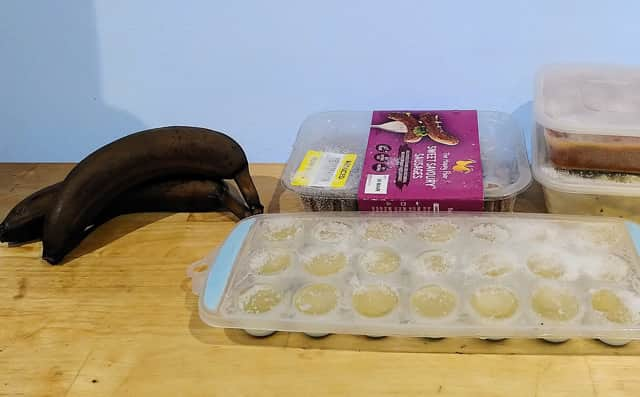
Caitlin’s first haul included puff pastry, pizza bases, lettuce, cucumber, bread rolls, salads, freshly made pasta and six cans of Guinness beer – one of which was dented.
“It was amazing really,” she said.
“I was still shopping for other food I wanted, but it made such a difference to my bill.

She added: “Some weeks, there might not be that much and I would save maybe 10 euros (£8.50) on things like bread, but other weeks, I could save up to 50 euros (£42).
“I was telling all my friends about it. Once you get over the ‘ick’ factor of what you’re doing, you realise how brilliant it is.”
Even in lockdown, Caitlin managed to dumpster dive a few times a month – despite her boyfriend’s reservations.
She said: “My partner was less enthusiastic and made me sterilise everything.
Having such success on her trips to the supermarket bins, Caitlin decided to take on the challenge of ‘Freegan February’ in 2022.
This meant trying to spend nothing at all on food and using only produce that was destined for waste streams.
She added: “I had some bits left in the freezer which I ate, but otherwise, I asked my friends for food they were going to get rid of and used the app.
“At the end of every day, I would go on Olio and look at who had what nearby – like someone with potatoes half a kilometre away.
“I was training for a 10k run, so I worked it into my day, –
going on runs and collecting food en route, or checking the app in my lunchbreak and cycling to collect it.

Caitlin’s month of free food did not stop her from eating well, either.
She said: “I had plenty of greens, fibre, protein and I even managed to get multivitamins using the app – so it was a rich and diverse diet.
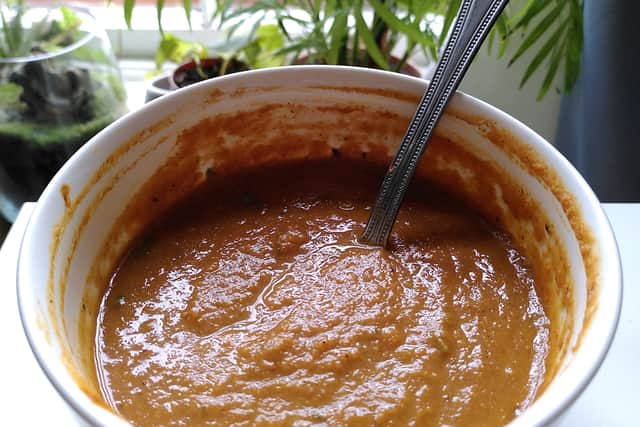
“We had curries, pasta bakes, salads, vegetable bakes.
She added: “I got to the end of the month and I thought, ‘I could keep going.'”
The year before, in December 2021, Caitlin even managed to make a completely free Christmas dinner using 50 per cent Olio and 50 per cent dumpster diving.
She said: “I went dumpster diving a couple of times and I managed to find potatoes, pumpkin, broccoli, cauliflower, cabbage, peas, potatoes, mushrooms, gravy powder, potato gratin and chicken covered in crumbs with garlic butter.”
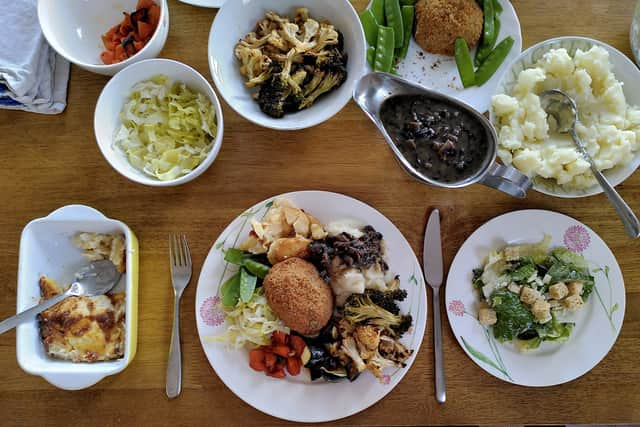
She said: “We really like fancy food like cheese boards and wine, which probably undoes a lot of our saving, but that’s the compromise we make.
“This can mean out monthly bill goes up, but we also find it possible to spend as little as 100 euros (£85) between us.
“We have been saving for the last couple of years to put a deposit together to buy our own place, so we are definitely money conscious.

One of Caitlin’s biggest tips for cutting costs and waste is to understand the difference between use by dates and best before dates.
She said: “If it has a use-by date, you should probably throw it out when it hits that.
“But if it is best before, that is just a suggestion. It might not be as vibrant after that date, but it is still perfectly good to eat. You just need to look at it and make a judgement.
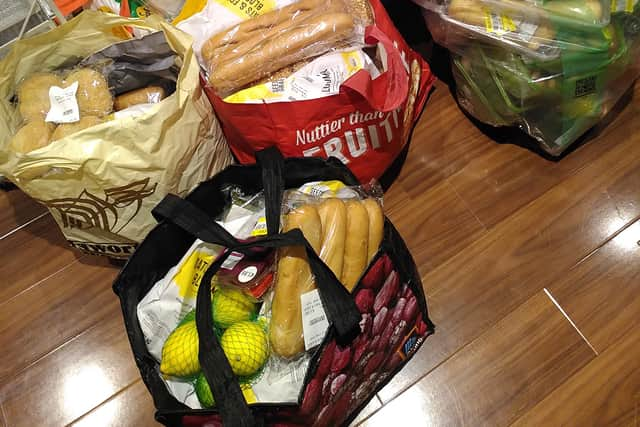
She added: “Check what is in the fridge before you go shopping and what is likely to get wasted and use that first. Then work out what meals you can make, so you can use those things.”
Storing food correctly can also make a huge difference to its shelf-life, according to Caitlin.
She said: “You should consider what the best temperature is to store things at.
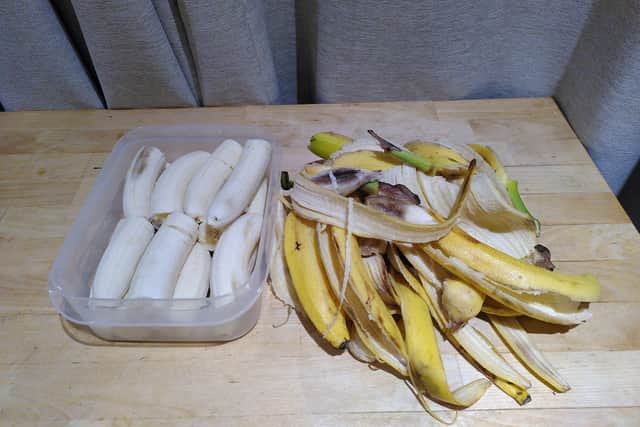
Caitlin added: “If you put bread in the fridge, it goes stale, on the counter, it goes mouldy. I put half a loaf in the freezer and the other half on the side in a brown paper bag.
“Potatoes and onions should be in a cool, dark cupboard, so they last longer.
“Certain fruit and veg will also make other fruit and veg ripen quickly, so it’s worth checking what works together.
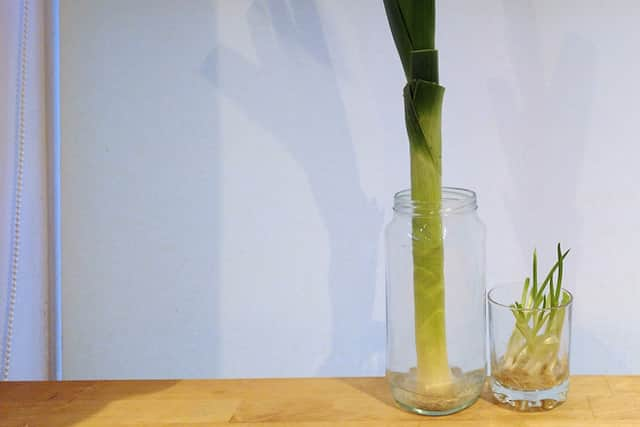
“Another handy trick is growing fruit and veg you have already bought.
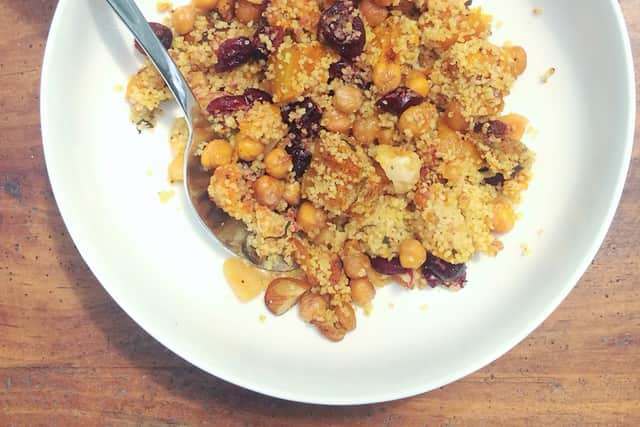
For anyone keen to reduce spending and food waste, Caitlin’s advice is to take it “bit by bit.”
“You have to start somewhere – it doesn’t matter where,” she said.
“Maybe take a look at your bin and ask yourself, ‘How could I have avoided throwing this away?’
“Don’t put too much pressure on yourself – everything you do is a step in the right direction.”
- Breakfast - shop-bought cereal, with free sunflower seeds, peaches and yoghurt collected from Olio, costing 50 cents (42p).
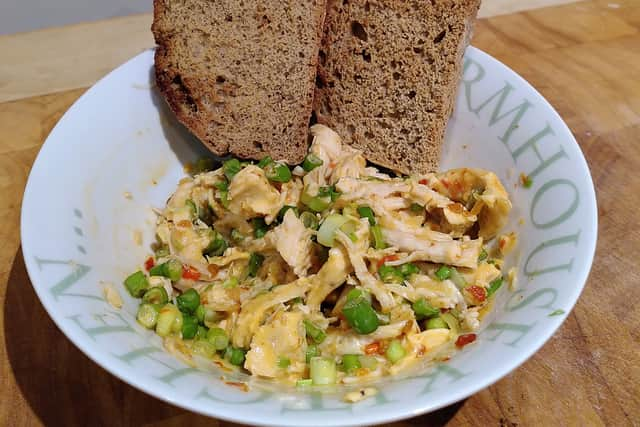
- Lunch - Sandwich with tofu made with free bread, lettuce and home grown spring onions, costing one euro (85p), or leftover curry from dinner.
- Dinner - Potato salad using potatoes from Olio, home grown spinach and shop-bought parmesan cheese, oil and edamame beans, costing less than a euro.
You can follow Caitlin’s food journey on her Instagram – https://www.instagram.com/wastelesswanderess/