
Eco-holidaymaker dodges planes and hotel comforts and packs plastic tubs in sub-10kg luggage to reduce carbon footprint
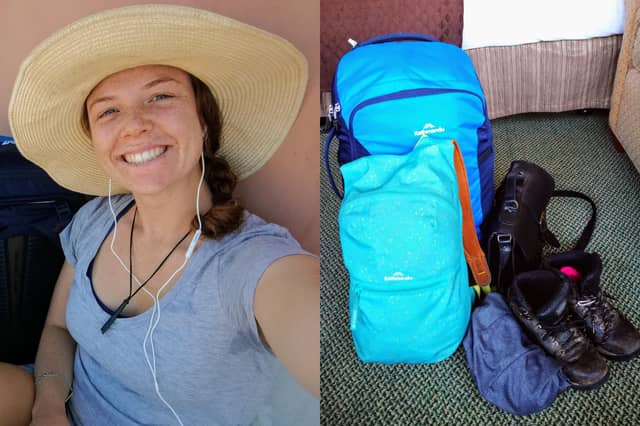

A travel lover who has visited more than 40 countries uses “clever hacks” to reduce her carbon footprint, from packing less than 10kg to taking plastic food containers so she can have “leftovers for brekkie” and asking hotels ahead of her stay to remove any free toiletries.
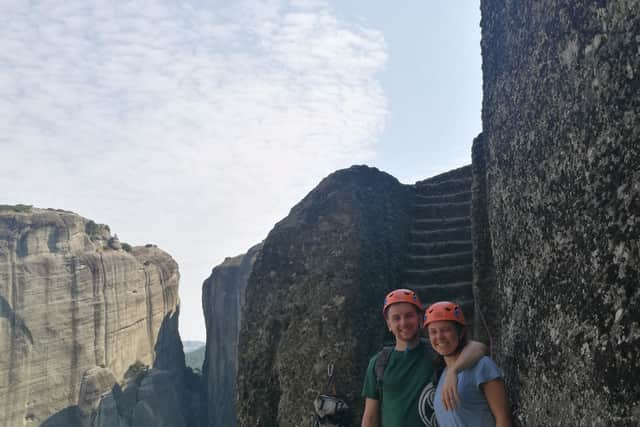
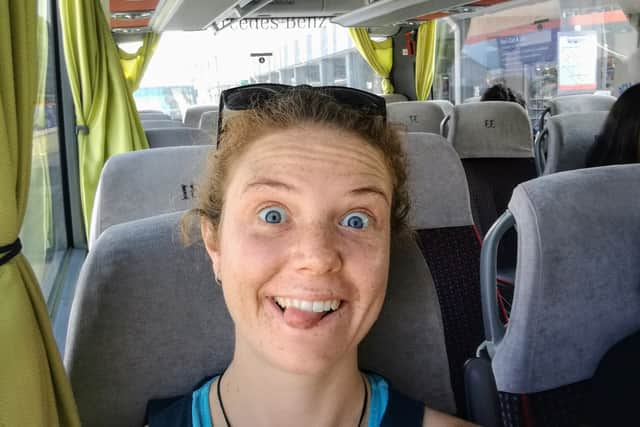
Caitlin Weich, 31, from Dublin, Ireland, tries to avoid flights at all costs and has travelled more than 1,800 miles from Greece to the UK using only buses, trains and ferries – while her partner, Adam Boyle, 28, has trekked all the way to Japan without boarding a single plane.
To reduce their impact even further, the couple have devised a wide range of carbon-cutting techniques, including packing a “capsule wardrobe” – a small collection of clothes that can be combined into an outfit for any occasion.
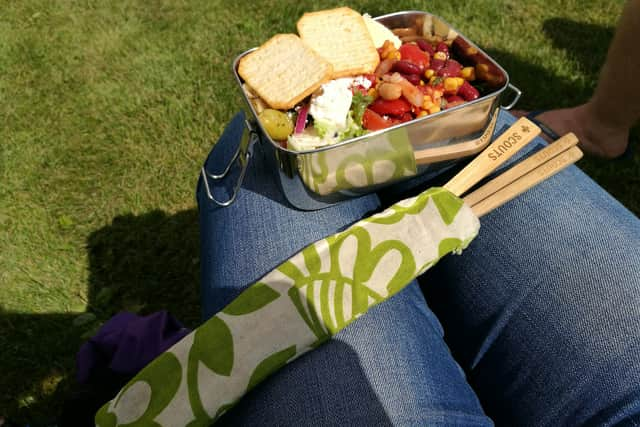
Caitlin also travels with a pair of chopsticks and a spoon to avoid using disposable cutlery, as well as natural shampoo bars and toothpaste tablets, which are plastic-free.
The couple avoid hotels when possible and otherwise always leave the “Do not disturb” sign on their door as Caitlin points out “you wouldn’t change your sheets and towels every day at home”.
Caitlin says she is happy to snack on any scraps, whether it’s a “piece of naan bread with a side of smoothie” or “half a biscuit and a handful of nuts with some leftover stir fry”.
“The next time you go on a trip with your massive luggage, take note of what you actually wore,” Caitlin, who works in marketing, told PA Real Life.
“Because the chances are you’re going to come home and half of the clothes in your bag will not have been worn, and you will have carried them halfway across the world and back for nothing.
“If you go through the list of things that you can change, one of the biggest is look at your international flights.”

“From pretty much day one, I would be bundled up into the car and we would drive to see my grandparents in South Africa – that’s a long drive from Namibia,” she said.
But at the age of 15, she became aware of her carbon footprint after filling out an online carbon calculator and being shocked by the results.
“The biggest thing that was within my control and completely changed my carbon footprint was air travel,” she said.
Since then, Caitlin has been working out tactical ways of reducing her carbon footprint while travelling around the world.
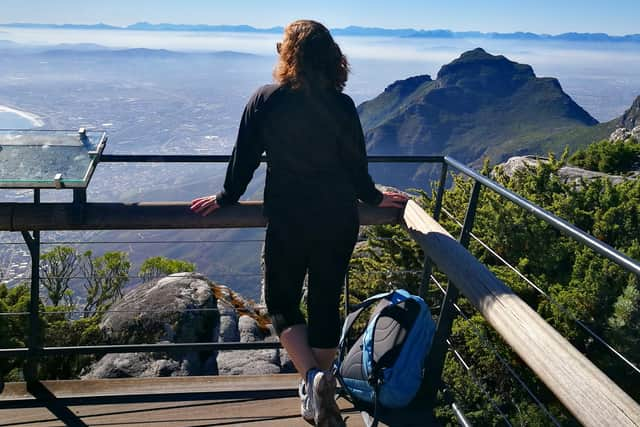
To date, she has visited Namibia, South Africa, Botswana, Mozambique, Swaziland (now Eswatini), England, Northern Ireland, Scotland, Wales, Hong Kong, New Zealand, France, Spain, Switzerland, Italy, Vatican City, Greece, Monaco, Albania, Croatia, Montenegro, Hungary, Austria, Czech Republic, Germany, Netherlands, Ireland, the United States, South Korea, Malaysia, Singapore, Norway, Finland, Estonia, Iceland, Azerbaijan, Turkey, Canada, Australia, Slovenia, Luxembourg and Belgium.
The first and most important change Caitlin made was swapping flying for “sail and rail” whenever possible.
Caitlin once travelled from Athens in Greece back to Dublin relying solely on trains, buses and ferries.
Her partner, Adam, has also proved that planes are not the only way to cover great distances by travelling from Dublin to Tokyo over a three-month period.
“He literally sailed, trained, bussed the entire way to Japan,” she said.
“So it is possible, but it will take you a couple of months.”
“Hotels, unless they are doing incredibly well, are buildings which remain partially empty most of the time,” she said.
“They offer a full laundry service for your entire set of bedsheets and towels, however often you ask for that to happen.”
“I don’t know about you, but when I’m at home, I don’t change my bedsheets every second day,” she added.
“So one of the little hacks you can do is hang the ‘Do not disturb sign’ on the outside of your door for the entire duration of your stay.”
“At home, I always make sure to keep my leftovers,” she said.
“So, if possible, I’ll take a container with me so that I can take my leftovers home.
“That can really help reduce the amount of waste because you’ll be able to eat it for brekkie the next day.”
Caitlin has also managed to cut back on packing as much as possible by using a “capsule wardrobe”, which involves taking fewer but more versatile clothes.
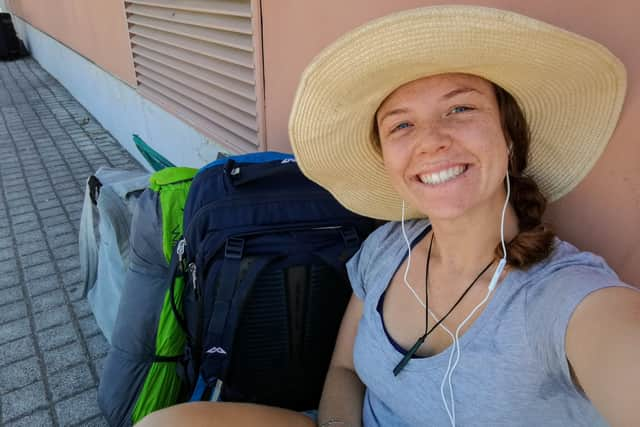
“It means that I’m not taking any extra weight, because each kilo that we add to our baggage increases the overall carbon footprint of our trip.
“So that pair of jeans goes from being your daytime walking around jeans with a T-shirt to your night-time jeans with a cute, little fancy top.”
In 2017, she managed to travel from New Zealand to the UK, Scandinavia, Iceland, Canada and the United States with just a carry-on bag weighing less than 10kg.

“Send a message beforehand saying ‘Please don’t do that, I’m going to bring my own solid bar of shampoo, conditioner and toothpaste’.
“I don’t need the small plastic bottles that are going to end up going through recycling or more likely to landfill.”
She also travels with a spoon and chopsticks to avoid having to use disposable cutlery when ordering takeaways.

“A pair of chopsticks and a spoon will get through all airport security and are light to carry.
“Bringing a knife – that will get confiscated, guaranteed.
“Even if you find yourself parked by the side of the road in the middle of the Canadian Rockies, trying to cook on the tiniest gas cooker you’ve ever seen, you will be able to do anything with chopsticks and a spoon.”

A single person flying from London to Athens and back generates an estimated 0.873t of CO2, according to myclimate’s flight calculator.
Part of the problem, says Caitlin, is that aviation companies receive large government subsidies, which means the price of a plane ticket is often lower than that of trains, boats or even buses.
The couple still have to occasionally use planes for work, but try to avoid them at all costs.
“Transport is usually the biggest carbon emitter of our holidays, and some methods of transport are well known to be bigger fuel-burners than others.
“Aeroplanes and cruise ships are the big two to try and reduce or avoid entirely.”
Learn more about Caitlin’s travels by following her on Instagram: @wastelesswanderess