
Francesco Mattana’s minestrone soup
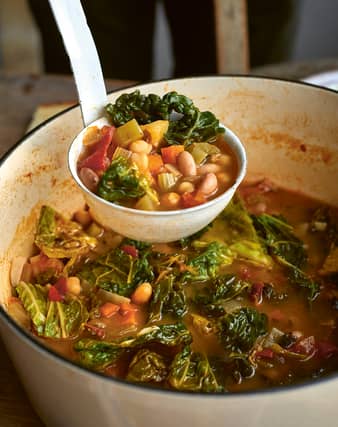

“Minestrone is a big deal all over Italy, but the most famous minestrone comes from Sardinia,” says chef Francesco Mattana. “For many years, this comforting and delicious dish was the main meal in Sardinian households, and our grandparents ate it almost every day. This might sound boring, but actually the recipe would vary, depending on what was available and what was in season.
“Minestrone is a great example of why Sardinia is one of only five ‘blue zones’ in the world and why people here are more likely to live to 100 years old. It’s a simple, accessible dish, packed full of seasonal vegetables and legumes. Even today, minestrone is still something that we eat very often. My advice would be to use my recipe as a guide but try to make it seasonal and make it your own, just like we do in Sardinia. Swap things in and out – if you prefer to use different pulses or different greens, you can try chard (silverbeet), cavolo nero (lacinato kale), courgette, cauliflower … the list goes on.”
Francesco Mattana’s minestrone soup
Ingredients
(Serves 4)
100g dried borlotti (cranberry) beans
100g dried chickpeas (garbanzo beans)
1 onion, roughly diced
2 celery sticks, chopped into 1cm cubes
1 large carrot, peeled and chopped into 1cm cubes
2tbsp extra virgin olive oil, plus extra for drizzling
2 garlic cloves, finely chopped
3 sun-dried tomatoes, finely chopped
15g basil
15g parsley, finely chopped
3 large tomatoes, roughly chopped (or halved if using small tomatoes)
1 large potato, peeled and chopped into 2cm cubes
4 large Savoy cabbage leaves, tough stalks removed and roughly chopped
40g pecorino, grated, or 4tbsp pangrattato (see below)
Method:
1. The night before, wash the beans and chickpeas in cold water. Place them in a large bowl and cover them with fresh cold water; they will expand as they soak, so make sure the container is large enough and there is plenty of water. Cover the bowl and leave them to soak for at least 12 hours (or longer – check the packet).
2. The next day, drain and then rinse the beans and chickpeas thoroughly with fresh water. Set aside. Place a large casserole dish (Dutch oven) or ceramic pan over a medium heat. Add the onion, celery, carrots and olive oil and cook for 8–10 minutes, stirring occasionally. Now add the garlic and sun-dried tomatoes and cook for a further 2 minutes. Tear the basil leaves and stir them in, along with the chopped parsley and cook for another minute.
3. Next, add the tomatoes and potato, give everything a stir and cook for a further 2 minutes, or until the tomatoes are starting to soften. Add the drained beans and chickpeas and a good pinch of salt and pepper. Cover with water and bring it to the boil.
4. Once boiling, reduce the heat back to medium, cover and cook for 1–1 ½ hours, or until the beans and chickpeas are soft. If needed, top up with water so that the vegetables are always submerged.
5. Once the beans and chickpeas are cooked, add the cabbage, cover and cook for a final 10 minutes. Taste and adjust the seasoning before serving.
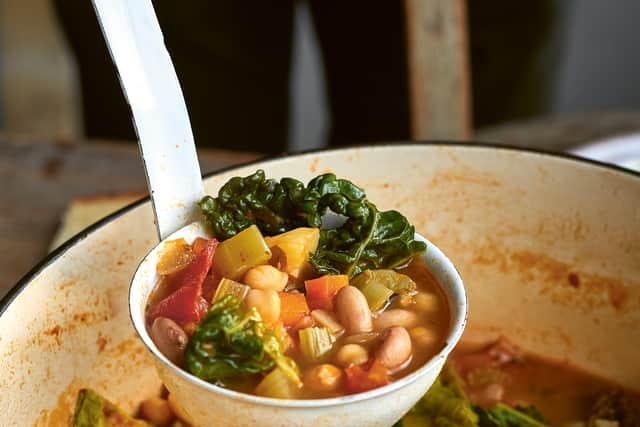
6. To serve, use a slotted ladle to divide the vegetables, beans and chickpeas equally between serving bowls, then pour over the warm broth. Sprinkle with cheese or pangrattato and drizzle over some olive oil.
Top tips
If you want to save time or you are making this at the last minute, you can swap out the dried pulses for 250g tinned borlotti beans and 250g tinned chickpeas. If using tinned, add them along with the cabbage. Sometimes we also add fregula or small pasta shapes towards the end of the cooking time, along with some extra water.
Don’t waste old bread
“With bread being one of the most wasted foods around the world, I wanted to give you an easy way to make the most of it when it’s old or stale,’ explains Mattana. “Pangrattato, which means ‘grated bread’ or ‘breadcrumbs’, was initially created as a cheat’s substitute for cheese in the cucina povera or ‘kitchen of the poor’.
“I make this recipe all the time because it’s a great way to elevate dishes such a risotto, ravioli and pasta by adding a bit of a crunch and a boost of flavour. It can also be used as a garnish on top of fish, meat, vegetables dishes – you name it! My version goes well with many different dishes, but you can adjust the recipe to include whichever herbs or flavours you like.
Pangrattato – no-waste breadcrumbs
Makes 1 x 500g jar
300g leftover or stale bread, chopped into small chunks
2tbsp extra virgin olive oil
30g bunch of parsley, stalks discarded
2 large garlic cloves, crushed
2tsp dried oregano
1 sun-dried tomato
Fine sea salt and freshly ground black pepper
1. Put the bread, olive oil and a generous pinch of salt and pepper into a large frying pan over a medium-high heat and toast for 5 minutes, stirring occasionally.
2. Transfer the toasted bread to a food processor and add the parsley, garlic, oregano and sun-dried tomato. Blitz it all together until a rough breadcrumb has formed, and you don’t see any large pieces of garlic, parsley or sun-dried tomato. Avoid over-blending, as you want the pangrattato to have a rough texture. If you are working with a small food processor, do this in batches.
3. Transfer the breadcrumb mixture back to the frying pan and continue to cook it over a medium heat, stirring constantly until it is golden and brown all over. This could take 10–15 minutes or more, depending on how stale your bread is.
4. Once the breadcrumbs are golden and lightly crispy, transfer them to a large baking sheet, spread them out evenly and leave them to cool. Once cooled and fully dry, transfer the breadcrumbs to a sterilised and well-dried jar with an airtight seal and keep them in the refrigerator, or you can freeze them for months and just take out as much as you need each time.
Bear in mind that the breadcrumbs will dry out completely while cooling, so don’t overcook them, as this will result in very dark breadcrumbs with a bitter aftertaste. Make sure that the pangrattato is completely cool before storing it. Any residual heat can create condensation in the jar that will develop bacteria and will lead to spoilage.
Eat Like a Sardinian: Live to 100 by Francesco Mattana is published in hardback by Murdoch Books, priced £22. Photography by Dave Brown. Available May 28