
Glass barriers help protect Venice’s famous basilica from high tides
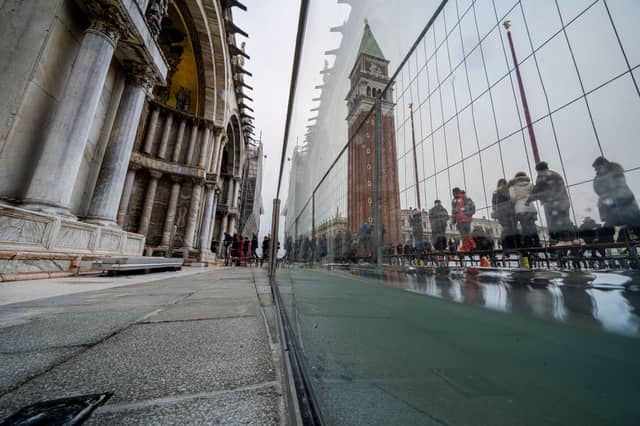

It’s a simple solution, but one that may keep the marble columns and valuable mosaics of Venice’s famous St Mark’s Basilica safe from seawater-induced erosion: a set of glass barriers installed around the 900-year-old church has kept its floors dry during frequent high tides.
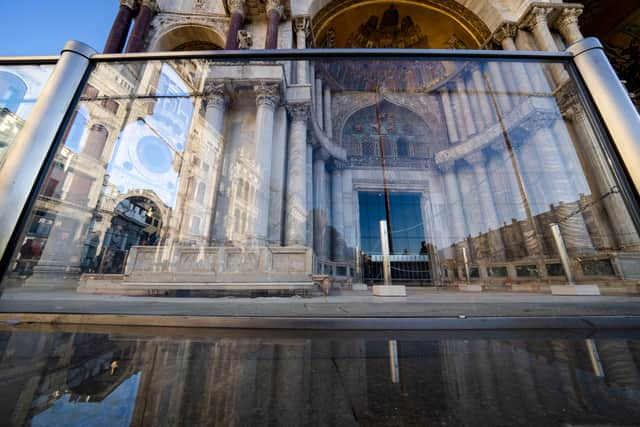
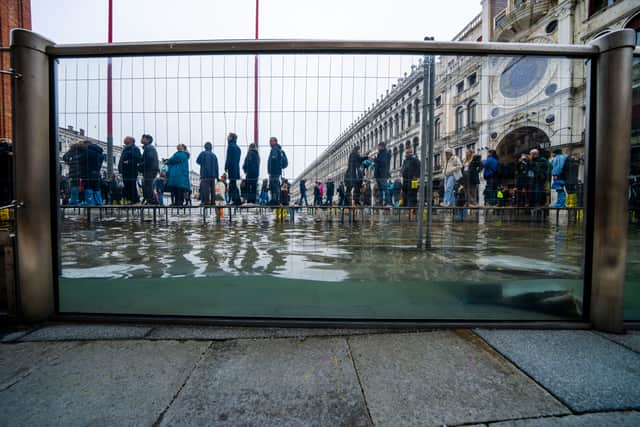
The new barriers are made of glass mounted on a base of armoured concrete that is buried below the pavement of St Mark’s Square to resist the force of surging water.
Mr Piana said the system could keep out up to 3.5ft (1.10m) of water in the square – equivalent to a tide of 6.2ft (1.90m) above sea level.

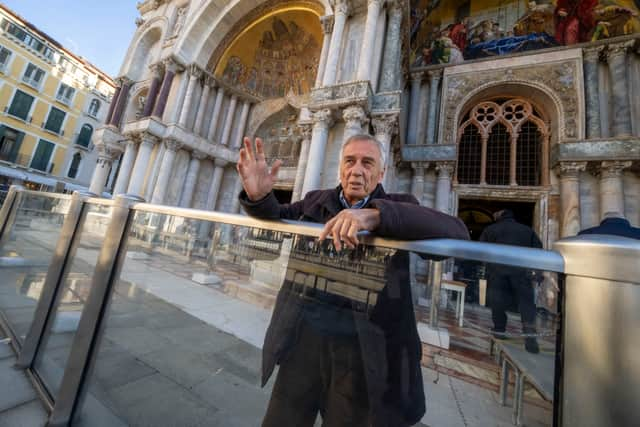
Built on log piles among canals, Venice has grappled with flooding since its foundation 1,600 years ago. But, like other coastal areas, rising sea levels and more extreme weather that scientists associate with climate change have meant more frequent high tides.
While the basilica was built on what was one of Venice’s highest points at the time, it now sits on one of the city’s lowest due to subsidence and rising sea levels.

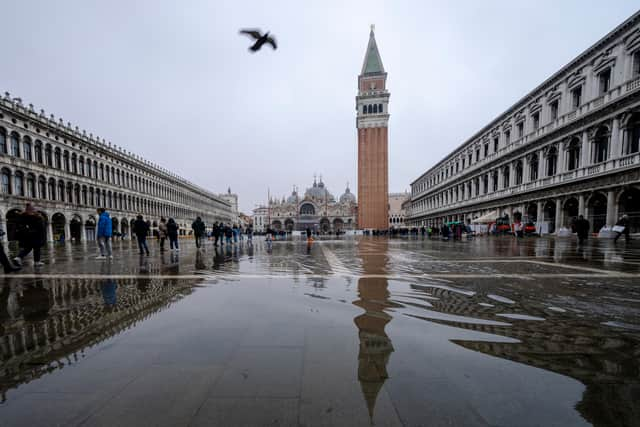
Flooding in November 2019 was especially devastating because the water could not recede quickly following repeated deluges, leaving parts of the basilica submerged for up to 24 hours.
Floodwater getting into the basilica has frequently been happening out of season too, making it all the more vulnerable and pushing officials to devise the new glass barriers as a defence.
Mr Piana said the glass and concrete barriers are part of a larger engineering project to set up a series of channels below the surface of the church and its namesake square to carry off water from the lagoon and keep it from flooding the square.