
Government pledges Universal Credit reform in independent Scotland


The Scottish Government has pledged a £250 million reform to Universal Credit in an independent Scotland in a new policy paper.
As part of its Building a New Scotland series – a number of publications which lay out a prospectus for an independent Scotland – ministers have said they would drop the bedroom tax, the two-child limit and the benefit cap.
Successive administrations in Scotland have long been against these policies.
Scotland after independence, the paper said, would also scrap the current benefit sanction regime and replace budgeting loans with grants, ending the five-week wait for an initial payment.
According to the publication, more than £250 million would have to be paid out to implement the reforms – if they were to take place next year.
“This is not insignificant in itself but needs to be seen in the context of the £24.7 billion being spent on social security in Scotland by UK and Scottish governments in 2023-24,” it read.
“In addition, reductions in poverty and destitution could be expected to reduce other costs to the state over the long term, for example those caused by health inequalities; this links to the Scottish Government’s underlying approach to the wellbeing economy and a joined-up approach to government, focusing on outcomes to make people healthier, happier and wealthier.”
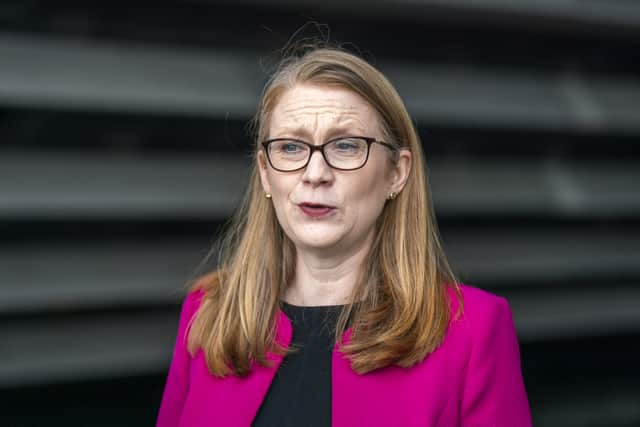
Speaking about the launch of the paper, Social Justice Secretary Shirley-Anne Somerville said: “With independence, we believe Scotland can do better.
“With limited powers, the Scottish Government has already demonstrated that things can be done differently with an approach to social security that treats people with dignity, fairness and respect.
“An estimated 90,000 fewer children are expected to live in relative and absolute poverty this year as a result of actions we have taken.
“With the powers of an independent nation, Scotland could do more to make our system fairer and move away from the UK Government’s system of benefit freezes, caps and punishment.
“We could move away from the UK Government’s system that offers inadequate levels of financial support and is pushing people into poverty.
“The best-performing independent countries comparable to Scotland demonstrate that a strong social safety net is a foundation of a dynamic, innovative and productive economy, rather than a barrier to it.
The paper – which did not mention pensions, a topic to be covered in its own paper in the new year – also teased the potential creation of a “minimum income guarantee”, a floor of financial security which would see the Government top up earnings of citizens.
The Scottish Government has been looking into such a move, with an expert group publishing an interim report earlier this year with final findings expected next year.
Governments in an independent Scotland, the paper said, could go further and introduce a universal basic income – a set payment made to every citizen regardless of income.
“With independence, the Scottish Government would commit to developing the right approach to social security for Scotland – one which at a very minimum allows people to cover the essentials they need to survive, but with time and resources could go on to develop something much more ambitious, something which addresses the fundamental structural inequalities and supports a dynamic economy – starting with addressing the fundamental issues with the existing UK system, testing and piloting approaches to find the right fit for the long term,” the paper said.
Scottish Tory social security spokesman Miles Briggs said the paper should be “filed under fantasy fiction”.
He said: “Ministers have a brass neck to be wasting yet more taxpayers’ money and resources publishing this paper when they are failing right now to use the extensive welfare powers they have at their disposal.
“They have produced a series of pie-in-the-sky proposals with no details as to how they would be paid for – and astonishingly nothing on pensions – all to push their obsession with independence.”
Scottish Lib Dem leader Willie Rennie said: “If this paper was a rare moment of honesty from the SNP, listing their string of failures on social security, I might see the point in it.
“Rather than seizing the opportunity to immediately deliver a fairer system, the Scottish Government will take a decade to put their new social security powers to use. They also did away with a Cabinet-level position focused on social security.”