
Grandfather determined to help find cure for cruel condition that took his wife and means his twins have inoperable tumours wrapped around their necks
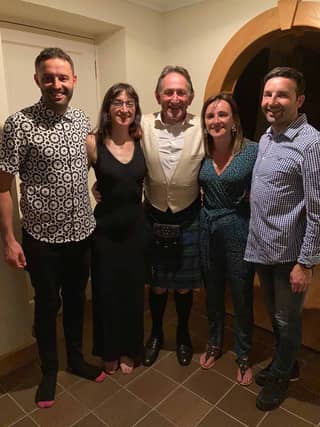

A trailblazing grandfather is determined to help find a cure for the cruel condition caused by a rare genetic mutation that took his wife from him and is now wreaking havoc upon his twins.
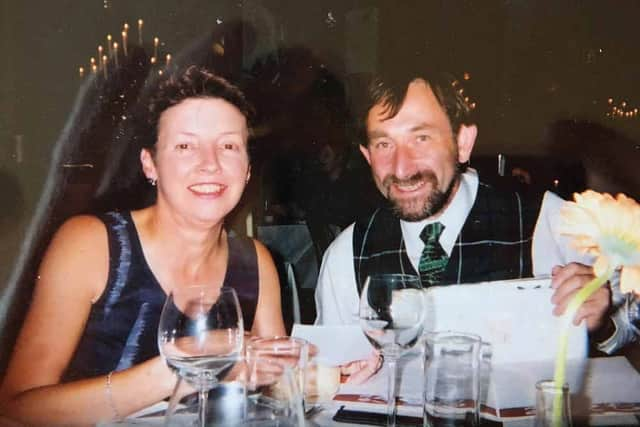
Life changed forever for Jonathan Williamson, 70, back in 1993, when his wife Sue was given six months to live after complaining of backache, only to be diagnosed with phaeochromocytoma – a rare tumour of the adrenal glands above the kidneys, which had in her case metastasized all over her body.
When, in 2010, Jonathan discovered Sue’s condition had been caused by a defective gene all four of his children were tested. Two were clear but twins, charity worker Jennie and firefighter James, 41, had both inherited the gene and the tumours had already spread across their bodies.
Charity worker Jonathan, of Dundee, Scotland, who set up the The Phaeo and Para Cancer Charity in 2018 in a bid to find a cure, said: “In 1993, my life changed forever. Jennie and James didn’t know that their lives had changed forever, too.

He added: “To find a way forward would be incredible, and I’m sure we will.
“We continue to push on to find answers – for those we’ve lost, those who currently fight and the future generations to come.”

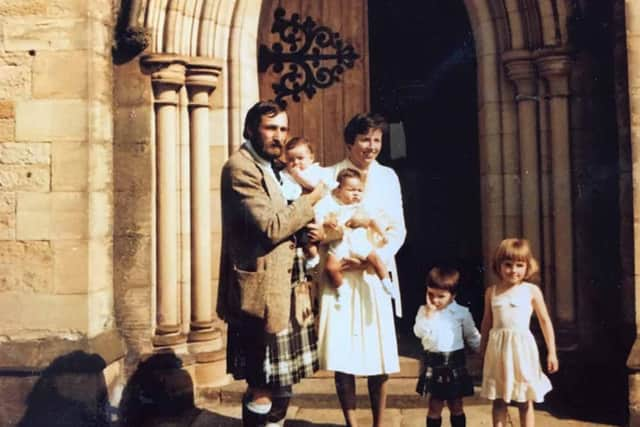
The following year, in 1972, Sue had surgery to remove a tumour in her adrenal gland, but went on to have a “completely normal” life and had no idea her genetic condition was causing cancerous and non-cancerous tumours to grow in her body as she showed no symptoms.
But, after suffering with backaches in 1993, Sue saw a specialist and a biopsy revealed she had phaeochromocytoma, while tumours were found to have metastasized all over her body.
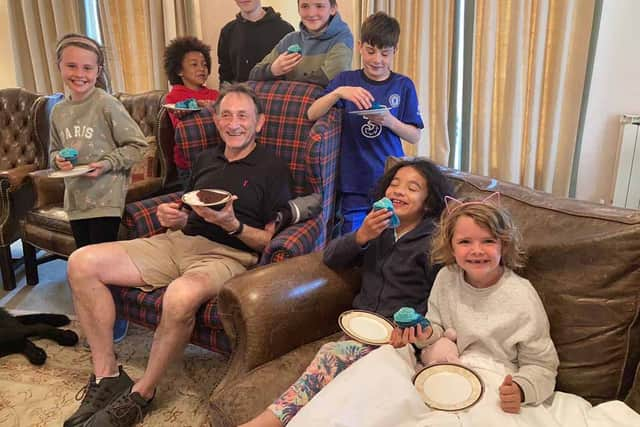
Jonathan, who has been with his current partner, Liz Duss, 72, for 12 years and has launched a GoFundMe appeal to raise money for research, said: “Sue was in really good health before this happened.
“When she was diagnosed, she was about 47, she had four young children, she was a busy mum and we were living a normal life.
A lifeline came when specialists at the Beatson West of Scotland Cancer Centre in Glasgow said Sue was eligible for radioisotope therapy – an injection of radioactive liquid, which she would need to have twice a year and would extend her life, by destroying cancer cells.
But the treatment itself was also terrifying.

He added: “We were scared but this was helping her to live.
“It was the only thing that could potentially keep her alive, so we just accepted it.”
Jonathan added: “We were feeling pretty amazing. Going from six months to live to a treatment that would keep her alive was incredible.
“She was able to live a normal life. We travelled, we raised our kids. We did a lot of what we wanted to do when we retired.
“Life became very normal for us. We didn’t discuss her illness very often.
But the toxic treatment finally caught up with her, weakening her system until, on December 23, 2003, she passed away, aged 57.
Grateful for the decade the treatment bought, Jonathan said: “We could both see that her health was deteriorating. She needed a wheelchair, as she could no longer walk for any distance.
He added: “But we lived a good 10 years more together than we thought we had.”
In 2010, new research led to Jonathan being told Sue’s cancer was caused by a faulty SDHD gene, which meant there was a 50 per cent chance it could be inherited.
Treatments were, by then, less toxic, but in 2011 both twins were found to have inoperable tumours wrapped around their necks.
Jennie’s tumour, which was the size of a golf ball, was found near her jugular vein, which could not be removed as it was surrounded by nerves. While James’ tumour, which was the size of a sausage, is wrapped around his carotid artery, and is too dangerous to remove.
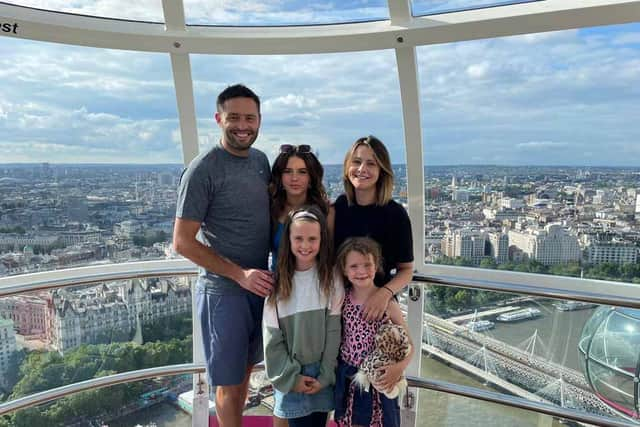
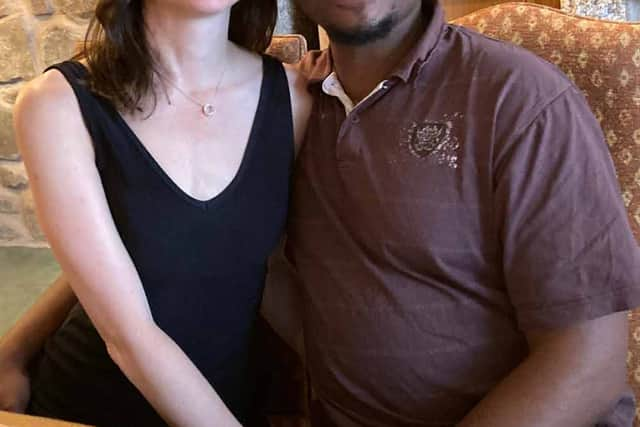
Jennie, who lives in Edinburgh, Scotland, with her two children Anatswa, eight, Kupa, seven, and husband, Ainslie Chinembiri, 39, a banker, said: “Because of our experience of seeing our mum living mostly a normal life, I felt a bit of relief, as I knew we could find the tumours early with the scans.
“It didn’t really affect life at the time, it was just something we had to do.”
While regular scans showed the tumour had not grown, in 2017 a second tumour was found on the left side of her head and, by 2019, further investigations detected 28 cancerous tumours which had spread and metastasised to her bones, like her mum.
Jennie, who is now having hormonal treatment to stop the cancer from growing, says she and her twin brother also realise there could be health implications for their own children but doctors have advised against testing children before the age of 10.
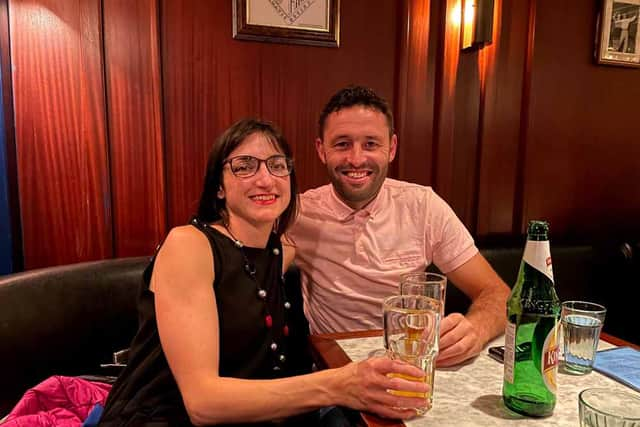
She added: “My family were so supportive, though. Dad comes to every meeting with consultants with me.
“James and I are always comparing notes, checking that everything is okay.
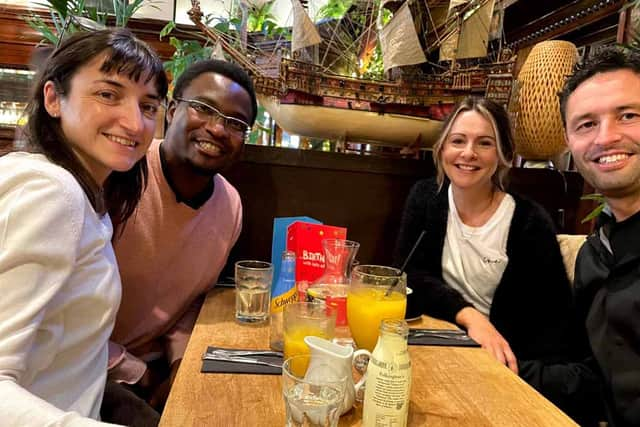
The Phaeo and Para Cancer Charity have already made important strides in their research, after Dr Krisztina Takacs, a biologist in Hungary, made a tiny model animal with the same defective gene using a 2mm long worm to see how it could lead to cancer.
They have also been testing two of James’ tumour blocks, which are held at Dundee Ninewells tissue bank, in a bid to find a drug or cocktail of drugs that would blast them.
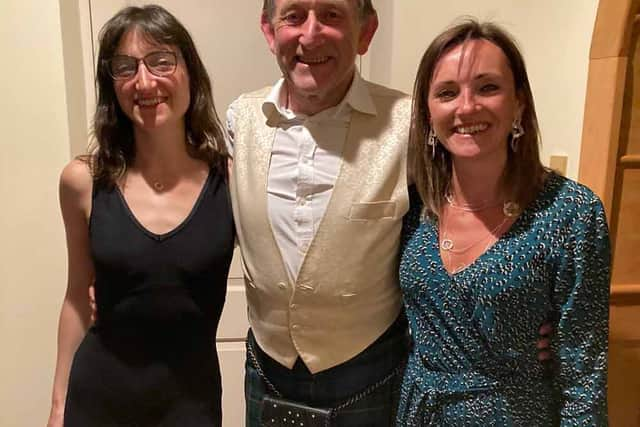
Divorcee James, who lives in Dundee with his partner primary school teacher Karen Dewar, 38, said: “I was a little fearful that I wouldn’t wake up again when I went for my second surgery, but I try to stay positive.
“The research being done is great, it’s positive and fills me with hope. I’m glad my tumours can be used for some good.
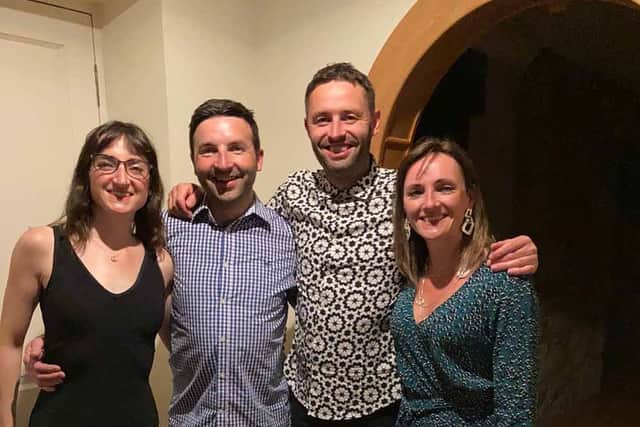
He added: “I’m quite lucky. While I inherited mum’s gene, I’ve inherited dad’s positivity. I have lots of checks, but it doesn’t affect my life and I don’t have any pain.
“That may change, I may have another form of cancer, but I don’t let it affect me.
“Having my family with me has been so great. And as much as it’s not great to have this, it’s nice to have someone like Jennie to go through this with.”
If you want to support The Phaeo and Para Cancer Charity’s research, you can donate here: www.gofundme.com/f/the-phaeo-and-para-cancer-charity or find out more on www.facebook.com/PhaeoPara