
Historic church is site of the crowning of British monarchs for 1,000 years
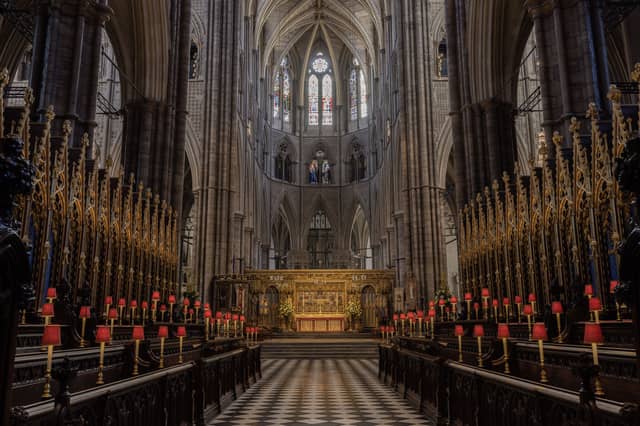

Westminster Abbey has served as the coronation church for nearly 1,000 years and is the final resting place of 17 monarchs.
Edward the Confessor, Charles II and Elizabeth I are among those buried in the historic London church, which is steeped in British history and famed for its stunning gothic architecture.
King Charles III will be the 40th reigning monarch to be crowned there when the golden bejewelled St Edward’s Crown is lowered onto his head by the Archbishop of Canterbury on May 6.
The religious ceremony will take place in front of the High Altar in the sacrarium – the heart of the Abbey’s coronation theatre, which is decorated with a 13th century mosaic floor known as the Cosmati pavement.
The King’s ceremony is the Abbey’s 39th coronation – with a rare joint one for dual sovereigns William III and Mary II taking place in 1689.
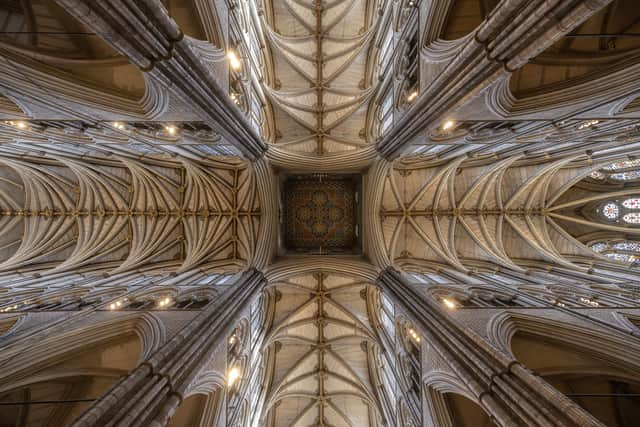
For the royal family, the venue – with its impressive nave, sky-high vaulted ceiling and chequered black and white floor – has hosted many state occasions and times of personal joy and sorrow over the decades.
The late Queen Elizabeth II was married and crowned in the Abbey.

During her coronation on June 2 1953, a young Prince Charles, now the monarch himself, was among those who witnessed the defining moment of her crowning.
In 2011, the then Duke of Cambridge, now the Prince of Wales, exchanged vows with Kate Middleton, now the Princess of Wales, as millions watched across the globe.
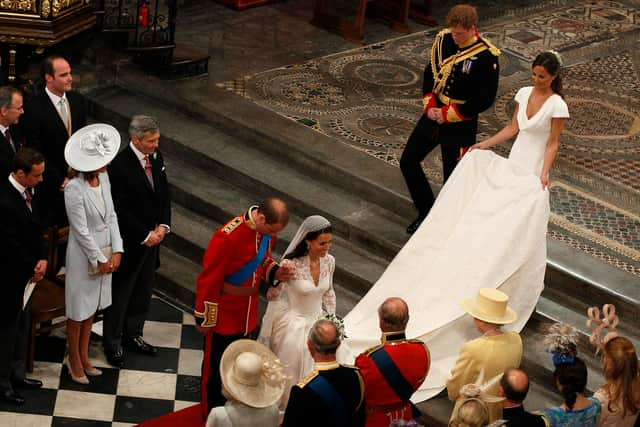
It was also where the funerals of Diana, Princess of Wales, and the Queen Mother took place.
More than 3,300 people are buried in the abbey and it houses memorials to the famous and the great.
The ashes of eminent cosmologist Professor Stephen Hawking are interred between the remains of Sir Isaac Newton and Charles Darwin.
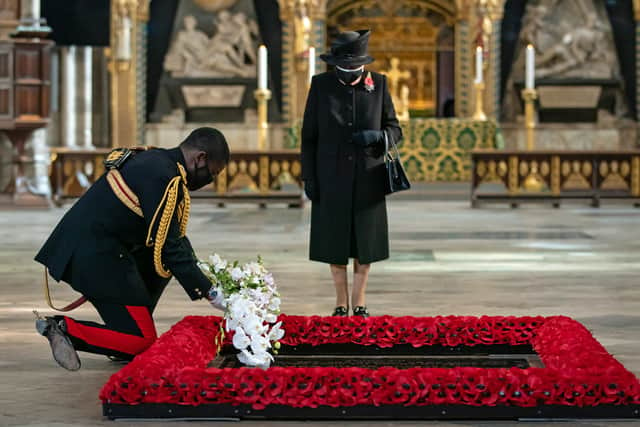
Near the Great West Door is the Grave of the Unknown Warrior – the unidentified First World War soldier who has come to symbolise the nation’s war dead.
The Unknown Warrior’s body was brought from France and buried on Armistice Day, November 11 1920.
It is thought the idea came from the Rev David Railton, who had served as a chaplain on the Western Front.
Benedictine monks first came to the site of the abbey in the middle of the 10th century.
The present church, begun by Henry III in 1245, is one of the most important Gothic buildings in the country, with the medieval shrine of an Anglo-Saxon saint, Edward the Confessor, still at its heart.
The abbey, which has the official title of the Collegiate Church of St Peter, Westminster, is known as a royal peculiar with a dean and chapter, responsible not to a bishop or archbishop but only to the sovereign.