
HSE warning as they share pictures of odd rash that could signal deadly infection

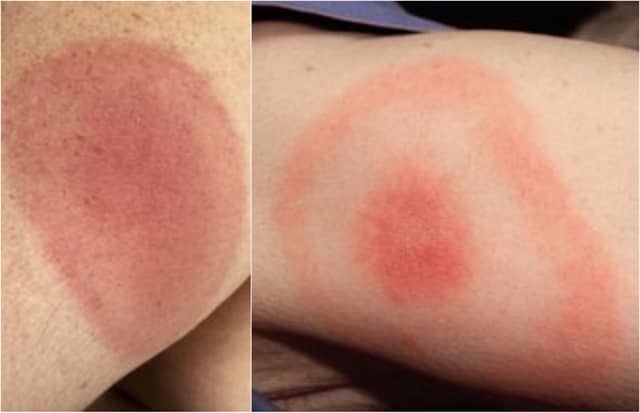

People are most at risk of contracting Lyme Disease over the summer and early autumn
People are being warned about the symptoms of Lyme disease with the summer and early autumn being the riskiest period for infection in Ireland. Lyme disease is a bacterial infection that can be spread to humans by infected ticks. It's usually easier to treat if it's diagnosed early and there are some notable symptoms.
The HSE says "most people with early symptoms of Lyme disease develop a circular red rash around a tick bite" but added that not everyone infected gets the rash.
"The rash can appear up to three months after being bitten by a tick. Most rashes appear within the first four weeks. It usually lasts for several weeks," they said.
They warn that in the early stages you may also have flu-like symptoms such as: feeling hot and shivery, or a high temperature; headaches; muscle and joint pain; tiredness and loss of energy.
The HSE advice continued: "Only a small number of ticks are infected with the bacteria that cause Lyme disease. A tick bite can only cause Lyme disease in humans if the tick has bitten an infected animal."
People are warned to remove ticks as soon as possible as they burrow into the skin - Lyme disease can be prevented if infected ticks are removed within 36 hours.
The HSE's three steps to removing a tick safely are:
- Grasp the tick as close to the skin as possible.
- Slowly pull upwards, taking care not to squeeze or crush the tick - dispose of it carefully.
- Clean the bite with antiseptic or soap and water.
High-risk areas for ticks include grassy and wooded areas and sand dunes near beaches. People should check their skin and that of their children after being outdoors, especially their head and hairline.
"Pets can carry the ticks and need to be checked as well. Use fine-tipped tweezers or a tick-removal tool. You can buy these from some pharmacies, vets and pet shops," the HSE says.
Ways to dispose of a tick include putting it in alcohol; placing it in a sealed bag or container; wrapping it tightly in tape pr flushing it down the toilet.
Symptoms usually go away on their own but you should contact your GP if you have symptoms of Lyme disease such as a rash or fever and you: were bitten by a tick; spent time in woods or areas with long grass, but did not notice a tick.
"Lyme disease can be difficult to diagnose. It has similar symptoms to other conditions and there is not always an obvious rash.
"Blood tests help confirm or rule out Lyme disease. But these tests are not always accurate in the early stages of the disease.
"Sometimes you will need to have the blood test repeated," advice added.
Lyme disease is usually treated with antibiotics with the HSE saying, "most people with Lyme disease get better after antibiotic treatment. It can take months for some people. But the symptoms should improve over time."
"Some people who are diagnosed and treated for Lyme disease continue to have symptoms. For example, tiredness, aches and loss of energy. But this is rare.
"It's not clear why this happens to some people and not others.
"Talk to your GP if your symptoms come back after treatment with antibiotics or if they do not improve," the HSE concludes.
In order to prevent tick bites in the first please, the HSE advises:
- cover your skin while walking outdoors and tuck your trousers into your socks
- use insect repellent on your clothes and skin - products containing DEET are best
- stick to paths whenever possible
- wear light-coloured clothing so ticks are easier to spot and brush off